

The buyer has changed: Has your GTM?
Key takeaways from Alicia Hale and Alex David’s keynote at GO NYC 2025

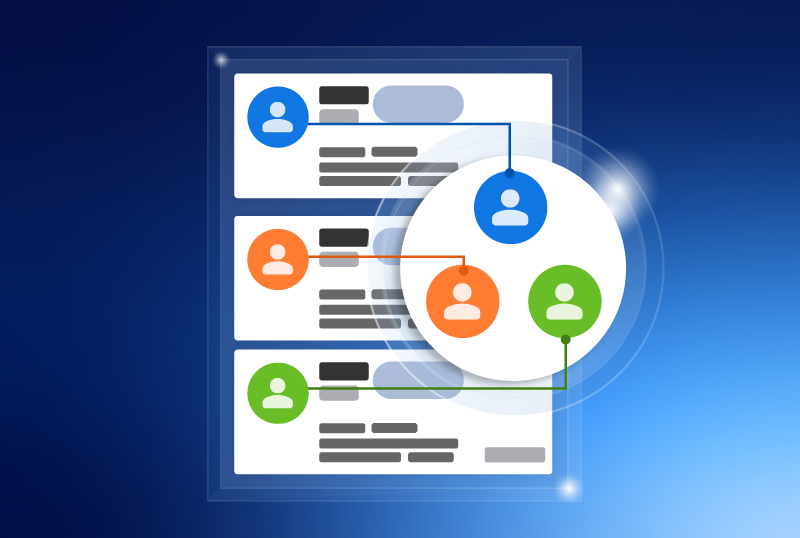
Today’s B2B buyer is almost always a collective decision-maker, also known as a buying group, meaning that your go-to-market team must influence that “buyer” as a collective entity. In fact, 72% of today’s B2B purchases involve multi-stakeholder groups.
A B2B software buying group, for example, may typically include at least one person from leadership, IT/information security, procurement, product, and engineering. As every B2B seller well knows, each of these individuals within the group is motivated by different factors and therefore any effective sales approach must take into consideration their “persona differences.”
To gain “buy-in” for closing a B2B software sale, for instance, you’d need need to discuss:
- stack integration and cybersecurity issues with the IT/information security person,
- time-to-value and ROI with the leadership person,
- total cost of ownership, initial price, renewals, and support levels with the procurement person, and
- Ease-of-use, user interface design, and adoption issues with the engineering and/or product person.
Are B2B Sellers Engaging the Whole Buying Group?
In an age of clearly-defined buyer personas and the widespread availability of AI tools for content personalization, you’d think B2B sellers would have no problem customizing the right message to the right member of the buying group. You’d also be (mostly) wrong in that assumption.
A surprisingly small 25% of all B2B sellers show strong preparation for the particular buyer persona they’re about to engage with, meaning that 75% of those sellers are not engaging the right person with the right message. That’s a massive gap, meaning that most sellers are sending the wrong message and likely failing to optimally influence the person they’re engaging.
What Buyers Think About B2B Sellers
Economic and budgetary pressures are perennial strains on any purchasing decision. In fact, 83% of organizations say that financial pressures directly impact their purchasing decisions and their choice of vendors.
The days of spending sprees are long gone. Instead, sellers must clearly prove the value of their offering(s) to the buying group, and buyers also expect a shorter time-to-value.
When you add these financial pressures to the lack of effective “buyer persona” personalization that we discussed earlier – with only 25% of B2B sellers differentiating their outreach based on the specific personas within the buying group – you can understand the skepticism and hesitancy of so many B2B buyers.
Here’s another “drag” for sellers: B2B buyers recognize and dislike “misaligned engagement.” Your marketing, sales, customer success, and other customer-interacting teams must engage with the buying group based on shared data and a shared playbook. When that alignment is lacking on the seller’s side, the buying group notices and responds with a lesser likelihood to purchase.
How AI Can Help Improve the Journey
Artificial intelligence represents a fundamental evolution in go-to-market strategies, helping sellers shift from generic, undifferentiated engagement with a B2B buying group (i.e., acting as if every group member were motivated equally by the same message) to intelligent, self-optimizing systems that not only support personalized outreach but also adapt to prospect intent signals in real-time, at the individual and account level.
With the emergence of AI tools that enable content personalization, the B2B sales paradigm has shifted from “build your campaign and hit play” to “define your desired outcome and let AI execute by sensing and responding to buyer/account intent signals.” AI can automate personalized, persona-based journeys that move from specific buying intent signals to customized engagement that addresses evolving buyer needs to achieve measurable results.
AI tools can also help align GTM teams around buyer intent signals that define how buyers actually buy and how B2B sellers engage with them. That’s powerful personalization at scale, one that moves the needle on revenues.
B2B companies that embrace this evolution in their sales efforts will gain compounding advantages over rivals who continue to drive generic, undifferentiated engagement that only serves to turn off members of the buying group and thus hinder revenue-generation efforts.
AI + Humans = Optimal Personalization at Scale
The effective use of AI to drive personalized, persona-based account outreach does NOT mean automating everything and taking humans out of the loop.
AI has its place and humans have their place. AI, for example, might be great for the initial market research phase of a campaign. It can quickly surface target companies and compare what products they’re using with what your B2B company might offer. AI might also be useful when creating specific messages for specific people.
But when it comes to understanding a B2B vendor’s specific use case, how your offering is different from a rival’s, and negotiating contract terms, that human touch surpasses AI’s capabilities.
So how do B2B sellers better serve buyers in this next era of AI-influenced GTM?
- Personalize: treat people like people;
- Scale with AI: today’s buying group is more diverse, so sellers need to personalize and scale engagement using the right amount of AI and the right amount of human interaction;
- Time to value: get value to financially-strained buyers as fast as possible; and
- Shift sales mindsets: focus on alignment, value-based outcomes for buyers, and differentiating outreach to the buying group based on personas and dynamic intent signals.
By following this more dynamic approach, you better meet the needs of today’s B2B buyers.
Want the full story? Watch the complete session to see how today’s best GTM teams are adapting to the new B2B buyer.
Related content


We have updated our Privacy Notice. Please click here for details.