

How to Bypass B2B Purchasing Gridlock with Buying Group Marketing

What is a B2B buying group (or committee)?
A buying group is the set of people involved in a specific purchase decision at an account. Members may influence, evaluate, champion, approve, use, procure, or block the purchase.
Buying group marketing is the strategy of identifying those people, understanding their roles, engaging them with relevant messages, and measuring how the group progresses toward a decision.
A buying group is not every contact at a company. It is the relevant group involved in a particular purchase, use case, or business initiative.
Personas and buying group roles are different
A persona describes a person’s function, responsibilities, or area of expertise. A buying group role describes the part that person plays in a specific purchase.
For example, a chief information officer is a persona. Depending on the purchase, that person may act as a decision-maker, economic buyer, technical evaluator, or executive sponsor.
The same persona can play different roles depending on the product, use case, account structure, and purchase.
Example of a B2B buying group
Let’s say you’re selling a cybersecurity platform to a mid-sized financial institution.
Here’s what the buying group might look like in practice:
- The CISO (chief information security officer) is your main contact and internal champion. They’re frustrated with current vulnerabilities and want faster threat detection.
- The CFO controls the budget and wants clear ROI proof that your platform reduces risk without increasing operational costs.
- The Head of IT operations worries about integration complexity and downtime during deployment.
- The compliance manager needs assurance the platform meets regulatory standards.
- The procurement team is evaluating competing vendors to ensure fairness and contract compliance.
Now, if marketing only nurtures the CISO and sales only talks to IT, the deal will likely stall. The CISO may love your platform, but the CFO may see it as too costly, and procurement might delay the sales process over policy concerns. When important stakeholders have different priorities or lack the information they need, an opportunity can slow down or stall. A buying group approach helps marketing and sales recognize those differences and coordinate engagement accordingly.
For example, marketing might provide ROI evidence for the CFO, integration guidance for IT, security documentation for the compliance team, and implementation information for end users.
You can align messaging by role: ROI-driven narratives for the CFO, integration guidance for IT, compliance checklists for the legal team.
This multi-threaded approach keeps every persona informed and pushes them towards closing the deal.
Recommended → 9 Reasons Why Buying Groups Will Be The Next Big Thing In B2B
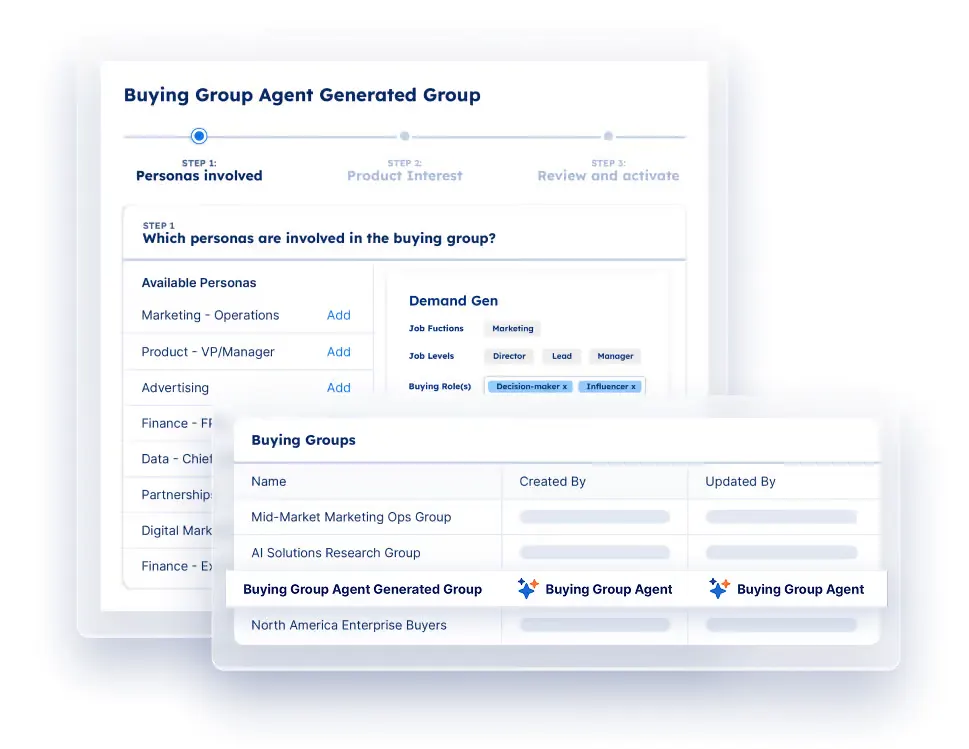
Automatically build buying groups with Demandbase
Demandbase Buying Groups helps teams identify relevant personas, map known contacts to buying group roles, and understand which roles are engaged or missing.
The Buying Group Setup Agent can help create personas and buying groups, while Buying Group Insights helps teams evaluate completeness and engagement across target accounts. Demandbase’s current contact-data offering includes more than 200 million AI-curated contacts, although teams should confirm the latest figure before publication.
Demandbase also connects buying group activity with account intelligence, intent, engagement, and predictive scoring so marketing and sales can prioritize accounts that show both fit and buying momentum.
The importance of buying groups marketing in B2B
B2B marketing revolves around two models. You have the lead-based and the traditional account based marketing (ABM).
But the problem with these models is that they don’t reflect the modern B2B decision-making process.
- For starters, lead-based marketing is too narrow. It focuses on individual behaviors such as a single contact downloading a whitepaper or attending a webinar. Then uses that action to assume that one person’s engagement is equal to a buying opportunity.
- But that approach ignores the complexity of B2B sales that requires multiple decision makers to complete a purchase.
- Traditional ABM, on the other hand, is too broad. It treats an entire account as one opportunity, assuming that because a company fits your ideal customer profile (ICP), the entire organization is aligned and ready to buy.
- But that’s rarely true. Large organizations often have multiple buying groups operating independently, each exploring different solutions, at different times, for different needs.
So while lead-based marketing focuses on one person, ABM often generalizes everyone. And that’s where deals fall off.
On the flip side, buying group marketing offers a fix to this. It focuses on the specific group of people involved in a single purchasing decision.
Here’s what that means:
Accurate qualification: From MQLs to Qualified Buying Groups (QBGs)
In the lead-based model, qualification depends on a single person’s activity. In this case, did they open an email? Did they download an eBook? That kind of engagement doesn’t reflect intent at the account level —let alone the group level.
Buying group marketing replaces this outdated metric with Qualified Buying Groups (QBGs): a far stronger, more reliable signal based on collective engagement.
It shifts the focus on the group instead of the individual, allowing you to confidently qualify opportunities that are ready for meaningful sales engagement.
This way, when multiple stakeholders within an account engage with your brand around the same solution (e.g., visiting your pricing page, attending a product webinar) you understand that there’s a real buying conversation happening internally.
Related → B2B Buying Groups: The End of MQL-Centric Models | Demandbase
Precise engagement: Reaching the right people with the right message
Traditional ABM does one thing very well, and that is telling you which accounts are active. However, it doesn’t tell you who within those accounts is actually driving the activity. And that leads to generic outreach and misaligned messaging.
Buying group marketing gives you the context to be truly relevant. When you know the composition of the buying group, their collective intent signals, and their individual concerns, you can craft personalized content journeys that speak to the needs of each role while keeping the narrative consistent for the whole group.
For example, you can discover that the head of operations is reviewing implementation case studies, while the IT director is reading technical documentation.
When every member of the group feels seen, heard, and understood, you become a trusted partner in their evaluation process, which eventually improves your conversion rates and overall brand perception.
Related → The 4 outdated rules B2B marketers keep following (and how to break them)
Full-funnel revenue growth: Managing multiple opportunities within one account
Still on traditional ABM, the model assumes that one company equals one deal. But large organizations often have multiple business units, geographies, or teams evaluating different solutions simultaneously.
Buying group marketing enables you to track and manage all of them. You can identify that:
- Marketing operations is evaluating ABM software.
- Sales enablement is exploring conversation intelligence tools.
- Customer success is researching analytics integrations.
All of which are parallel opportunities within the same organization. This new business also sets the foundation for cross-sell and upsell potential, which drives stronger Net Revenue Retention (NRR).
Related → How to Measure Account-Based Marketing (+ABM Metrics)
AI makes it scalable
Based on the approach behind buying group marketing, scaling the entire process especially for enterprise businesses can be a bit difficult.
It involves tracking dozens of signals, mapping buying committees, and analyzing patterns across thousands of accounts. This would have been impossible to do manually or even scale.
Meanwhile, by adding AI, you can process millions of behavioral and intent data points to:
- Identify members of a buying group across systems.
- Detect correlations between signals that humans would miss.
- Continuously update predictions as new data flows in.
This automation allows your team to focus more on strategy and engagement without the hassle of tussling with data.
Related → How Demandbase Buying Groups Will Change the Game
Seamless sales and marketing alignment
Lead-based marketing created a fragmented system within the GTM team. Often, you’d find sales disqualifying ‘leads’ that marketing passed. The traditional ABM helped solve this problem but also didn’t pinpoint who within that account should be engaged first.
Buying group marketing provides a shared source of truth. A place where both teams can see exactly which buying groups exist, who’s active within each, what stage they’re in, and where engagement gaps lie.
The marketing team can prioritize campaigns based on group activity and buying stage, while sales can tailor outreach to the right mix of influencers and decision-makers.
This results in smoother handoffs, fewer missed opportunities, and more synchronized efforts that move buyers seamlessly through the funnel.
Related → 6 Strategies for engaging the buying group through account-based marketing
How to implement an effective buying group marketing strategy
- Step 1: Define your target buying group
- Step 2: Identify key roles within the buying committee
- Step 3: Map the buyer’s journey for each role
- Step 4: Craft role-specific messaging
- Step 5: Develop tailored content formats for each role
- Step 6: Select the appropriate marketing channels for each role
- Step 7: Implement a multi-channel distribution strategy
Step 1: Define your target buying group
Before you can influence a buying group, you have to define who they are. This starts with understanding which organizations and departments are most likely to invest in your solution and then mapping the people within them who shape the decision.
Begin by analyzing your best existing customers. Look for commonalities in:
- Firmographics: Industry, company size, location, and annual revenue.
- Technographics: The tools and systems they already use (especially those your product integrates with).
- Behavioral patterns: How they buy—what triggered their need, who got involved, and what journey they followed.
Once you know what your ideal customer looks like, narrow it further to define where your product fits best.
For example, if you’re selling an employee engagement platform, HR and internal communications will be your primary departments, but IT and finance may still play a supporting role.
The goal here is identifying the core accounts and groups most likely to convert, expand, and succeed with your solution.
DB Nuggets → Use your CRM and intent data to uncover patterns among top-performing customers. Which departments drove adoption? What common events preceded a deal (like leadership changes or funding rounds)?
Those patterns will define your best-fit buying groups.
Step 2: Identify key roles within the buying committee
Once you’ve defined your target organizations, the next step is understanding the roles and dynamics of the people who make up the buying group. Each role has its own priorities, motivations, and influence.
But just to recap: To simplify this mapping process, use this quick checklist:
- Who approves the budget? → Decision-maker
- Who uses the product daily? → User/influencer
- Who provides technical vetting? → Influencer/technical buyer
- Who benefits or risks the most from the purchase? → Champion or blocker
- Who’s responsible for project success? → Project manager/champion
By identifying each of these roles within your key accounts, you create a clear engagement map that sales and marketing can follow together.
Step 3: Map the buyer’s journey for each role
Not every member of the buying group experiences the journey the same way. Each role enters the funnel at different times and consumes different types of information before reaching consensus.
To operationalize this, you need to map the journey by role and stage:
- Awareness stage:
- Decision-makers look for insights on market trends and organizational challenges.
- Users search for pain-point content that reflects their daily frustrations.
- Influencers start scanning for technical compatibility or emerging solutions.
- Consideration stage:
- Decision-makers compare ROI projections and risk analyses.
- Influencers dig into product demos, feature comparisons, and integration capabilities.
- Users want to understand how the product will fit into their existing workflow.
- Decision stage:
- Decision-makers need pricing transparency and procurement details.
- Influencers want assurance of ongoing support and security compliance.
- Users look for evidence of smooth onboarding and tangible value.
By tailoring your GTM strategy to these nuanced stages, you make sure every stakeholder gets what they need, when they need it.
DB Nuggets → Visualize this as a matrix: roles on one axis, journey stages on the other.
Then map content, channels, and actions for each cell. This ensures full coverage across the decision landscape.
Related → What is an AI customer journey and how to use it to enhance customer experience
Step 4: Craft role-specific messaging
Messaging is where many B2B strategies fail. Most brands still broadcast one-size-fits-all messages, assuming that if it resonates with one person, it will with all. But what resonates with a CFO won’t move an IT Director or an Operations Manager.
Your messaging should reflect that diversity:
- For decision-makers, emphasize outcomes: Cost reduction, market advantage, revenue growth, and risk mitigation. They think in terms of “strategic impact.”
- For users, focus on how your product makes their daily work easier, faster, or more efficient. They care about usability, accessibility, and time savings.
- For influencers, highlight your technical advantage: Integrations, compatibility, performance, and security.
- For champions, provide internal storytelling materials: Infographics, talking points, and business case templates they can use to win others over.
- For blockers, acknowledge and neutralize their objections with data-backed evidence and transparency.
The tone, complexity, and angle of your messaging must evolve with each persona. The CFO expects authoritative insights, while a marketing ops specialist expects tactical clarity.
Step 5: Develop tailored content formats for each role
Once you know what to say, you need to decide how to deliver it. The right message in the wrong format won’t get the desired impact.
- Decision-makers: Gravitate toward strategic, data-backed content. For example, whitepapers, and executive briefs. They value clarity and credibility, and won’t do well with technical jargon that doesn’t convey meaning.
- Users: Prefer hands-on, practical formats like product demos, tutorials, and user testimonials that show “how it works” in real life.
- Influencers: Want technically rich content, e.g., comparison guides, spec sheets, product architecture overviews, and analyst reports.
- Champions: Need persuasive assets like internal presentation decks or quantified case studies that make them look credible in front of their peers.
The idea is to meet each stakeholder where they think and operate. Each interaction should build trust, add clarity, and nudge the group closer to consensus.
Related → How to calculate ROI on marketing campaigns
Step 6: Select the appropriate marketing channels for each role
Each role consumes information differently. Your job is to deliver your message where they naturally spend time.
Here are a few examples:
- Decision-makers: Reach them on high-authority platforms like LinkedIn, executive-level newsletters, and industry conferences where strategic discussions happen.
- End users: Engage them on community forums, social media groups, or learning platforms like YouTube and Reddit-style professional communities.
- Influencers and technical buyers: Target them through technical blogs, specialized webinars, professional Slack groups, and industry-specific associations.
Diversify your channels but keep your messaging consistent. Every impression (from an ad to a webinar) should reinforce a unified brand voice that speaks to each role’s needs.
Step 7: Implement a multi-channel distribution strategy
Finally, your strategy must converge into a multi-channel execution plan. This ensures your message is seen consistently and reinforced across the buyer’s journey.
Here’s how to make it work:
- Integrate your channels: Make sure email, social, paid ads, and outbound sales touchpoints tell one unified story.
- Use retargeting campaigns: Leverage behavioral data to re-engage individuals with content tied to their specific role and journey stage. A user who watched a demo might see a follow-up ad for product tutorials, while a decision-maker who downloaded an ROI guide receives a pricing comparison next.
- Enable your sales teams: Equip your reps with role-specific playbooks, battle cards, and conversational prompts.that align with ongoing marketing initiatives.
- Leverage content syndication: Extend your reach through trusted third-party platforms that decision-makers and influencers already follow. This expands visibility beyond your owned channels and builds credibility through association.
How to measure the success of buying group marketing
The approach for measuring success in this new model is different and requires a mindset shift.
And that’s because traditional B2B metrics like MQLs, email open rates, webinar registrations, etc., only measure individual activity or isolated channel performance.
But buying group marketing is more about ‘collective progress’ —i.e., how a team of decision-makers within an account moves together through the buying journey
This new perspective requires a two-layered approach:
- Leading indicators, which reveal whether you’re effectively engaging and covering the right group of people.
- Business outcomes, which prove that your buying group strategy is creating tangible revenue impact.
1. Leading indicators: Are you engaging the right group?
Leading indicators are your early signals. They show whether your strategy is successfully reaching and activating the members of your target buying groups before opportunities formally enter the pipeline.
Note: They don’t prove revenue yet. However, they prove that the right people in the right accounts are actively moving through the buying journey.
Here are the most important metrics to track in this phase:
a. Buying group engagement score
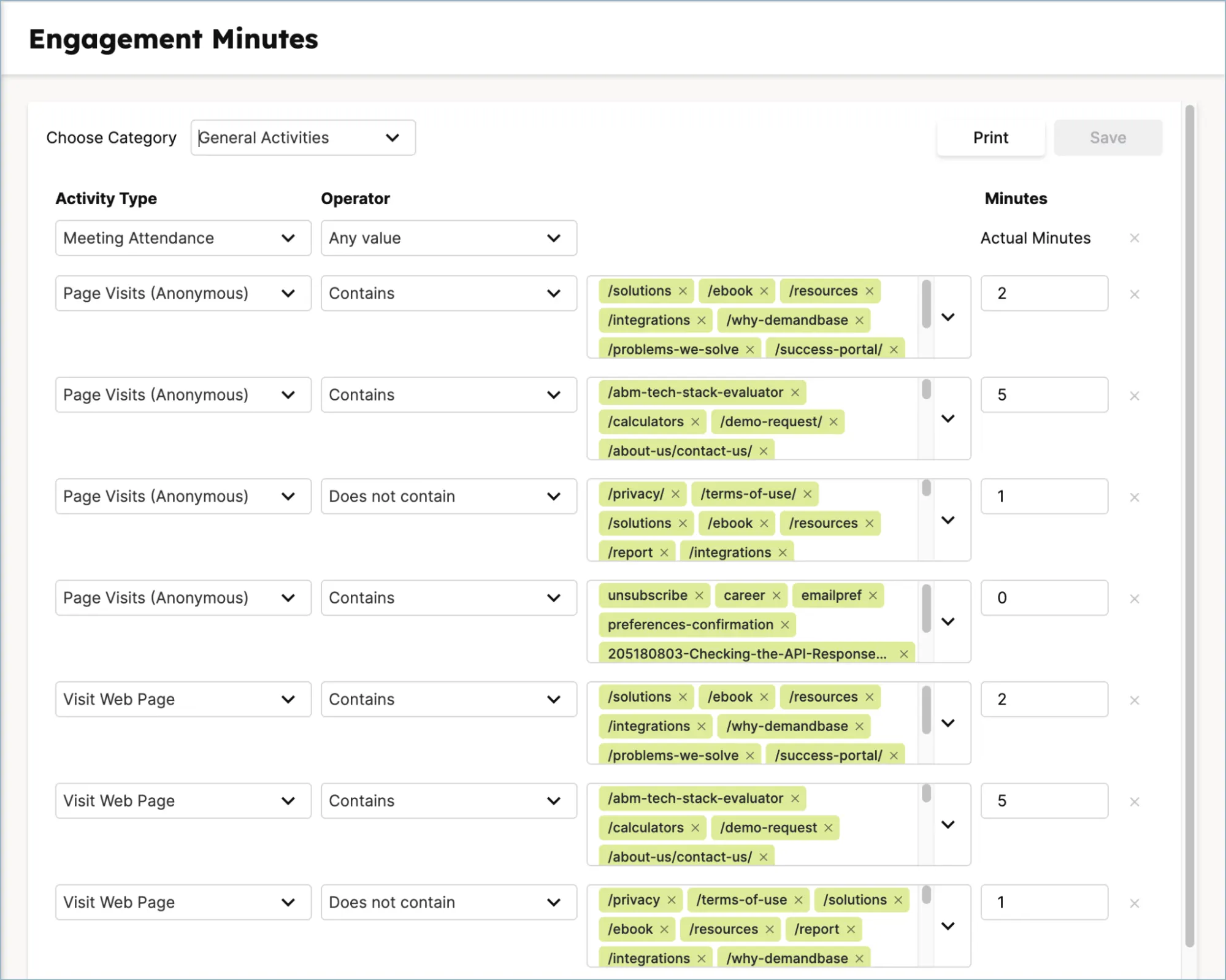
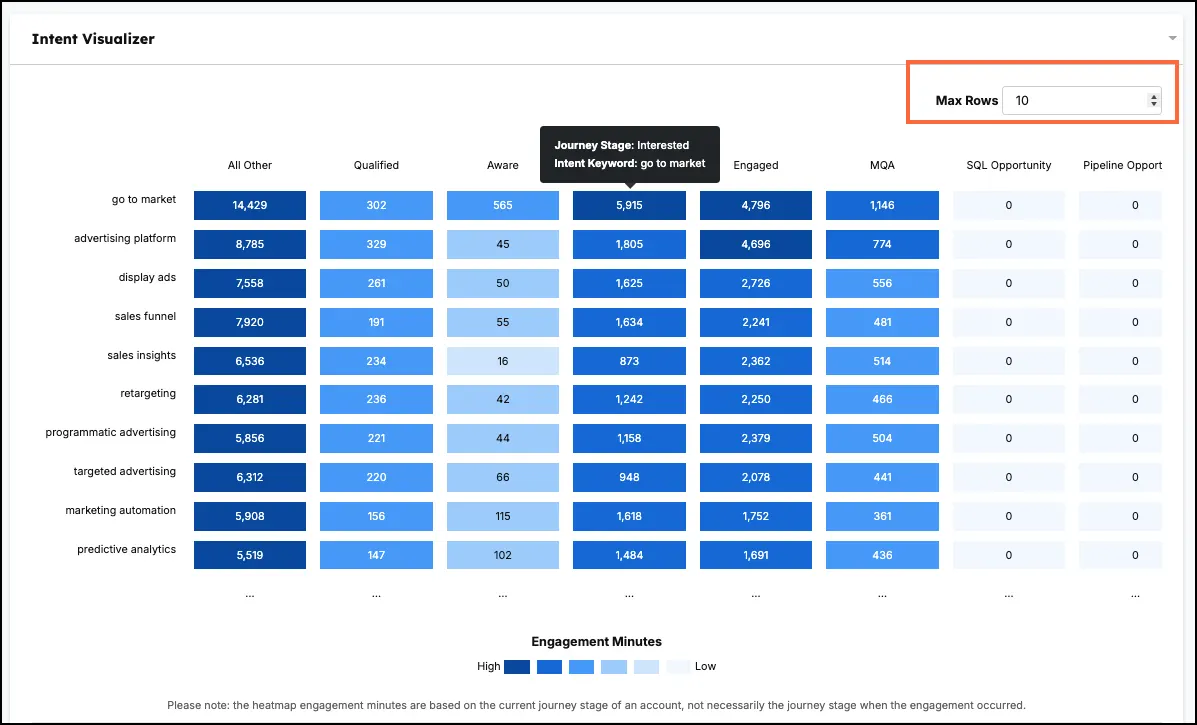
Buying group engagement measures activity across the known and inferred stakeholders associated with a specific account and buying motion. This includes ad clicks, website sessions, webinar attendance, content downloads, and email interactions.
It’s your single source of truth for measuring ‘collective interest.’
For example, if five different stakeholders from one account are actively researching your content, attending demos, and comparing vendors, that surge of collective activity signals readiness.
Teams can create scoring models that weight activities according to their relationship to purchase intent. A pricing-page visit, a technical documentation visit, and an executive meeting may all signal different types of engagement.
The exact weights should be based on the organization’s historical opportunity data and buying motion rather than treated as universal defaults.
You can use your Demandbase to visualize these engagement (known and anonymous) spikes in real time. When multiple roles within the same account interact with similar content in a short window, your sales reps will be notified.
Related → Understanding AI Lead Scoring: Definition, Benefits, and How to Get Started
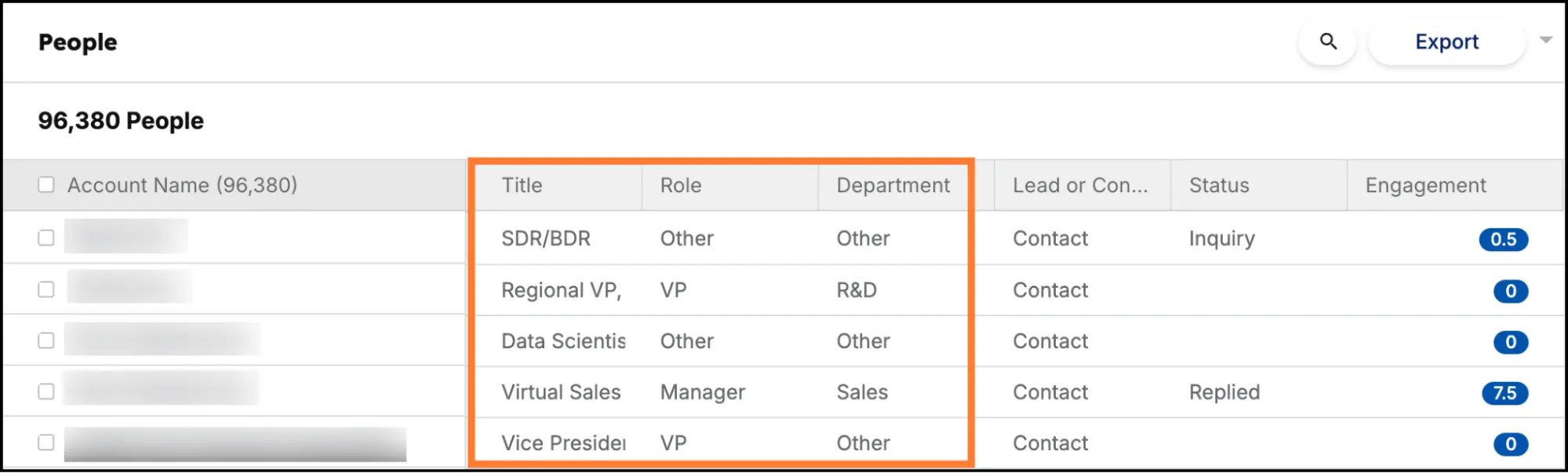
b. Buying group coverage
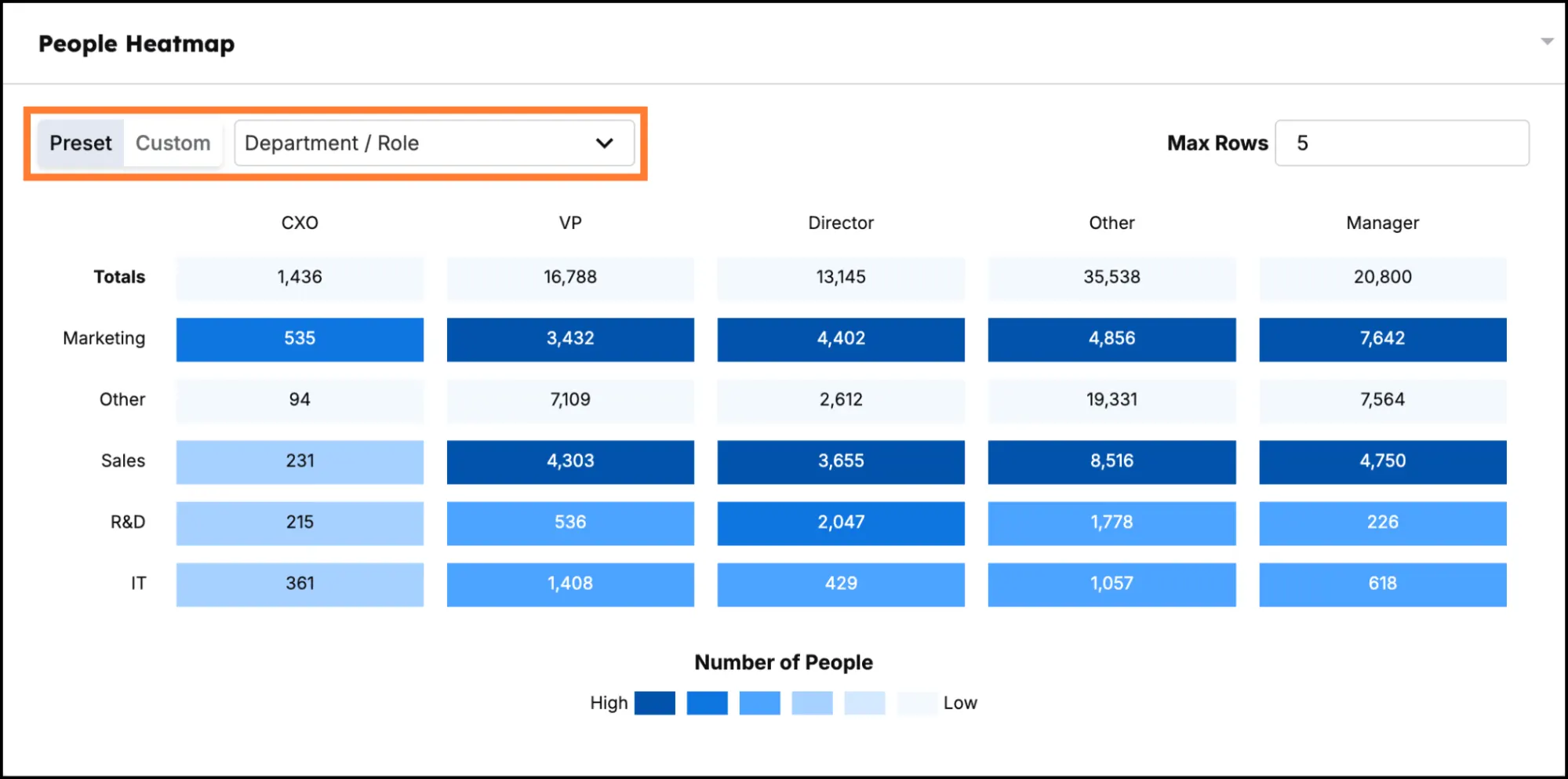
Buying group coverage measures how many of the relevant stakeholder roles have been meaningfully engaged for a specific purchase.
Coverage should be based on the roles that matter for the buying motion, not simply the number of contacts associated with the account. Low coverage can create risk when important stakeholders have not been identified, engaged, or aligned, but the roles that matter will vary by product, account, and purchase.
See how it works on Demandbase →
c. Qualified buying groups (QBGs)
A QBG represents a collection of stakeholders from the same account who have collectively reached a defined engagement threshold that indicates in-market intent.
Unlike marketing qualified lead (MQL), which triggers from a single person’s activity (like downloading an eBook), a QBG is multi-person validation that proves that the group as a whole is showing coordinated buying behavior.
The criteria for a QBG can include:
- The engagement score of the group surpasses a specific benchmark.
- A minimum number of key personas are engaged (e.g., at least one decision-maker and one influencer).
- The account’s intent signals indicate active research in your category.
Once a group meets these criteria, it’s flagged as a QBG, ready for personalized outreach from sales.
2. Business outcomes: Is your strategy driving revenue?
These are the metrics your CMO, CRO, and CEO care about. They tie your buying group efforts directly to the bottom line.
Here are the core business outcome metrics that matter most.
a. Pipeline velocity
Pipeline velocity measures how quickly your QBG moves from opportunity creation to closed-won.
When you’ve engaged the full buying group early and in context, there’s less internal debate and fewer stalls. Deals advance faster because everyone already has the information and trust they need to make a decision.
To measure pipeline velocity, track the average time QBGs spend in each sales stage. If your buying group marketing is working, you’ll notice deals moving faster because objections are addressed early on.
For example, if your average sales cycle was 120 days and drops to 90 after adopting buying group engagement, that’s a 25% improvement.
b. Win rate by buying group
This metric compares your win rate between opportunities where the entire buying group was identified and engaged versus those where it wasn’t.
If your strategy is sound, you’ll consistently see a higher close rate for opportunities with full coverage and multi-threaded engagement. And this is because alignment reduces resistance within the group.
This metric also serves as an internal quality check. If your win rate doesn’t increase with greater coverage, it could indicate issues with message alignment, content quality, or how well marketing insights are being translated into sales action.
c. Average deal size
Another major outcome metric is average deal size, which often grows as your buying group marketing matures.
When you engage entire committees instead of single contacts, the conversation expands from “one department’s problem” to “the organization’s opportunity.”
For example, a single-user software license may turn into an enterprise-wide deployment once the CFO, CTO, and Operations leads see the value collectively. This expansion effect happens naturally when your messaging resonates across roles.
Pro tip →
Monitor your average contract value (ACV) for QBG-influenced opportunities compared to traditional ones. You’ll likely see a meaningful uplift, demonstrating how group alignment translates to commercial impact.
Combine this with win rate analysis. High ACV + high win rate across engaged groups is the ultimate indicator of buying group maturity.
See the buying group. Shape the decision. Own the win
…All with Demandbase.
Demandbase gives you the ability to see into the collective behavior of the entire buying group behind every opportunity. It gives you one unified view that connects intent, engagement, and readiness across every stakeholder involved in a deal.
Our friends at Palo Alto Networks put it like this:
“Demandbase has completely transformed the way we manage our leads with buying group signals. Leads are no longer stagnant; they’re activated, engaged, and moving faster through our funnel. The level of alignment we’ve built between our marketing and sales teams has set the benchmark for future initiatives.”
Lauren Daley, Director of marketing operations
Demandbase’s Palo Alto Networks case study reported a 17% higher closed-won rate and 2.3x larger average deal sizes when a buying group was present. These are customer-specific results, not universal benchmarks, but they illustrate how broader stakeholder engagement can be associated with stronger opportunity outcomes.
You also get Sales Intelligence to surface actionable insights across every account. This way, your reps always know which opportunities are heating up, which roles are most engaged, and what messages will resonate best.
Adding to this is the Pipeline Predict feature that uses AI to analyze behavior, buying intent, and account activity. This helps your team prioritize the right opportunities before competitors even spot them.
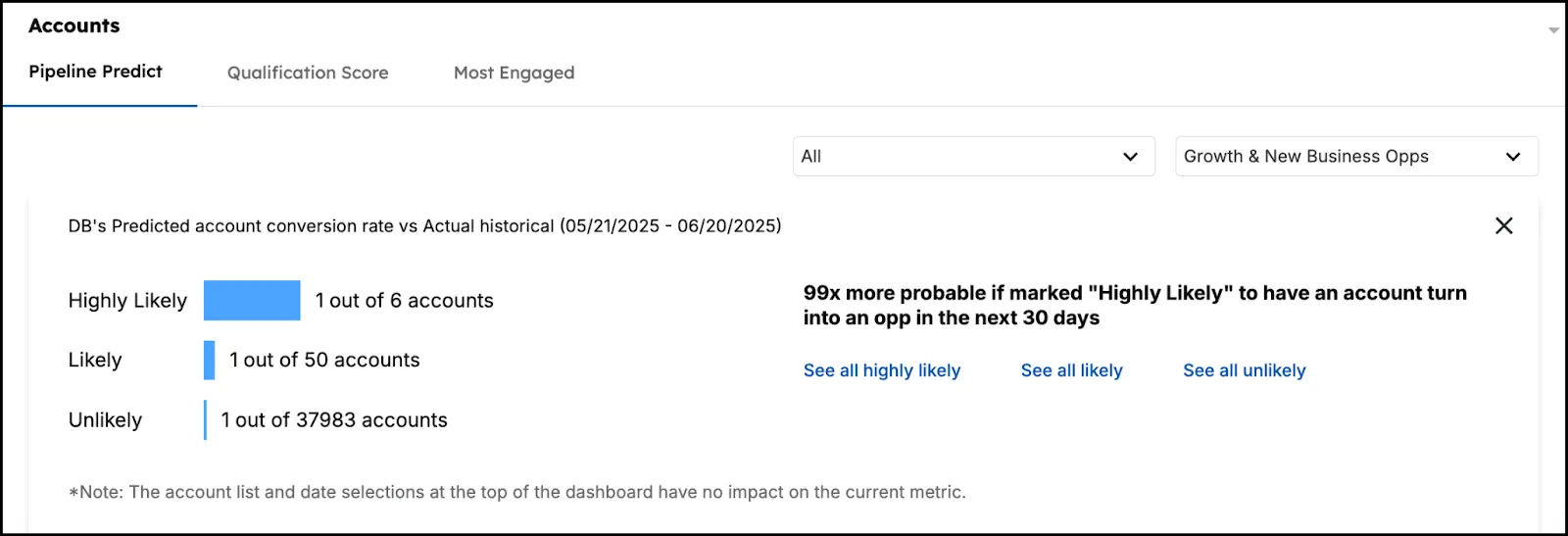
And with your marketing and sales operating from the same buying signals, and account activity, everything syncs from first engagement to closed-won.
Ready to move beyond ABM?


We have updated our Privacy Notice. Please click here for details.