

Real-time buying signals: 20+ examples & how to use them

What are real-time buying signals?
Real-time buying signals are digital or behavioral indicators that reveal when a potential customer or account is actively showing interest, intent, or readiness to purchase a product or solution.
These signals are captured across multiple touchpoints (such as website visits, content engagement, product research, ad interactions, or social media activity) and they happen as buyers are making decisions.
It’s essentially online body language that exposes interest in real time.
How it works
Real-time buying signals are generated when buyer behaviors are tracked, aggregated, and interpreted through intent data platforms.
The process typically unfolds in three steps:
- Data capture: Every digital action a buyer takes — e.g., visiting a product page, downloading a whitepaper, clicking an ad, or searching for industry topics — creates a data point. Demandbase and similar platforms use tracking scripts, cookies, and integrated APIs to collect these activities in real time.
- Signal interpretation: Algorithms and AI models analyze these actions to identify patterns that historically indicate buying behavior. For example, visiting a pricing page or comparing competitors’ products signals far stronger intent than a casual blog visit.
- Signal activation: Once the system detects a strong buying signal, it immediately notifies GTM teams. This can happen either by updating account scores in the CRM, triggering an alert to sales reps, or adjusting ad targeting in real time. This ensures teams engage at the right time with the right message.
Practical example of real-time buying signals
Let’s say your ICP includes enterprise SaaS companies with over 500 employees.
One of those companies, “Company X Analytics,” has recently shown a spike in searches around “marketing attribution software” across multiple third-party sites.
At the same time, three of its employees have visited your website’s pricing page and attended a webinar.
Individually, these actions might not stand out. But together, in real-time, they form a clear buying signal: Company X is actively researching, evaluating vendors, and likely preparing to make a purchase decision.
A platform like Demandbase would immediately surface this account to your sales team, notifying them to prioritize Company X and personalize outreach based on the topics driving their research. Also, because timing and context align, the outreach feels relevant to the prospect’s problem.
Why are buying signals important for B2B marketing & sales?
They strengthen marketing and sales alignment
Buying signals act as a ‘bridge’ between marketing and sales, transforming both teams from operating in silos to working from a shared understanding of buyer intent.
Marketing can pass leads to sales based on data-backed behavioral insights. At the same time, sales can provide feedback on which signals correlate most strongly with actual conversions, refining the lead qualification process even further.
This closed-loop alignment ensures that marketing is generating value. The sales team, in turn, gains confidence in the quality of leads they receive, knowing these accounts are truly interested and ready for engagement.
Over time, this synergy fosters a unified go-to-market motion; where marketing focuses on nurturing interest while sales executes personalized, high-impact outreach.
They shorten the sales cycle
Traditional B2B sales processes rely heavily on discovery calls and manual qualification to determine if a prospect is in-market. This is a long and unproductive process that’s mainly driven by ‘arbitrary’ lead scoring systems.
Buying signals fixes this by revealing which accounts are moving fastest towards a purchasing decision—and why. When sales teams know which accounts are most engaged or showing intent, they can prioritize outreach, align messaging with known interests, and focus resources where they’ll have the greatest impact.
For example, instead of cold calling a list of 500 companies, sales reps can focus on the 50 accounts that recently downloaded whitepapers, visited pricing pages, or engaged in comparison research.
These micro-signals indicate urgency, allowing reps to initiate conversations that are timely, and relevant, helping them close deals faster.
They power predictive insights and revenue forecasting
When tracked over time, patterns in buyer behavior help identify what actions most reliably precede a deal.
Marketers can use this intelligence to forecast pipeline health, estimate deal velocity, and predict when specific accounts are likely to buy. This enables more accurate budget planning and resource allocation.
For example, if analytics reveal that accounts viewing a particular product page three times in one week have a 60% higher likelihood of converting within 30 days, marketing teams can build automation workflows that flag such activity and alert sales in real time.
Businesses can also use its predictive capability to support their demand generation efforts, allowing them to replicate success patterns across similar accounts.
They enable precision targeting
Another advantage of buying signals is, it extends beyond identifying ‘who’ the target buyer is. By analyzing firmographic, behavioral, and intent-based data, marketers can also gain insight into ‘what’ these buyers care about.
This makes it possible to segment audiences dynamically and tailor messaging that speaks directly to their stage in the buying journey.
A quick example is if a company in the financial services industry suddenly increases its visits to cybersecurity-related pages. The marketing team can trigger personalized outreach focused on data protection, compliance, and trust.
This level of contextual relevance elevates the buyer experience, makes campaigns more effective, and drives engagement metrics like click-through rates and lead-to-opportunity conversions.
They help identify active, in-market buyers in real time
Taking on from the earlier definition, timing is a critical aspect of buying signals. Being able to detect when a potential customer is actively researching, comparing solutions, or showing intent to purchase switches up things for marketers and sales alike.
We can see this when a prospect begins consuming multiple pieces of content around a specific product line, requests pricing information, or attends a webinar. Those digital footprints reveal they are moving closer to a buying decision.
This data-driven visibility helps sales and marketing teams avoid the costly inefficiency of chasing cold leads. With this, they can concentrate on the 15-20% of accounts that are “in-market”.
Main types of buying signals
You can categorize buying signals in many different ways. And the reason for this is because different frameworks serve different purposes.
For marketing and sales teams, the most effective way to think about buying signals is by grouping them into three core categories: fit, opportunity, and intent.
These three pillars tell you who to target, why it might be the right time, and what they are interested in.
Fit data
Fit data forms the foundation of every buying signal framework. It establishes that baseline by evaluating how well a company aligns with your ideal customer profile (ICP) — based on firmographic, technographic, and demographic attributes.
This helps teams avoid wasting resources on accounts that are unlikely to convert or derive long-term value.
How fit data works:
Fit data is built by collecting and analyzing static and semi-static information about an organization (in the case of account-based marketing) or an individual buyer (in contact-level targeting).
This involves examining multiple data points such as:
- Firmographics: These are the company-level identifiers such as industry, company size, revenue, location, and growth rate.
- For example, a SaaS company offering enterprise data security tools might prioritize organizations with over 500 employees in regulated industries like finance or healthcare.
- Technographics: This refers to the technology stack a company uses —e.g., CRMs, cloud providers, marketing automation tools, or cybersecurity platforms.
- Let’s assume your product integrates with Salesforce, accounts already using Salesforce represent a strong fit.
- Demographics: At the contact level, demographics cover job titles, seniority, department, and functional role. Knowing whether you’re reaching a decision-maker (like a VP of IT) or an influencer (like a systems analyst) helps shape your outreach and messaging strategy.
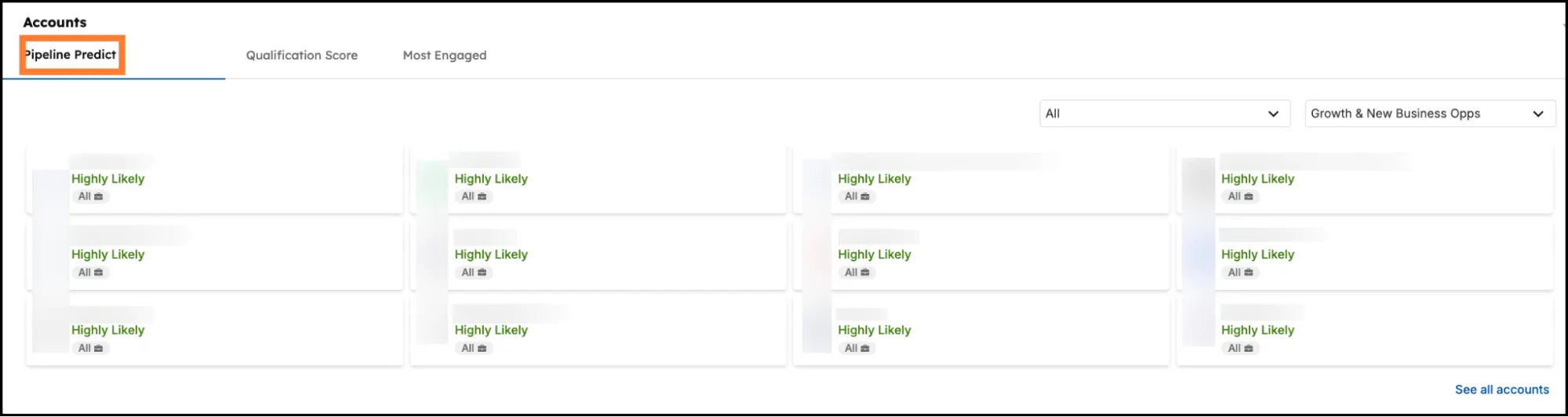
When you aggregate these attributes, you get a “fit score” or “match score” that reflects how closely an account or contact aligns with your ICP.
Opportunity data
This captures the timing and context that determine whether an account is in a position to buy right now or in the near future.
It signals when certain business conditions, external events, or internal shifts make a company more likely to purchase. This gives marketers and sales teams an early opportunity to position themselves ahead of time.
How opportunity data works
Opportunity data is derived from both external and internal sources that capture organizational changes, market movements, or trigger events that can influence purchase readiness.
These signals often fall into categories such as:
- Hiring and job changes: Rapid hiring (especially for roles related to your product, like “data engineers” or “IT security specialists”) often indicates budget expansion or digital transformation initiatives. Similarly, a new executive appointment (such as a CMO or CIO) frequently leads to new technology evaluations or vendor switches.
- Financial events: Companies receiving new rounds of funding or reporting revenue growth are more likely to invest in tools that support scale, automation, or operational efficiency.
- Technology changes: Data showing when a company adopts, upgrades, or phases out technology can reveal a potential window for engagement. For example, if a firm is replacing its legacy CRM, that’s a prime opportunity for sales teams to offer modern alternatives.
- Strategic initiatives: Press releases about mergers, product launches, or expansions often signal increased demand for adjacent tools or services.
- For example, an organization expanding into new markets may soon require localization, or workforce tools.
- Regulatory or industry shifts: Policy changes, new compliance requirements, or market disruptions can create immediate needs.
- For example, new data privacy laws may trigger investment in security and governance platforms.
All of these data points are collected and processed to highlight “buying windows” —i.e., periods when a company is open to exploring new markets or solutions.
Intent data
Intent data captures and interprets the digital behaviors that indicate genuine interest in a specific product, topic, or solution.
Behaviors such as searching for keywords, reading comparison guides, downloading whitepapers, attending webinars, or visiting certain webpages — collectively paint a picture of buyer interest intensity.
It’s the most dynamic layer of all three signal types because it reflects real-time behavior, helping you understand which accounts are in-market, what stage of the buying journey they’re in, and what topics are top of mind.
How intent data works
Intent data is derived from tracking and aggregating online behaviors across multiple channels. These behaviors can occur both within your owned properties (first-party data) and across the broader web (third-party data).
- First-party intent data: This comes directly from your owned platforms: your website, emails, chatbots, webinars, and product demos.
- For example, when a visitor repeatedly views pricing pages, product documentation, or customer case studies, those are strong buying signals captured through your analytics tools or CRM.
- Third-party intent data: This is behavioral data gathered from external sources, such as publisher networks, B2B research websites, review platforms, or data co-ops. They monitor content consumption patterns, search activity, and engagement across thousands of B2B media sites.
- An example is when multiple users from the same company consistently research a topic, e.g., “data loss prevention software”, the platform flags that organization as “surging” in intent for that category.
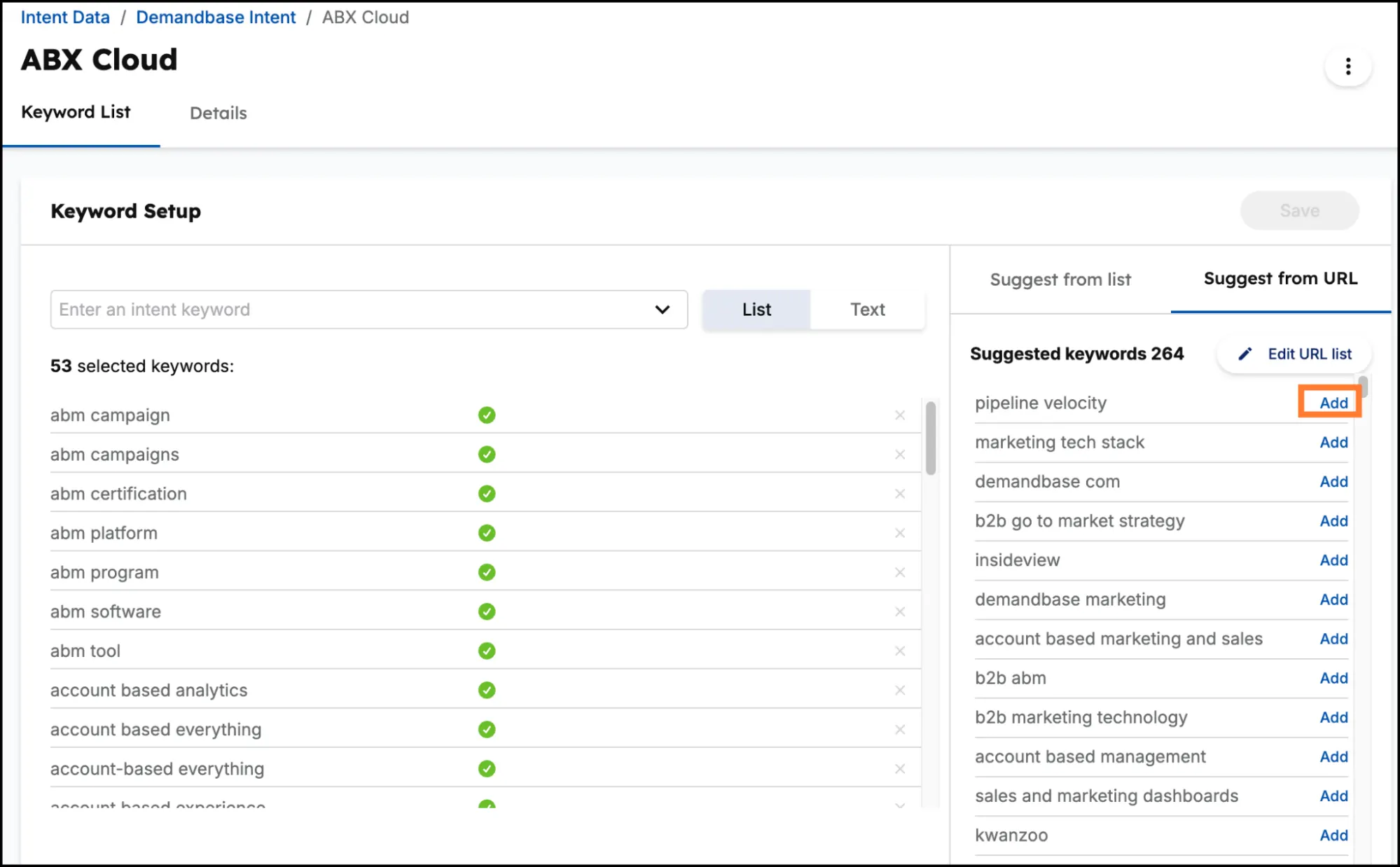
- Fit data establishes who is worth targeting based on profile alignment.
- Opportunity data identifies when conditions are right for outreach based on business changes or timing triggers.
- Intent data uncovers what the buyer is researching and how urgently they’re looking.
Together, these layers give marketing and sales teams a holistic, data-driven view of the buyer journey.
20+ Examples of buying signals you should monitor
- Requesting a demo or free trial
- Contacting sales or requesting a quote
- Searching for “your brand + competitor” (e.g., “Demandbase vs. 6Sense”)
- Starting but not completing a trial or demo form
- Asking a substantive question via chatbot or webinar Q&A
- Downloading late-stage assets
- Replying to outbound sales emails with commercial questions
- Researching your brand on third-party sites
- Attending live or on-demand webinars
- Visiting high-value website pages
- Engaging colleagues or forwarding materials internally
- Disclosing pain points or goals in a form fill
- Subscribing to your blog or newsletter
- Mentioning relevant challenges on public forums
- Downloading top-of-funnel content
- Engaging with social media posts
- Company announcing new funding or leadership changes
- Expansion into new markets
- Reading general blog posts or educational content
- Visiting your homepage
- Opening marketing emails without clicking through
High-intent signals (ready for a sales conversation)
These are direct, high-value actions that strongly indicate the buyer has moved into the decision or purchase phase. They signal readiness for personal sales engagement, pricing discussions, or hands-on evaluation.
1. Requesting a demo or free trial
This is arguably the strongest buying signal. A demo request means the prospect wants to see how your product works for their specific use case. It’s similar to someone into a store and asking for a test drive.
A demo request often comes after multiple research interactions: reading case studies, visiting pricing pages, or comparing vendors. This means the buyer is past the educational phase and in the evaluation stage of their journey.
How to use it: Trigger immediate sales routing and follow-up, ideally within 24 hours.
Your salespeople should also should tailor their outreach based on what pages or content the user engaged with before requesting the demo (e.g., if they read your “Enterprise Security” case study, start with that context).
2. Contacting sales or requesting a quote
When a prospect requests a quote or asks for pricing, the intent is direct. They’re assessing budget alignment and procurement readiness.
This signal indicates that internal discussions about investment have already started, often with executive oversight.
How to use it: Treat this as a late-stage opportunity. Rather than leading with general product overviews, focus your next conversation on ROI, implementation timelines, and value comparison.
This is also a perfect point to bring in customer case studies and testimonials to reinforce trust.
3. Searching for “your brand + competitor” (e.g., “Demandbase vs. 6Sense”)
This tells you two things:
- (1) they know you by name, and
- (2) they’re actively comparing you with alternatives. This is the “consideration moment” in the buying journey.
How to use it: Immediately surface competitive positioning content to that account such as comparison pages, customer wins, and migration stories.
Your SDRs should reach out with messaging that highlights why customers switch to you and offer to walk them through differences in a no-pressure conversation.
Recommended → Is 6Sense Worth It? An Honest Review (Based on 100+ Users)
4. Starting but not completing a trial or demo form
A partial form fill is also a strong high-intent cue. It suggests serious interest interrupted by friction (e.g., too many fields, unclear next steps, or timing).
These prospects are curious enough to convert but they hit a barrier.
How to use it: Implement automated recovery workflows (such as a triggered email saying “We noticed you started a trial, here’s a faster way to get started”).
Also, have your sales team follow up manually, using a helpful, non-pushy tone: “Saw you were exploring a demo. Can I answer any questions before you jump in?”
5. Asking a substantive question via chatbot or webinar Q&A
Questions like “Does this integrate with Salesforce?” or “How long is implementation?” show an evaluation mindset. The buyer is narrowing options and testing fit and functionality for their existing stack or workflows.
6. Downloading late-stage assets
Late-stage resources attract prospects who are seeking proof of feasibility, and risk reduction.
When a lead downloads an RFP template, they’re preparing formal vendor evaluation. Similarly, engaging with ROI tools shows they’re trying to calculate business impact before purchase approval.
7. Replying to outbound sales emails with commercial questions
When a prospect replies to an outbound sequence with inquiries about pricing, timelines, implementation, or technical fit, it’s the clearest form of verbal intent.
They’ve acknowledged the message, validated its relevance, and initiated a two-way dialogue.
How to use it: At this stage, the sales rep should focus on aligning the product’s benefits to the buyer’s unique operational context.
Replies like “Can you send pricing details?” or “What’s your onboarding process?” are often the last step before formal evaluation or demo scheduling.
Medium-intent (actively engaged and researching)
These signals indicate that prospects know the problem they’re trying to solve and are now exploring potential solutions. They’re not yet ready to buy, but they are ready to listen.
Unlike high-intent signals, which demand immediate sales outreach, medium-intent signals require strategic nurturing through thoughtful content, relevant touchpoints, and timing.
The goal here is to build credibility and trust long before a competitor even enters the conversation.
8. Researching your brand on third-party sites
When prospects compare your product on G2, Capterra, TrustRadius, or public forums, it’s a good sign of interest. They’re seeking social proof and validation from real customers and this is something that usually happens before they make a formal shortlist.
This kind of behavior is often invisible to your analytics stack, but intent data providers (like Demandbase’s intent network) can surface these interactions.
9. Attending live or on-demand webinars
Webinars are one of the best signals of buying intent because they demand time commitment and people don’t attend unless they care.
Attendees who engage with polls or Q&A often reveal active pain points (“We’re struggling to align marketing and sales data”).
How to use it: Score attendance and engagement levels:
- If they interacted with polls or questions, route them to SDRs for soft follow-up (“I saw you joined our GTM alignment session. Want to see how Demandbase automates that workflow?”).
- If they only viewed the recording, keep them in a nurture track and send related educational content.
10. Visiting high-value website pages
When prospects start exploring pricing, case studies, or integration pages, they’ve moved past general education.
Now, they’re trying to understand how your solution actually works and whether it fits their business context.
How to use it: Set up automated account alerts that notify sales when target accounts repeatedly visit critical pages.
Marketing should trigger retargeting campaigns focused on the same topic or use case, while SDRs personalize outreach referencing what content they engaged with (“I noticed your team was exploring our integrations with HubSpot, would you like to see how that works in your setup?”).
11. Engaging colleagues or forwarding materials internally
When someone forwards your webinar invite, email, eBook to teammates or invites colleagues to a demo, that means the buying committee is forming.
This shift from individual interest to collective engagement is the ‘bridge’ to high intent.
How to use it: When two or more stakeholders from the same company engage, notify the sales team immediately. Then use account-level engagement scoring to identify possible patterns
Also, your outreach should address multiple personas (marketing, sales, ops), tailoring messaging to each one’s priorities.
12. Disclosing specific pain points or goals
Whenever a lead shares a specific business challenge—whether via chatbots, discovery forms, or initial calls — they’re signaling that they recognize the problem and are exploring solutions.
For instance, a form entry stating “We’re struggling to consolidate customer data” tells you what matters most. This is your opportunity to tailor nurturing sequences or outbound follow-ups directly around the prospect needs.
How to use it: Have your SDRs reference the pain point directly in outreach (“You mentioned SDR visibility as a challenge in [X form filled]. Here’s how teams use Demandbase to fix that in real time”).
This approach redefines the follow-up as simply ‘generic’ and turns it into a personalized solution-based conversation.
13. Subscribing to your blog or newsletter
Subscribing shows sustained curiosity. The prospect values your thought leadership enough to invite your content into their inbox. This is a mid-funnel sign that they’re looking for consistent insights about the problem you’re solving.
While this doesn’t signal immediate purchase intent, it reflects growing trust and recognition of your expertise.
How to use it: Segment these subscribers by content type consumed (e.g., product trends, strategy tips) and tailor drip campaigns that gradually introduce solution-specific topics.
Over time, this nurtures familiarity and preference, making your brand top-of-mind when a buying cycle begins.
14. Mentioning relevant challenges on public forums
Public statements like “We’re struggling with data security during scaling” on Reddit, Quora, or Slack communities signal an authentic expression of need.
Unlike gated signals, these are organic and unscripted, often preceding formal buying intent.
How to use it: Monitor the platforms (using social intent tools or keyword alerts) to understand early pain themes and tailor awareness content accordingly.
Also avoid cold outreach based on this signal alone as it can throw off the prospect —and come off as ‘pushy.’
However, you can use it to guide thoughtful engagement when combined with other signals (like site visits or webinar attendance).
Lower-intent signals (early-stage interest)
These signals indicate curiosity, or early-stage exploration, but not yet an active buying intent.
Prospects in this phase are educating themselves, defining their problem, and slowly building category understanding. They might not even recognize that your product exists, or that they need it yet.
15. Downloading top-of-funnel content
When a prospect downloads an industry report, general whitepaper, or educational eBook, they’re signaling awareness of a broad challenge or market trend.
These are exploratory learners, seeking to understand the problem they’re facing are not in the market for any specific tool.
How to use it: Use this opportunity to start nurturing. Segment these accounts into awareness campaigns featuring educational resources (e.g., “What is intent data?” or “The future of ABM”).
You should also track follow-up behavior such as multiple downloads or repeat visits to specific topics that suggest movement toward mid-intent.
Related → 7 Strategies to Become a Content Shark: Own the B2B Ocean
16. Engaging with social media posts
Likes, shares, or comments on your posts (while flattering) are lightweight indicators of intent. At most, they simply reflect brand awareness and recognition.
However, these micro-engagements still play a vital role in expanding reach and familiarity.
Social media actions keep your brand visible in a buyer’s digital environment, which primes future engagement. Repeated interactions from the same account may hint at deeper interest, especially if they engage with thought leadership or customer success content.
How to use it: Marketing can nurture these audiences with targeted remarketing ads or social nurture campaigns that invite them into gated content ecosystems.
Over time, consistent exposure can warm them up for higher-intent behaviors, such as attending webinars or visiting pricing pages.
17. Company announcing new funding or leadership changes
Events such as funding announcements, leadership hires, or mergers and acquisitions are contextual buying triggers. They create new needs such as scaling operations, adopting new tools, or modernizing infrastructure.
For example, a recently funded SaaS startup may not be researching CRMs yet, but new capital almost guarantees upcoming process investments.
Similarly, hiring a new CMO often signals marketing system overhauls or vendor evaluations.
How to use it: These signals should automatically feed into your account-based targeting system, enabling your marketing team to pre-position your brand before direct intent appears.
Sales can use these triggers for light, value-led outreach that acknowledges the event and subtly positions your solution as timely and relevant.
18. Expansion into new markets
When a company publicly announces expansion into new regions or launches a major product line, it signals potential future demand growth.
For example, a software firm entering the European market might soon require localization, compliance, or marketing infrastructure tools.
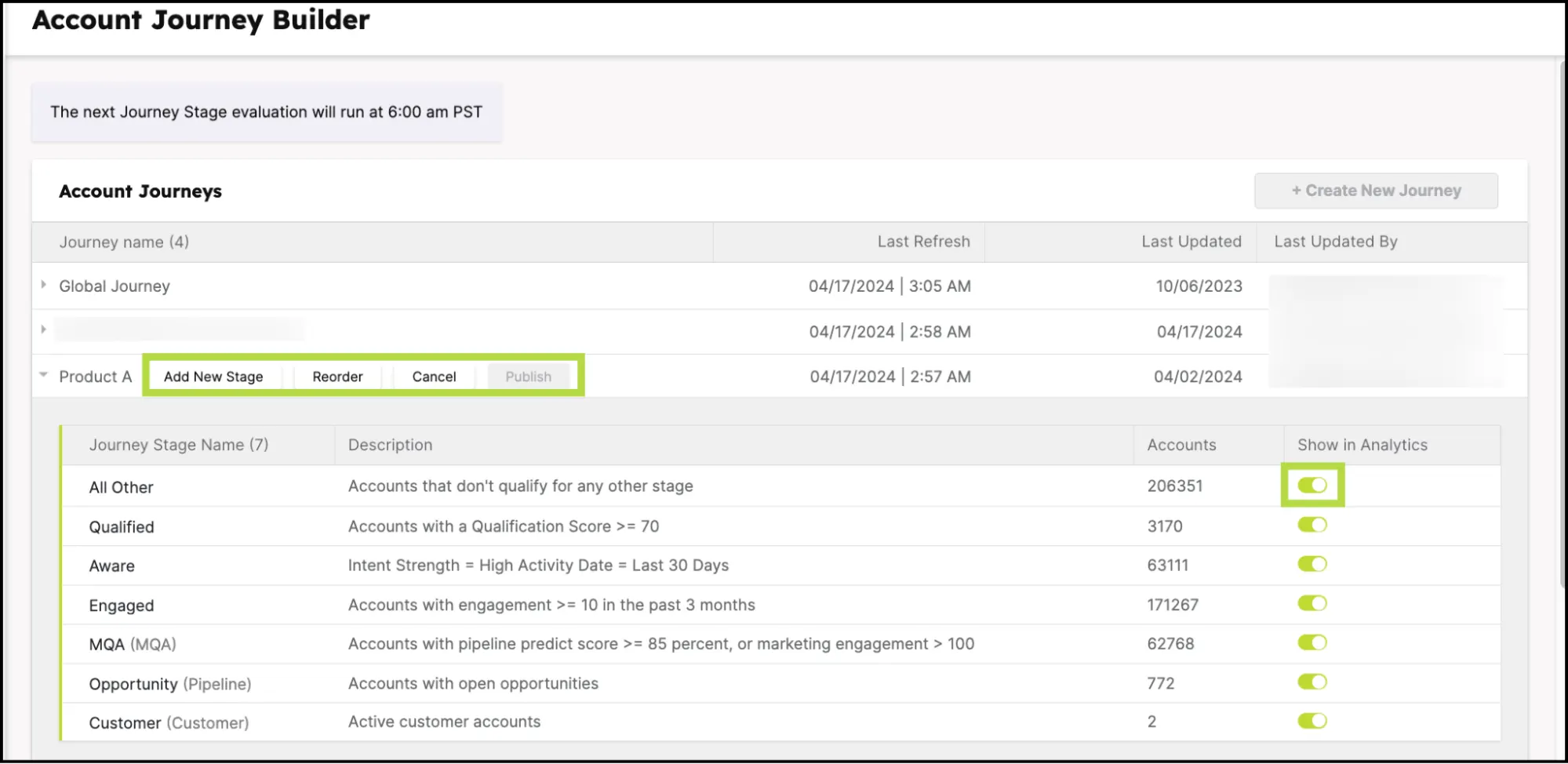
How to use it: Use predictive tools (like Demandbase’s Company Surge data via Bombora) to monitor if engagement or intent around relevant keywords begins to rise afterward.
Reach out later with contextual messaging (“I saw your expansion into APAC, here’s how companies in similar phases use our GTM platform to scale efficiently”).
19. Reading general blog posts or educational content
Prospects consuming thought leadership, trend analysis, or best-practice content are showing more of topic interest than product interest. They’re learning, and see your blog as the entry point.
The more they engage with your educational content, the more likely they start associating your brand with authority in that domain.
20. Visiting your homepage
First-time visitors who browse your homepage or “About” section are typically in the exploration or discovery phase. They may have seen your ad, heard your name, or encountered your brand through word of mouth.
How to use it: Marketing’s role here is to design a high-converting, educational homepage experience that answers foundational questions and gently guides the visitor toward deeper engagement.
This means having clear CTAs, accessible resources, and proof of credibility (e.g., customer logos, testimonials).
You can also add these visitors to retargeting audiences for brand reinforcement across social and display channels. This keeps you top-of-mind as they progress through research stages.
21. Opening marketing emails without clicking through
Email opens are one of the lowest-intent digital signals. While they indicate awareness, they have low engagement depth.
However, repeated opens (without unsubscribing) suggest ongoing brand recall and curiosity.
How to use it: These contacts can be nurtured through A/B-tested subject lines and progressively richer content to convert opens into clicks.
Use behavioral segmentation: for example, if a contact repeatedly opens emails about a specific topic (say “data privacy”), retarget them with related whitepapers or webinars.
Case study → Learn more about how Ingram Micro and CloudBlue increased pipeline velocity by 83%
How to spot and track buying signals
Spotting and tracking buying signals requires a mix of the right tools, behavioral analytics, and contextual intelligence.
No single source captures the full picture, it takes multiple technologies working together to decode what buyers are doing, thinking, and preparing to act on.
Sales intelligence tools
Sales intelligence platforms like UserGems, Clearbit, and ZoomInfo Copilot help revenue teams uncover, aggregate, and interpret intent-rich buyer data across thousands of touchpoints.
These platforms integrate with your CRM and marketing stack to create a 360-degree view of every prospect.
Here’s how they work:
They collect signals from email activity, job changes, website interactions, firmographic updates, and even hiring trends. Then, AI models analyze these signals to predict when a prospect or account is most likely to engage.
For example,
- UserGems alerts you when your past champions change jobs, signaling new opportunities in fresh accounts.
- Clearbit enriches lead data automatically, giving you complete company profiles (including headcount, industry, and tech stack) to qualify faster.
- ZoomInfo Copilot goes a step further by combining this with real-time intent data from content consumption patterns, surfacing which companies are researching topics relevant to your solution.
The power of these platforms lies in ‘signal stacking’—combining hundreds of micro-signals to determine which accounts are showing early or late-stage buying intent.
Digital analytics tools
Platforms like Google Analytics 4 (GA4), Heap and Mixpanel provide a direct window into how visitors engage with your owned digital assets. They reveal what users do, where they come from, and what holds their attention.
GA4, for example, uses event-based data models to capture micro-behaviors such as scroll depth, button clicks, video views, and form interactions.
For example:
- Visitors spending more than three minutes on product pages and returning multiple times within a week may indicate rising interest.
- A spike in engagement with pricing or comparison content signals readiness for sales involvement.
- Heatmaps or engagement flows can pinpoint friction points where prospects drop off.
Marketing teams can segment this data to score leads or retarget visitors with content aligned to their journey stage. Sales teams can also use analytics insights to time their outreach by focusing on accounts showing high engagement velocity (a mix of frequency, duration, and recency).
Case study → How Acela increased new target account visibility by 38%.
Social listening platforms
Social listening platforms are where modern B2B buyers share opinions, ask questions, and express their needs.
Tools like Sprout Social, Brandwatch, or Mention allow GTM teams to monitor these conversations for brand mentions, competitor comparisons, and sentiment changes
For example:
- A prospect commenting “Has anyone used [Your Product] vs [Competitor]?” on LinkedIn or X (Twitter) is a direct high-intent signal.
- But even subtler cues like frequent mentions of relevant pain points (“We’re struggling with CRM data accuracy”) reveal underlying market demand.
These platforms aggregate this data and apply sentiment analysis to detect tone and emotion. Some also use AI models to distinguish between curiosity, frustration, or advocacy, helping marketers craft appropriate responses and identify the best next step.
In addition, teams can also track industry keywords, hashtags, and brand conversations, to discover new in-market accounts that haven’t yet interacted directly with their brand.
Direct monitoring
Direct monitoring means actively engaging with potential buyers in the online spaces they are mostly present. This includes LinkedIn, Slack communities, Reddit forums, and even chat rooms.
The goal here is simply to build authentic human-driven relationships that are based on trust setting the foundation for future engagement.
Here’s how it works in practice:
- Engage directly with prospects who comment on your posts, share your content, or ask product-related questions.
- Track industry hashtags and keywords (e.g., #RevenueOps, #ABM, #MarTech) to identify ongoing conversations. When decision-makers discuss pain points aligned with your offering, it’s an opportunity to add value organically.
- Monitor community platforms like Slack channels, Reddit threads, or industry-specific forums. Buyers often discuss frustrations or tool recommendations, you can chip in on the conversation.
Data analysis
This is the process of interpreting behavioral, firmographic, and intent data collectively to find patterns that predict buying behavior.
Here’s how to make it work:
- Start by segmenting visitors into categories like new vs. returning users or anonymous vs. known accounts. Returning users, for example, often demonstrate stronger intent, especially when their browsing depth increases with each visit.
- Go further by applying behavioral weighting, giving more importance to meaningful actions like visiting pricing pages, watching demos, or downloading case studies. These metrics help you develop scoring models that reveal where an account sits in the buyer’s journey.
- You can also A/B test CTAs and page layouts to understand which elements generate stronger engagement. Maybe your “Request a Demo” button performs better when placed after a case study, signaling that users prefer social proof before committing to a trial.
Another tip is merging first-party data (form fills, session behavior, email engagement) with third-party intent data (aggregated industry activity, search surges, competitor interest) to give you a holistic understanding of each account’s buying journey.
For example, a company that recently consumed your content (first-party data) and shows surging intent for related topics on G2 or Bombora (third-party data) is statistically much closer to purchase.
Revenue orchestration platforms
This is where everything comes together. Platforms like Demandbase unify your first-party, third-party, and CRM data into one system, giving your GTM team a complete, real-time view of each account’s activity and intent.
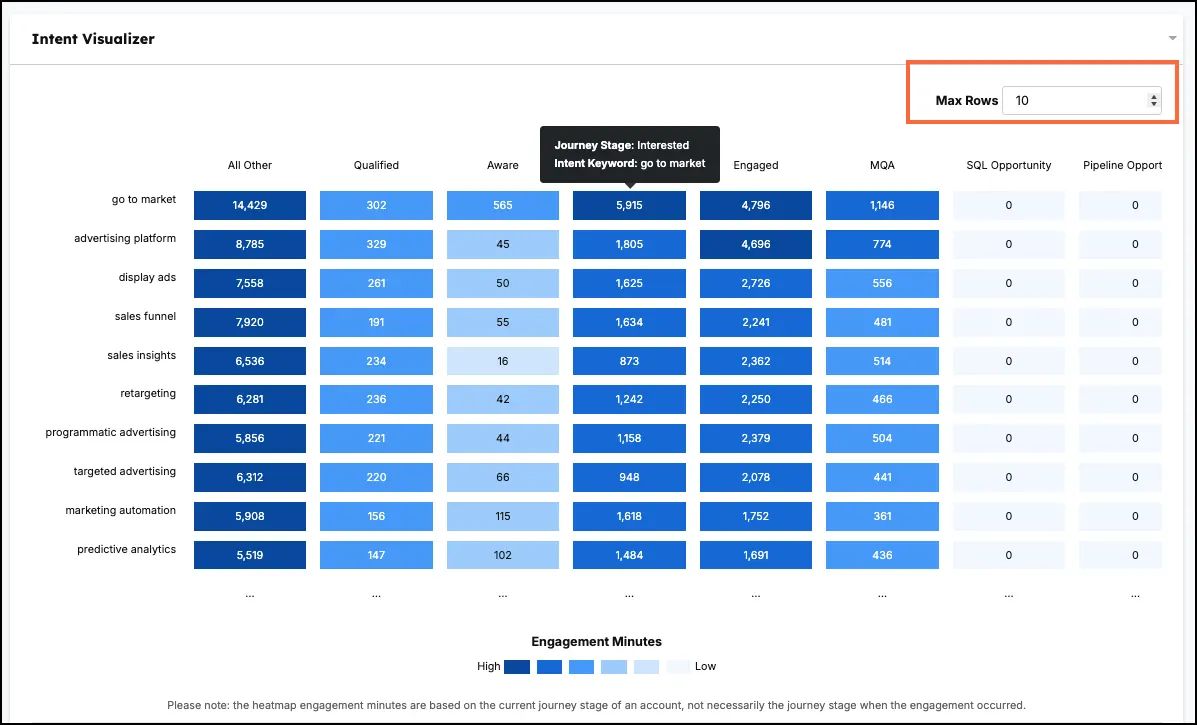
The platform automates the process of collecting, analyzing, and prioritizing signals. Its AI continuously learns from past outcomes to predict which accounts are most likely to convert.
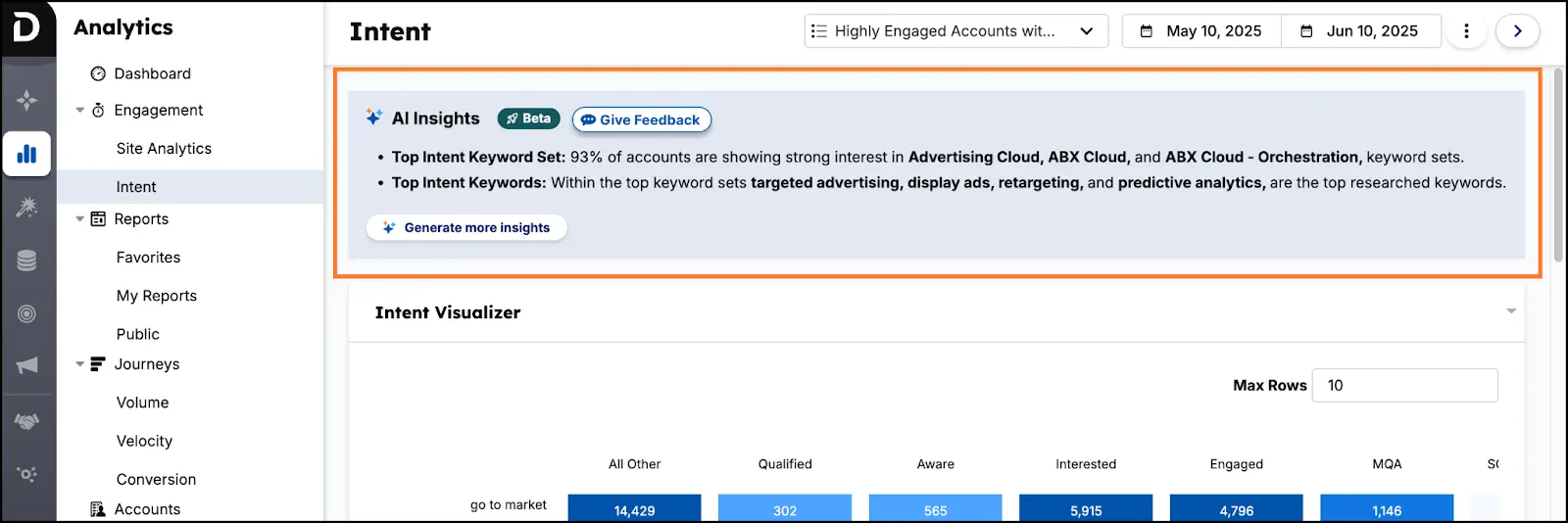
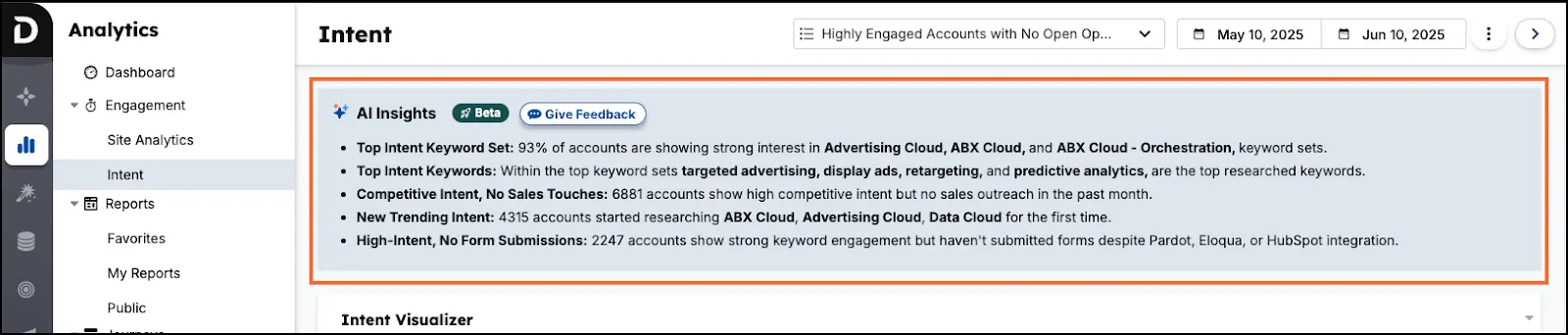
In addition, using AI insights on Demandbase, you can generate quick summaries about actively researched topics in your keyword set.
How to operationalize real-time buying signals in your GTM strategy
Establish clear signal taxonomies
Before you can act on buying signals, you need to define what counts as one for your business. A great way to do that is by creating a signal taxonomy, —i.e., a structured framework that categorizes signals based on:
- Signal type (fit, opportunity, or intent),
- Source (first-party, second-party, or third-party data),
- Level of intent (low, medium, high), and
- Action trigger (what happens when this signal is detected).
For example:
| Signal type | Example signal | Intent level | Action trigger |
|---|---|---|---|
| Fit | Company matches your ICP (200+ employees, SaaS, US-based) | Low | Add to awareness campaign |
| Opportunity | New funding round announced | Medium | Enroll in “growth-stage” nurture sequence |
| Intent | Multiple visits to pricing page + competitor keyword search | High | Send to sales for immediate outreach |
This taxonomy creates a shared meaning across teams. This way, when marketing sees a “Tier 1 Intent Surge,” they know sales should be notified within hours.
Also, as your GTM evolves, so should your taxonomy. A signal once considered “medium” (e.g., case study downloads) might become “high” once you have proof that 60% of those users convert within 30 days.
DB Nuggets: Assign confidence scores
Tag each signal with a confidence rating (high, moderate, exploratory). This allows sales teams to calibrate their response, treating a “high confidence intent surge” differently from an exploratory trigger.
Centralize all signal data into a single source of truth
Real-time orchestration depends on data connectivity. However, if your buying signals live in silos across multiple systems like CRM, website analytics, ABM platform, etc—it’ll be difficult to get the full picture of an account’s activity.
To operationalize this, you must centralize them into one integrated system.
This can be achieved through:
- A revenue orchestration platform like Demandbase, which automatically consolidates fit, intent, and engagement data at the account level.
- API integrations that connect your CRM (like Salesforce or HubSpot), your MAP (like Marketo or Pardot), and analytics tools (e.g., GA4) to feed continuous data into your GTM tech stack.
- A unified data warehouse (e.g., Snowflake or BigQuery) that synchronizes real-time data streams, ensuring accuracy and timeliness across departments.
Once connected, all behavioral data flows into one ecosystem.
- A page visit tracked in GA4,
- A content engagement logged in HubSpot, and
- A keyword surge detected by Bombora
can all be automatically associated with the same company account in your CRM.
Karen Salamone, Head of Marketing at MarketSource.
Define clear scoring and prioritization rules
Now that your data is centralized, the next step is to make it actionable through predictive scoring.
Since we’re dealing with real time signals, you need a signal scoring model that quantifies engagement strength based on behavior type, frequency, and recency.
Here’s how to do it:
- Categorize signals by strength:
- High intent (e.g., demo requests, pricing visits)
- Medium intent (e.g., multiple page views, webinar attendance)
- Low intent (e.g., newsletter sign-ups, blog views)
- Assign point values: Each action receives a score reflecting its conversion likelihood. For example, a demo request might be worth 50 points, while a blog view is worth 5.
- Implement decay logic: Create a model that makes old signals lose weight unless reactivated by new engagement.
- Set thresholds for activation: Define score tiers that trigger specific actions. For example, 80+ triggers a direct sales alert, 50-79 goes into a marketing nurture campaign, and below 50 remains in long-term tracking.
Key variables to consider:
- Recency: How recently did the activity occur? (Last 48 hours vs. 30 days ago)
- Frequency: How often is this behavior happening? (One-time visit vs. multiple interactions)
- Engagement type and depth: Did they read a blog post or multiple posts? Did they request a demo?
- Buyer role: Was it a CMO, SDR manager, or intern?
- Account fit: Does the company match your ICP?
For example:
If a mid-market SaaS company that fits your ICP visited your pricing page 3 times in a week and searched “Demandbase alternatives” on G2, that combination should immediately trigger a priority alert to sales.
DB Nuggets: Add persona multipliers
Assign higher weights for executive-level activity (+2x for C-suite, +1.5x for VPs). This optimizes your model, as it emphasizes influence and buying authority.
Align GTM teams around signal activation
You need clear playbooks that define who does what when a signal fires. Each department must understand how to interpret signals and what sequence of actions they’re responsible for.
Here’s a simple alignment structure:
- Marketing: Uses real-time signals to trigger personalized campaigns. For example, automatically retargeting accounts that recently viewed your comparison page with middle-funnel content.
- Sales: Receives live notifications when high-intent accounts cross engagement thresholds. Their outreach should reference the exact behavior (e.g., “I noticed your team explored our data governance use cases yesterday…”).
- Customer success: Monitors intent from existing customers for churn risk or expansion opportunities (e.g., increased searches on competitor platforms or product upgrades).
DB Nuggets: Hold bi-weekly signal reviews
Bring all teams together to discuss top active accounts, what triggered them, and what outcomes followed.
Automate engagement with AI and real-time workflows
Once alignment is in place, automation is the next layer of scale. Set up trigger-based workflows inside your CRM or marketing automation system that respond instantly to defined signals.
Here’s how:
- Use AI to detect patterns: Platforms like Demandbase AI analyze millions of data points to determine which signal combinations correlate most strongly with closed-won deals.
- Set trigger-based workflows: Example:
- “If an account’s intent score rises 25% week-over-week AND they visit the product tour page, notify sales via Slack.”
- “If an ICP account reads two comparison articles in 48 hours, add them to the ABM retargeting campaign.”
- Enable real-time routing: Integrate your CRM to automatically assign hot accounts to available reps with pre-built outreach templates referencing the detected behavior.
- Dynamic ad targeting: Use behavioral data to automatically personalize ad content and messaging for surging accounts.
When signals and automation intersect, your GTM motion becomes self-sustaining. It starts operating 24/7, capturing and converting prospect interest in real time without the manual back-and-forth.
DB Nuggets: Use AI next-best action recommendations
Deploy predictive systems that suggest next-best actions based on the highest historical success rate (e.g., “Send ROI case study” or “Invite to live demo”).
Measure impact and continuously refine your signal model
To stay accurate, establish a closed feedback loop between performance data and your signal models.
Track KPIs such as:
- Signal-to-opportunity conversion rate
- Average time from signal detection to deal creation
- Revenue influenced by signal-based campaigns
- Win rates for accounts flagged by predictive intent
Then, feed this back into your model. Adjust scoring weights based on level of interest, automate new workflows, and evolve trigger conditions based on what your data proves.
DB Nuggets: A/B test signal workflows
Experiment with timing, cadence, and message formats to find what combination of responses yields the highest engagement-to-opportunity conversion rate.
Your buyers already know what they want. Demandbase knows when.
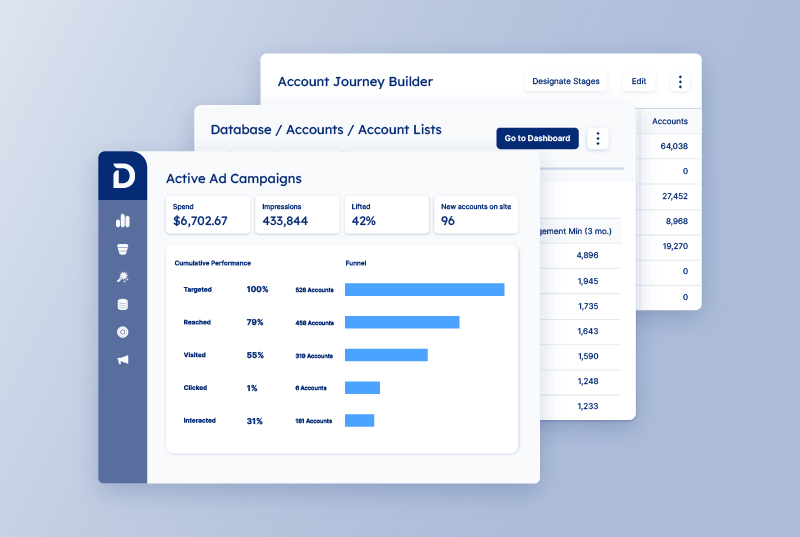
Demandbase is the B2B go-to-market platform that helps you see which accounts are actively in-market, what they care about, and when they’re most likely to buy.
It unifies data from your CRM, marketing automation, website activity, and third-party intent sources into a single system.
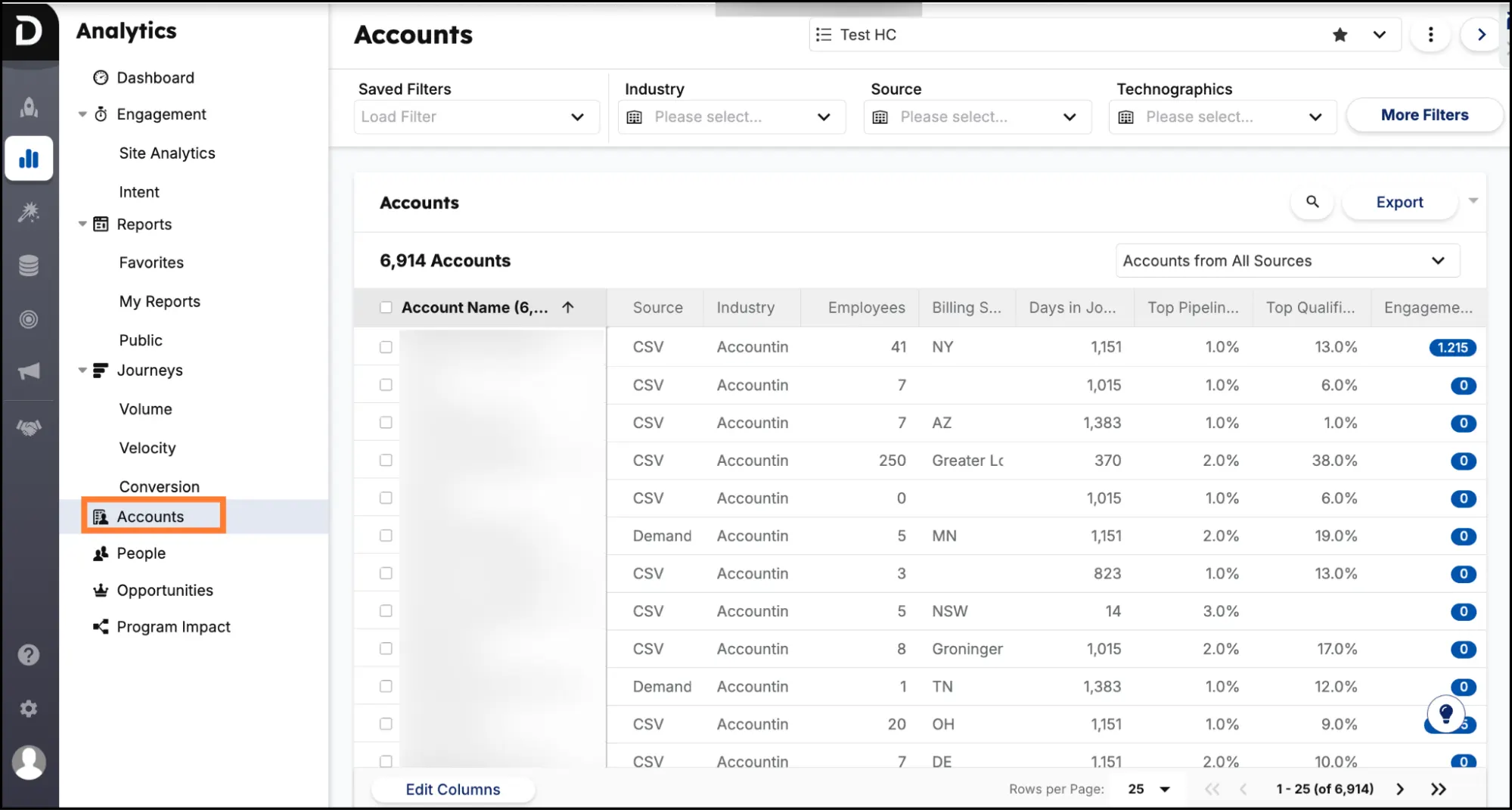
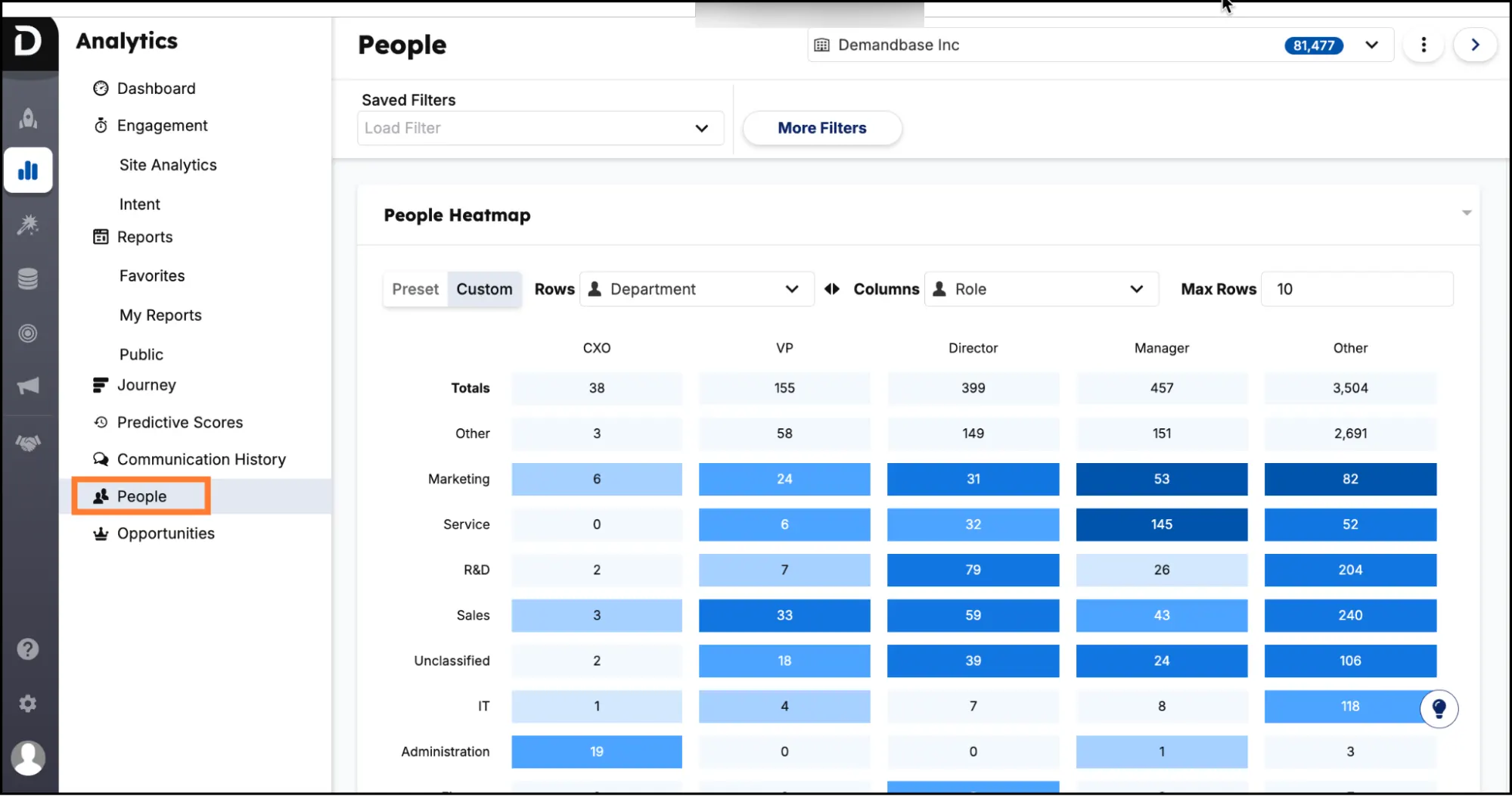
This insight empowers marketing teams to tailor campaigns around high-intent accounts and helps sales prioritize prospects that are most likely to convert.
When we talked to Linda Johnson, Global Director of Marketing Operations at Workforce, she described her experience using Demandbase like this:
“The Demandbase platform is the perfect ABX engine to help companies understand intent and not just spam potential customers with unwanted emails — to really help you focus and look at where your buyers are along the journey and to support their education.”
Why teams rely on Demandbase
- Real-time intent insights: Identify accounts showing active purchase intent based on thousands of behavioral and firmographic signals. You see which prospects are researching your solution right now, not weeks later.
- Connected data ecosystem: Integrate seamlessly with your CRM, MAP, and ad platforms to unify account activity across every channel.
- Dynamic audience segmentation: Target audiences that evolve in real time as buyer behavior changes. Demandbase’s AI updates segments instantly, ensuring campaigns stay relevant.
- Personalized account experiences: Deliver one-to-one engagement at scale—from ads to website experiences — all aligned to where each buyer is in their journey.
- Pipeline acceleration: Identify hidden opportunities within active accounts and push them closer to conversion with targeted messaging and predictive nurturing.
- Revenue intelligence: Get end-to-end view of your pipeline with insights into what’s driving revenue, what’s stalling deals, and what actions will move them forward.
- Cross-channel orchestration: Sync messaging across ads, email, web, and sales touchpoints so buyers experience a consistent, cohesive journey.
When you understand when a buyer is ready, every action you take becomes more precise, timely, and effective. That’s what Demandbase enables.


We have updated our Privacy Notice. Please click here for details.