
What is B2B market intelligence? The modern guide for GTM leaders
Answered on October 9, 2026
What is market intelligence in B2B?
B2B market intelligence is the continuous process of collecting, analyzing, and interpreting data about your target markets, customers, competitors, and broader industry trends to guide go-to-market decisions.
Unlike ‘traditional market research’, B2B market intelligence is dynamic and real-time. The focus is on capturing two types of market data:
- Structured data (like CRM, firmographics, and pipeline metrics) and
- Unstructured data (like online behavior, social media chatter, or industry news) to form a complete view of the market.
When done right, it tells you who to target, when, why, and how best to engage them.
For example, let’s say a cybersecurity company notices an increase in search activity from healthcare organizations around “HIPAA compliance automation.” On its own, that’s a data point.
However, through market intelligence, the company can map that surge to new government policies, analyze the competitive response, and identify which hospitals are actively budgeting.
With this knowledge, they can pivot their messaging, adjust pricing, and equip its sales team to reach those accounts.
The purpose and value of B2B market intelligence
In simpler terms, it gives GTM leaders a structured, data-backed way to navigate the uncertainty of the B2B buying journey. Without it, most decisions end up relying on intuition or outdated information.
This intelligence becomes what connects the strategy and execution part of the plan. It helps teams interpret what’s happening in their market (e.g., customer behavior, competitor activity) and translate those valuable insights into concrete actions.
Whether it’s refining ICPs, adjusting positioning, or spotting early signs of demand shifts, it ensures every decision is rooted in evidence.
The value shows up in measurable ways:
- It enables data-driven decisions: Replacing guesswork with verified insights leads to better targeting, stronger positioning, and a higher ROI on go-to-market efforts.
- It uncovers new opportunities: Identifying gaps in the market or shifts in demand gives businesses the foresight to adapt their products, messaging, and expansion plans.
- It sharpens competitive strategy: Understanding how the market is moving allows leaders to anticipate change instead of reacting to it.
With everyone operating from the same version of truth, teams can spot changes faster, respond with confidence, and align their moves toward the same growth priorities.
How B2B market intelligence differs from market intelligence and market research
- Market research is typically ‘project-based’ and focused on answering specific questions.
For example, “How do IT decision-makers perceive our brand?” or “What features would potential customers pay more for?” It’s often short-term and survey-driven, using interviews, focus groups, or data sampling to test assumptions.
- Market intelligence, on the other hand, operates at a broader level. It continuously gathers and analyzes information about competitors, customers, industries, and trends to support general business decisions.
It’s not limited to a single project, but rather, an ongoing system that gives leaders situational awareness.
- Now, B2B market intelligence takes this even further. It’s the application of market intelligence within the B2B context—where buying cycles are longer, and decision-making is distributed across multiple stakeholders.
Instead of focusing on individual consumers, it focuses on accounts, industries, and organizational behavior.
It also connects market insights across multiple layers (intent data, firmographics, technographics, and deal activity) to help GTM teams understand which accounts are ready to buy, why they’re buying, and what influences their decision-making.
For example, while market research might reveal that “finance teams are prioritizing automation tools,” B2B market intelligence would go further, identifying which companies are actively evaluating those tools, what technologies they already use, and how close they are to making a purchase.
The core pillars of B2B market intelligence
While B2B market intelligence covers a wide scope of activities, its foundation rests on three critical pillars. You have the competitor intelligence, market trend analysis, and customer and audience understanding.
Together, these form a comprehensive framework that helps GTM leaders see where the market stands, and where it’s heading, allowing them to move in sync with it.
1. Competitor intelligence
Competitor intelligence involves collecting and analysing information about your competitors. This includes gathering data on their marketing strategies, new hires, pricing updates, and overall performance in the market—all in an effort to inform your own positioning and GTM plays.
For example, say a rival software provider starts hiring solution engineers focused on AI integrations. That’s a likely clue that they’re moving toward automation-driven offerings.
A proactive GTM team would pick up that signal early, refine their messaging around differentiation, and equip sales teams to address that evolving narrative head-on.
Related → Understanding AI Lead Scoring: Definition, Benefits, and How to Get Started
2. Market trend analysis
Market trend analysis involves identifying, monitoring, and interpreting shifts within your industry or target markets that could influence demand or shape customer needs.
The goal here is to stay current, anticipate what’s coming next and align your go-to-market strategy accordingly.
One of the most effective ways to structure this analysis is through the PESTLE framework. It examines six macro-environmental dimensions: Political, Economic, Social, Technological, Legal, and Environmental factors—that collectively shape market behavior.
- Political: Changes in government policies, trade regulations, or geopolitical tensions can create ripple effects across industries.
- Economic: Factors like inflation, interest rates, consumer spending, and market confidence help you gauge overall economic health.
- Social: Social dynamics such as changing workforce values, generational expectations, and cultural attitudes inform how businesses communicate value and engage with customers.
- Technological: Emerging technologies, e.g., AI, automation, IoT, and data analytics—can redefine entire industries overnight.
- Legal: Regulations around data protection, cybersecurity, intellectual property, and ESG compliance increasingly dictate how organizations operate.
- Environmental: Sustainability is now a key market driver. Climate policies, carbon-neutral initiatives, and eco-conscious consumer expectations.
In practice, this pillar gives GTM leaders a strategic way of staying ahead of key conversations before it ‘hits’ the market.
A common example we can relate to is how the rise of remote work redefined priorities for software vendors. Companies that spotted the trend early adjusted their messaging to focus on security, collaboration, and scalability. This was long before it became mainstream talking points.
However, the companies that didn’t catch on quickly were left reacting to a market that had already moved.
3. Customer and audience understanding
This is about uncovering the motivations, pain points, and decision-making dynamics of the accounts you’re targeting.
It combines firmographic data (industry, size, revenue) with behavioral and intent data (content engagement, keyword research, product interest) to give a comprehensive analysis of how real buyers think and act.
This is because in B2B, purchases are made by buying committees. This often includes finance, IT, operations, and leadership. Understanding how these groups interact, what each stakeholder values, and how they evaluate risk gives GTM teams the ability to speak with relevance.
For example, if data shows that operations leaders are increasingly driving software evaluations in your target accounts, your messaging should shift from technical capabilities to operational efficiency.
The better you understand those underlying drivers, the more effectively you can align messaging, prioritize accounts, and design campaigns that resonate on a personal and organizational level.
Related → The Most Powerful Account Identification in ABM? Demandbase Just Built It
5 Principles of effective B2B market intelligence
Now that we’ve covered the pillars, we need to look at the other part. And that’s developing a strategic ‘capability’ to inform every move across your go-to-market motion.
The following principles define how the information you’ve gathered should be managed, interpreted, and acted upon:
It must be actionable
‘Data’ itself has no value unless you act on it. That’s why the purpose of B2B market intelligence is simply to guide strategic decisions.
As such, every data point should connect to a specific outcome. Whether it’s identifying a new market segment, tailoring a marketing campaign, or enabling sales with competitive insights. This ensures insights directly influence revenue-driving activities.
It must be holistic
A narrow or one-dimensional view of the market can easily mislead teams. You need intelligence that integrates multiple data types (firmographics, technographics, intent signals, and competitive insights) to form a complete picture of your target accounts and overall market position.
This ‘holistic’ approach helps your team see the full context behind every opportunity or risk, ensuring that decisions aren’t based on isolated data but on a cohesive understanding of the account.
It must be timely and dynamic
In B2B, the ‘timing’ of your campaign, message, ads, etc., determines the impact it’ll have on the account. That’s why annual reports, or static analysis of accounts quickly lose relevance once the market changes.
As a counter, your intelligence ‘must’ be dynamic, continuously updated with real-time data to reflect shifting customer needs, competitor activity, and market conditions.
It must be centralized and accessible
A fundamental principle of effective intelligence is centralization. That means creating a single, accessible source of truth for all market and account data.
When marketing, sales, and leadership teams operate from the same intelligence framework, it eliminates confusion, and ensures that every team’s actions reinforce the same strategic goals.
It must be predictive
Your intelligence systems should be able to forecast what’s likely to happen next. This involves using AI, machine learning, and predictive modeling, to identify emerging trends, flag accounts that are likely to enter the market, and even detect early signs of customer churn.
This helps you anticipate market shifts before they become visible. For example, identifying which accounts are most likely to move in-market next quarter, or even detect early signals of customer churn.
Key data sources for B2B market intelligence
A comprehensive market intelligence strategy relies on a mix of data sources to build a complete and actionable picture of your market. These sources are typically categorized into primary, secondary, and competitor-specific data.
Primary data sources
These are direct, original inputs collected straight from your audience or market. They provide unfiltered, first-hand insight into customer experiences, motivations, and perceptions.
Here are the common methods used to gather primary intelligence:
- Surveys: These are structured questionnaires used to gather insights from customers or prospects at scale. They reveal how buyers think, their preferences, pain points, motivations, and the factors driving their purchasing decisions.
- Interviews: These are in-depth one-on-one or small-group conversations with customers, prospects, partners, or even former employees of competitors. For GTM leaders, they help uncover emotional drivers that help shape buying decisions.
- For example, a 30-minute discussion with a procurement manager might reveal pain points your sales team never documented, or reasons deals stall at the final stage.
- Feedback channels: These offer continuous, unsolicited insights into customer satisfaction, unmet needs, and opportunities for improvement.
Secondary data sources
These refer to information that has already been collected, analyzed, or published by external entities, such as research firms, industry analysts, media outlets, or data providers.
Unlike primary data, which comes directly from your audience, secondary data provides context. It helps you understand the ‘external’ forces shaping your market, your competitors, and your customers’ environments.
Common methods include:
- Industry reports: Reports from analyst firms, consulting companies, and market research organizations (like Gartner, Forrester, IDC, or McKinsey) offer macro-level intelligence. They’re essential for benchmarking your growth, understanding technology adoption curves, and identifying emerging segments that signal where the industry is moving.
- Public databases: Data from regulatory bodies, trade associations, or open government portals provides credible, structured insight into industry regulations.
- For example, energy or manufacturing firms might track environmental compliance data, while SaaS companies may analyze patent filings.
- Third-party intent data providers: Intent data platforms (like Bombora, G2, or TechTarget) supply behavioral and technology stack insights that reveal who’s in-market and what solutions they’re considering.
Related → Find the Right B2B Buyers with Accurate Intent Data
Competitor-related data sources
These data sources focus on tracking, analyzing, and interpreting information about your competitors. Monitoring these materials helps GTM teams understand where rivals are focusing resources, and how to position more effectively against them.
Common methods include:
- Competitor websites, press releases, and financial reports: These sources offer transparent clues about a competitor’s direction. E.g., new products, recent partnerships, pricing changes, customer case studies, quarterly earnings etc.
- Customer reviews and testimonials: Public feedback on platforms like G2, TrustRadius, or Capterra provides raw, unfiltered insight into how customers perceive your competitors.
- Social media or thought leadership activity: Leadership posts, event participation, and influencer collaborations can all expose areas of focus or new market positioning.
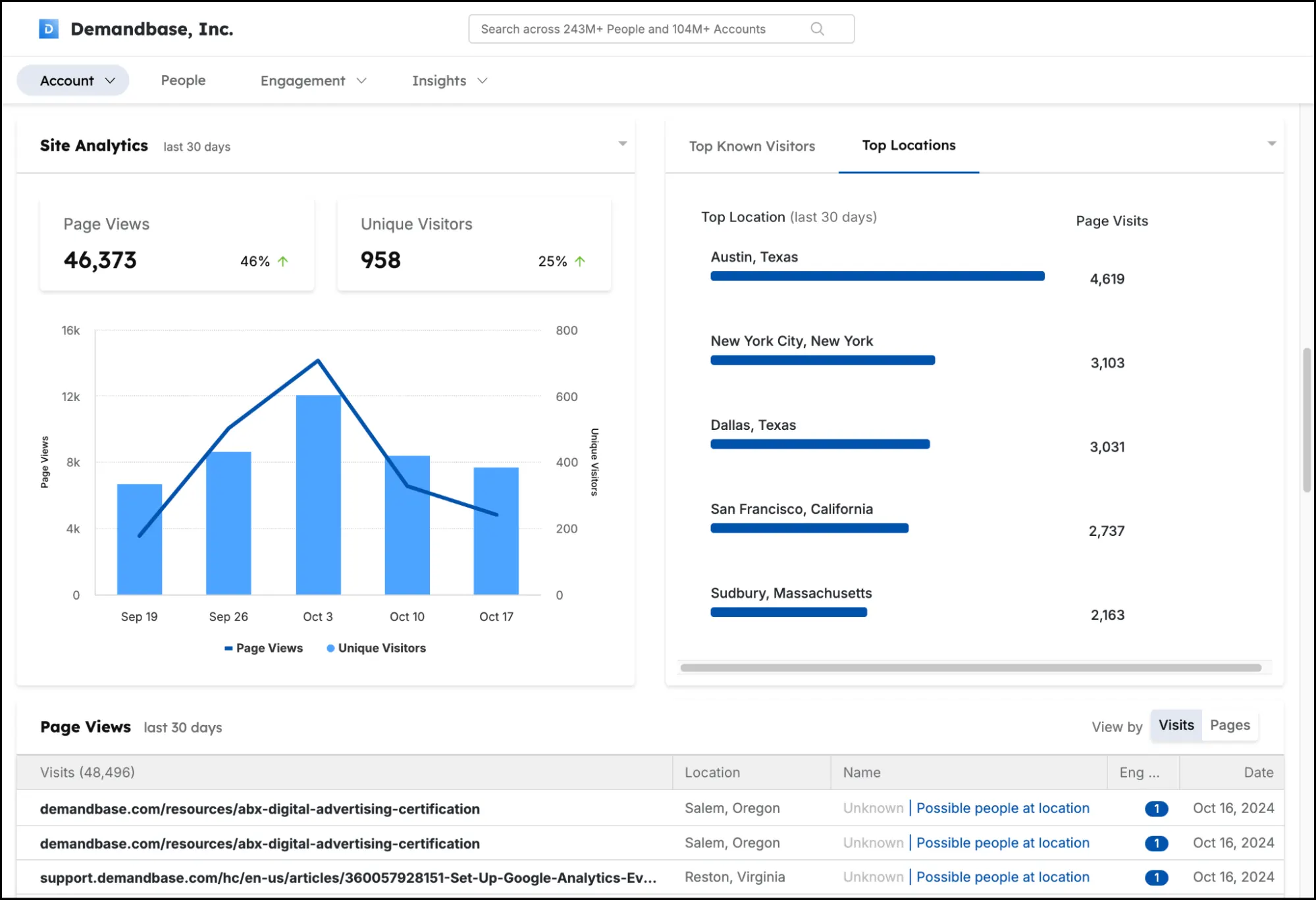 While these traditional sources are essential, a modern intelligence strategy adds a fourth, dynamic layer —and that’s real-time digital data. This includes the intent signals, technographic data, and online buying behaviors that reveal what your customers and competitors are doing right now.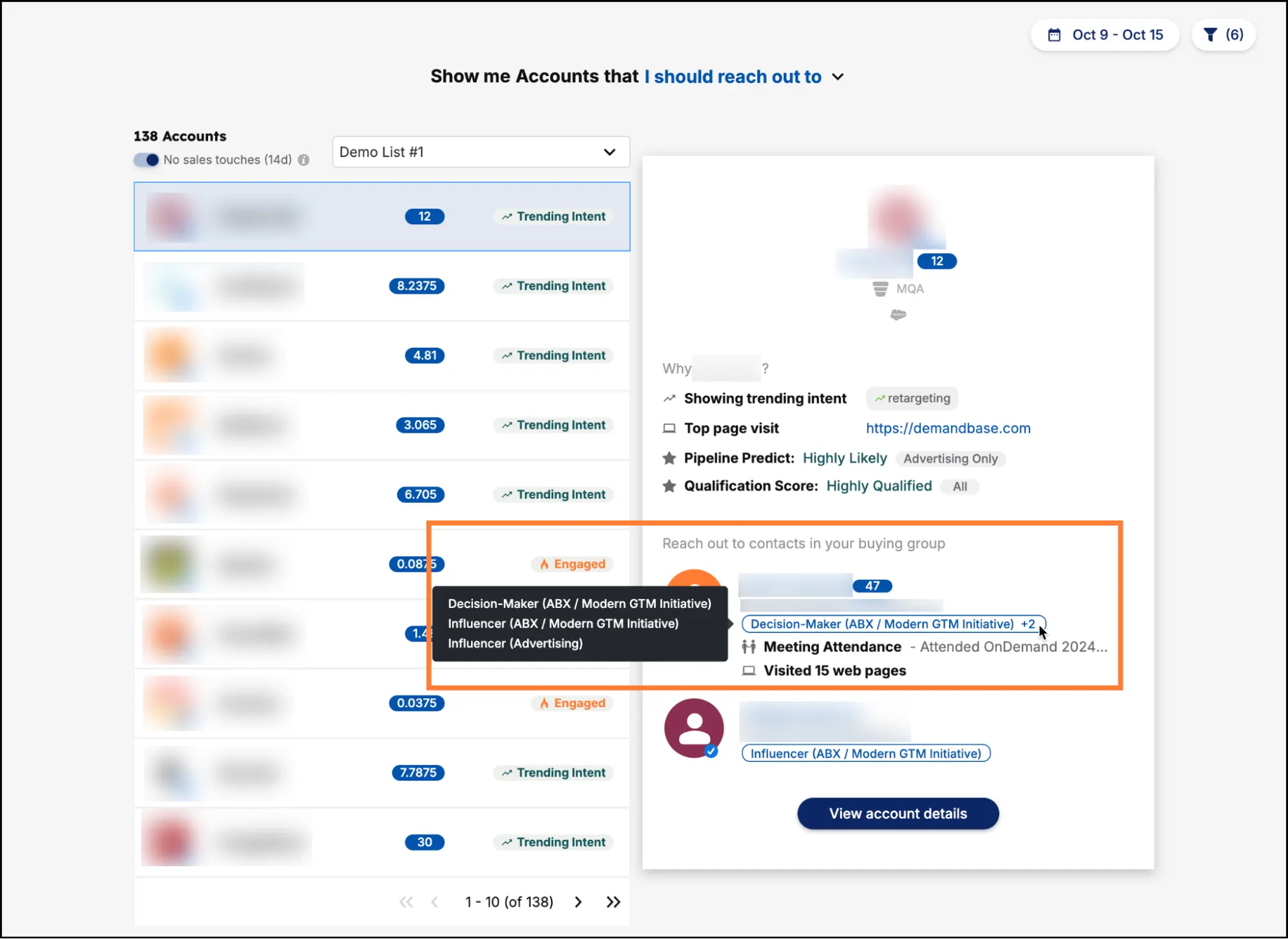
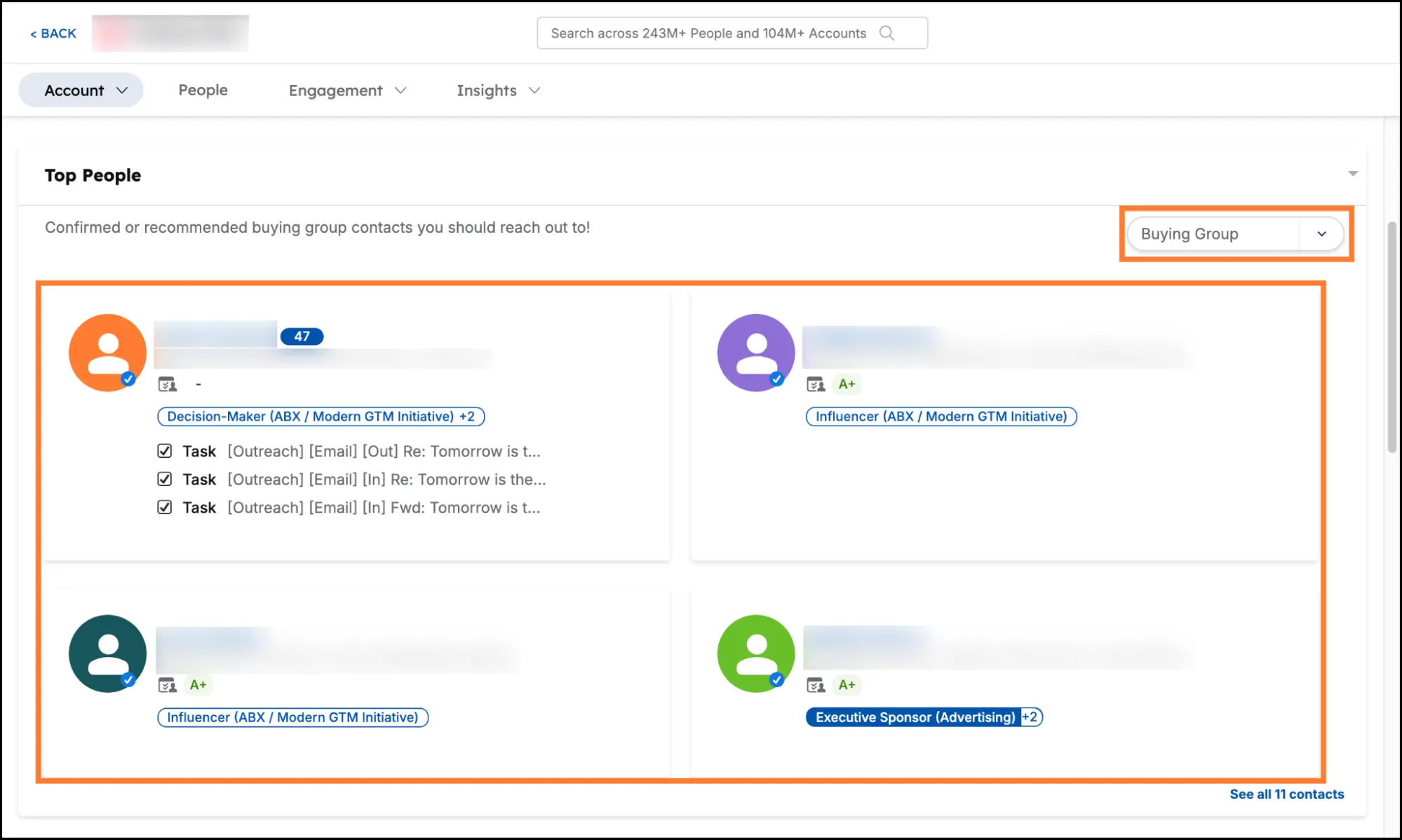
Demandbase, specializes in capturing and analyzing this live data stream, allowing you to see which accounts are researching your competitors today.
You get everything to turn real-time insights into immediate GTM action.
Setting the stage: What to consider before you start with B2B market intelligence
Understand your industry’s context and dynamics
Every market intelligence initiative starts with context. You need to see the ‘bigger’ picture before going into the details.
This means understanding the macro-level forces shaping your industry. from emerging technologies like AI and automation to evolving regulations and economic trends. This includes tracking emerging technologies like AI and automation to evolving regulations and economic trends.
Another important factor is recognizing the internal trajectory of your market—i.e., what’s driving growth, what’s slowing it down, and where the pressure points are.
For example, rising demand might create expansion opportunities, while high entry costs could limit competition.
Knowing whether your industry is in a growth, maturity, or decline phase will directly influence your strategic choices.
Know the nuances of buying behavior
The B2B buying behavior is quite different from the B2C. Here, the buyers are not ‘emotional’ or ‘impulsive.’ Rather, they’re deliberate, evidence-based, and purchase based on trust and long-term value.
Unsurprisingly, the process itself is complex, often involving multiple stakeholders, each with their own priorities and concerns.
Because of this, purchasing timelines stretch longer, and each interaction matters more.
To succeed, you must deeply understand what drives your customers’ decisions:
- Do they want to be more efficient? Save costs? Or reduce their risk?
When you grasp these motivations, it becomes easier to position your intelligence, messaging, and offers in a way that resonates with real business pain points.
Related → Buyer Intent Explained: B2B Sales Signals That Convert
Identify key-decision makers and influencers
Winning a deal in B2B comes down to targeting the right company, and reaching the right people in it.
Within every account, there’s a network of decision-makers, influencers, and gatekeepers who all play distinct roles in the buying process.
Ideally, decision-makers hold the final authority, but influencers often shape which vendors even make it to that stage. Ignoring them can mean missing the deal entirely.
That’s why a structured approach to stakeholder mapping is essential. You have to categorize individuals by their influence, authority, and level of engagement.
This clarity allows your sales and marketing teams to focus their efforts where they’ll have the greatest impact, building relationships that actually move opportunities forward.
Step-by-step process for conducting B2B market intelligence
Step 1: Clarify the purpose and expected outcomes
Every intelligence effort should start with ‘clarity’ of what you intend to achieve. Before you start collecting information, you need to define what success looks like.
- Do you want to identify new markets? Strengthen competitive positioning? Or optimize how sales targets high-intent accounts?
Your goals determine everything that follows —which data you’ll collect, which sources matter most, and which teams will use it.
For example, if your primary goal is to improve competitive positioning, your intelligence system should focus on tracking pricing shifts, customer sentiment, and competitor marketing narratives.
But if your goal is expansion into a new industry, then your focus should shift toward trend forecasting and industry-specific intent signals.
Step 2: Align stakeholders early
Market intelligence touches every part of a B2B organization—marketing, sales, product, RevOps, and even leadership.
For it to work, these teams need to align on both what data matters and how insights will be used. For example, agreeing on shared definitions like what counts as an “active buyer” or “qualified account”.
To avoid misalignment, establish shared ownership. Form a cross-functional intelligence group that defines priorities, sets KPIs, and determines how findings will flow into everyday decisions.
Step 3: Assess your data readiness
Before adding new data layers, evaluate the state of your existing information.
- Is your CRM accurate and integrated? Are customer records clean and updated? Is there a single source of truth connecting marketing and sales data?
If your internal data is poor, it’ll distort the insights being fed to your ‘intelligence’ system, leading to false conclusions.
Meanwhile, if you have a strong foundation that involves data governance, standardized definitions (for accounts, opportunities, etc.), and integration between systems, you’ll have a solid base to build on. This makes it easier to add new layers like intent or technographic signals, without overlap.
Step 4: Determine the right mix of sources
Different business goals require different intelligence sources. Primary data (surveys, interviews), secondary data (industry reports, analyst research), and digital intelligence (intent and technographic data) all serve unique purposes.
The right mix depends on where you are in your GTM maturity.
- Early-stage companies may rely heavily on qualitative inputs;
- While established enterprises might focus on intent signals and predictive analytics.
Knowing which combination fits your needs ensures your strategy is efficient and relevant from the start.
Step 5: Analyze and interpret the data
This is where the raw information you’ve gathered becomes actionable insight. For this, start by identifying patterns, correlations, and anomalies across your datasets.
For example:
- Are there common traits among high-value customers?
- Which competitors are increasing content or ad spend in certain verticals?
- What intent signals are showing a rise among mid-market accounts?
Combine descriptive analysis (what happened) with diagnostic analysis (why it happened). You can use frameworks like SWOT, Porter’s Five Forces, or segmentation models to generate meaning from the data you’ve gathered.
Visualization tools, dashboards, and AI-powered analytics can also help reveal hidden relationships and make trends easier to interpret across teams.
DB Library: Porter’s Five Forces
This is a framework for analyzing the competitive structure of an industry. It helps you understand where power lies, how profits are distributed, and what factors influence market attractiveness.
The five forces are:
- Competitive rivalry: Measures how intense competition is within your industry. High rivalry usually means you need strong differentiation or innovation to stand out.
- Threat of new entrants: Looks at how easy it is for new companies to enter your market.
- Bargaining power of buyers: Buyers have power when they can easily switch to competitors or drive down prices.
- Bargaining power of suppliers: If there are few suppliers or they provide unique components, they can influence your costs and supply chain stability.
- Threat of substitutes: This refers to products or services outside your direct market that satisfy the same customer need. The greater the availability and affordability of substitutes, the more you need to innovate or add value to retain customers.
Step 6: Activate the insights
This next step is simply turning what you’ve learned (above) into specific actions across marketing, sales, and product functions.
This could mean:
- For marketing: Adjusting campaign targeting based on account intent or industry trends.
- For sales: Refining account prioritization and outreach messaging based on competitive signals.
- For product development: Identifying emerging feature requests or technology gaps to guide roadmap decisions.
Step 7: Measure impact and continuously refine
B2B market intelligence is an ongoing cycle. After activation, you need to measure how insights are influencing business outcomes.
Track metrics like:
- Increase in qualified opportunities or pipeline velocity.
- Improved accuracy of ICP or persona targeting.
- Shifts in competitive win rates or market share.
- Efficiency gains in marketing and sales alignment.
These metrics help you understand what’s working and where your intelligence cycle needs tuning. Over time, you’ll learn which data sources deliver the most predictive power, and which insights resonate with internal teams.
Your B2B market intelligence readiness checklist
By now, you already know that building a strong market intelligence program goes beyond collecting data. More of it is about creating a consistent, repeatable system for discovering insights and applying them across the business.
Use this check list to ensure your strategy stays aligned with business outcomes:
- Start with strategy: Always tie intelligence goals directly to business outcomes.
- Blend perspectives: Use both qualitative insights and quantitative data for full context.
- Keep data clean and current: Build validation cycles to ensure accuracy and relevance.
- Centralize and share: Maintain a single source of truth accessible to all GTM teams.
- Prioritize actionability: Every insight should connect to a decision or next step.
- Automate smartly: Use platforms like Demandbase to track intent and competitor signals in real time.
- Review regularly: Revisit your intelligence strategy each quarter to stay aligned with market shifts.
Common use cases of B2B market intelligence
Identifying new market opportunities
One of the most powerful uses of B2B market intelligence is uncovering new opportunities for growth. By analyzing industry growth rates, regulatory changes, and shifting customer priorities, GTM leaders can spot where demand is rising before competitors do.
For example, a software provider might discover through market analysis that the healthcare sector is rapidly increasing its technology investment due to new compliance requirements. This allows them to position early-on before the market saturates.
Supporting market entry and expansion strategies
When entering a new geography or industry, B2B market intelligence de-risks the move. It informs you about local regulations, competitive density, pricing norms, and customer maturity levels.
With this knowledge, GTM teams can tailor their approach by adjusting go-to-market messaging, selecting the right distribution partners, and setting realistic market penetration goals.
Informing product development
Product teams rely on intelligence to ensure what they build aligns with real market demand. By analyzing competitor capabilities, customer feedback trends, and emerging technologies, they can prioritize features that deliver ROI.
For example, continuous monitoring of customer sentiment may reveal growing frustration with integration complexity. This can prompt a product roadmap adjustment toward simplified APIs or workflow automation.
Account prioritization and targeting
B2B market intelligence helps identify which accounts are most likely to convert by combining firmographic data (company size, industry), intent data (what topics they’re researching), and behavioral signals (website visits, content engagement).
With this visibility, GTM teams can prioritize high-quality accounts showing real buying intent and personalize outreach to match each account’s current stage of interest.
This reduces wasted marketing effort and shortens deal cycles by ensuring every touchpoint is timely and relevant.
Brand perception and health tracking
To stay ahead of reputational risks and measure brand strength, businesses use B2B market intelligence to continuously monitor customer perception.
For example, an enterprise software company might discover through sentiment analysis that while its platform offers advanced analytics capabilities, customers consistently mention onboarding complexity. That insight could inform both marketing messaging and product improvement efforts.
And some important metrics for tracking brand perception often include net promoter score (NPS), customer satisfaction score (CSAT), trust or reputation indices, brand recall awareness levels and share of voice.
Technology and tools for B2B market intelligence
To effectively manage the vast amount of data involved in market intelligence, businesses rely on specialized technology and tools.
- Data collection and aggregation platforms: They collect, unify, and normalize data from multiple sources, including CRM systems, marketing automation platforms, website analytics, social channels, and third-party databases.
- Examples: Zapier, Segment, Snowflake.
- Competitive intelligence tools: They help monitor competitor’s public activity such as product launches, content releases, pricing updates, hiring trends, and customer feedback.
- Examples: Crayon, Klue, Kompyte.
- Market research and analytics tools: They provide validated reports, forecasts, and industry benchmarks that help compare your internal data within broader market movements.
- Examples: Statista, Gartner Peer Insights, Forrester Research.
- Brand monitoring tools: They track online mentions, sentiment shifts, and trending topics across networks, giving you insight into how your brand and competitors are perceived in real time.
- Examples: Brandwatch, Meltwater, Sprout Social.
- Business intelligence platforms: They help transform raw intelligence into intuitive dashboards, visual trends, and automated reports.
- Examples: Tableau, Power BI, Looker.
- Intent data platforms: They track online behaviors such as content consumption, keyword research, and topic engagement—to identify which companies are actively exploring solutions like yours. Platforms like Demandbase specialize in this area.
Demandbase’s AI-driven system monitors live intent signals across thousands of digital touchpoints, revealing which accounts are “in-market” right now.
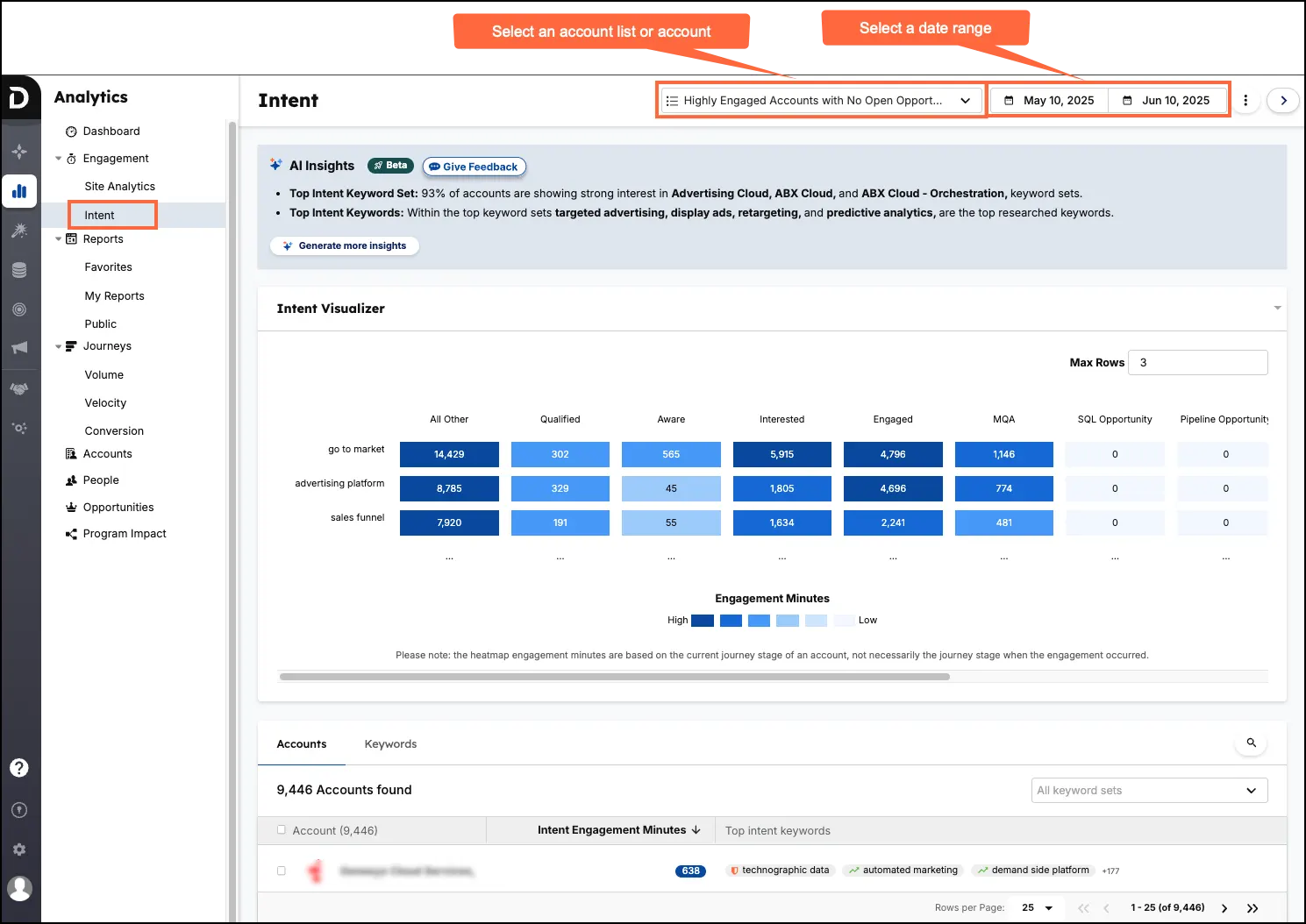
It also predicts future buying readiness by combining firmographic, technographic, and behavioral data, enabling GTM teams to prioritize accounts with the highest likelihood of conversion.
The future belongs to those who see it first. Win yours with Demandbase
Embed video → Introducing the New Demandbase
“With Demandbase, I get real-time updates and triggers, highlighting exactly what my prospective customers are interested in, allowing me to frame each and every interaction with them based on their desired outcomes.
It’s like having a crystal ball into their goals without me having to pry it out of them… truly life-changing!”
Read case study → Fivetran Account Executive Calls Demandbase His “Sales Detective”
Demandbase unifies every critical layer of market intelligence (from real-time intent data to technographics, firmographics, and competitive signals) into one intelligent platform.
It continuously monitors your market ecosystem, surfacing the accounts that are in-market right now, showing what they care about, and revealing how your competitors are engaging them.
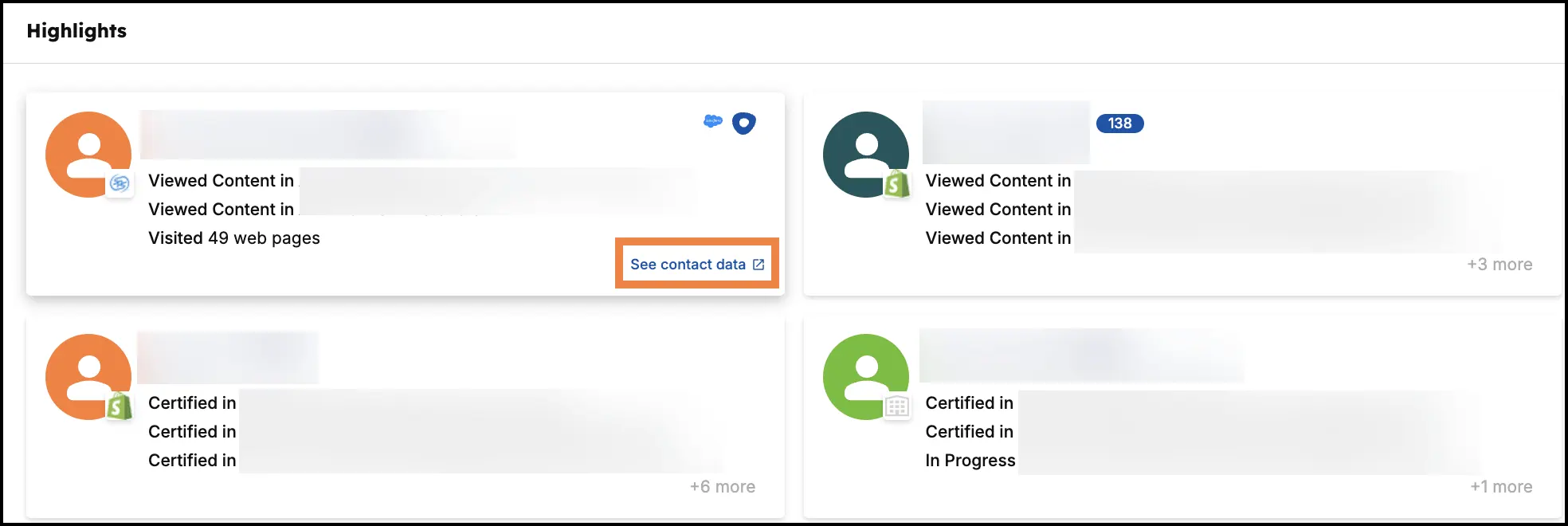
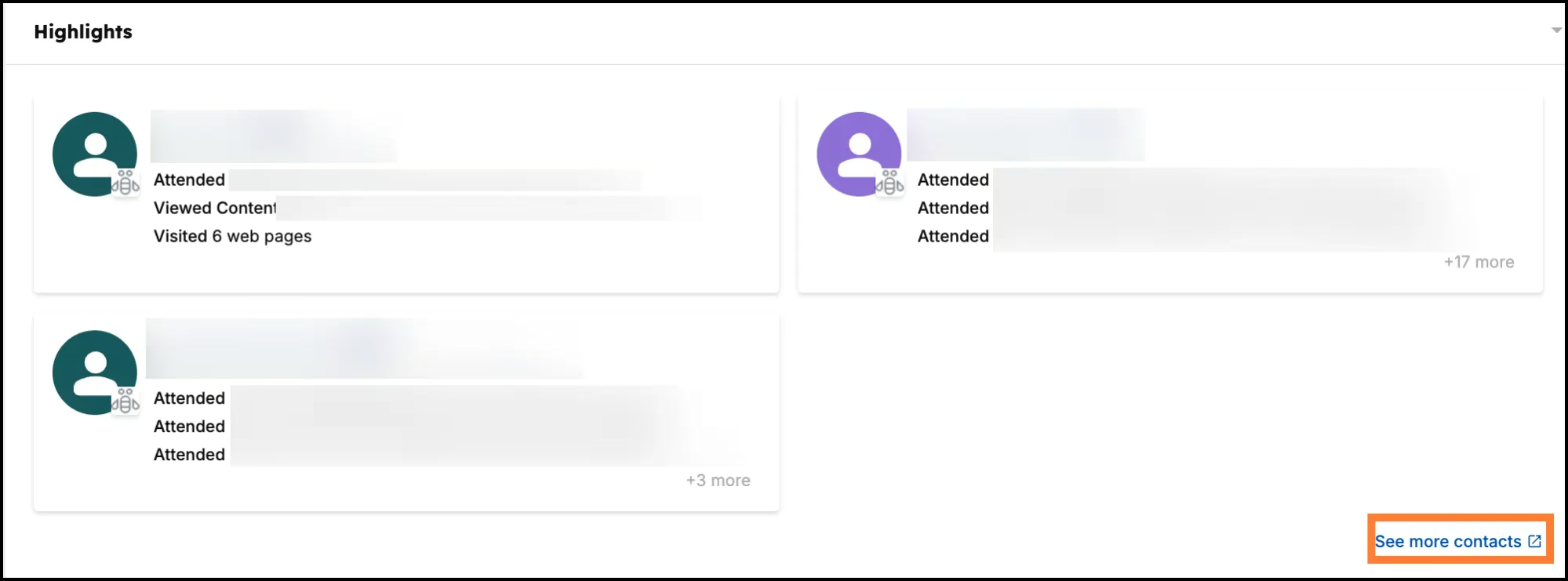
Demandbase also offers automated account scoring, predictive insights, and integrated reporting across sales and marketing, ensuring that everyone operates from the same source.
You can’t predict the future, but with the right intelligence, you can be ready for it.
We have updated our Privacy Notice. Please click here for details.