
The hidden revenue lever: How tech integrations increase conversions by 53%
Why connected CRM, MAP, predictive scoring, and ads directly impact MQA conversion and pipeline velocity

Contents
Integrations are mission critical for GTM teams because disconnected data creates fragmented execution. When CRM, MAP, predictive scoring, and advertising operate in silos, buying signals remain isolated. Sales and marketing act on partial visibility, engagement becomes inconsistent, and opportunities slow down.
Disconnected systems also weaken alignment. Marketing may see intent activity that sales never acts on. Sales may pursue accounts without awareness of broader engagement signals. Buyers experience that disconnect as inconsistent messaging and poorly timed outreach.
High-performing GTM teams approach infrastructure differently. They connect tools, workflows, and data so engagement reflects a shared understanding of account behavior. That coordination supports clearer buying group identification, stronger prioritization, and measurable revenue impact.
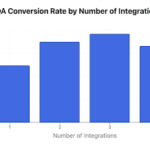
The visual below shows the relationship between integrations and MQA (marketing-qualified account) conversion, with CRM and MAP serving as the most common foundation.
How integrations set the stage
Research from Labs by Demandbase shows that integrated tenants significantly outperform those operating with limited connectivity.
Integrated teams see:
- 53% higher MQA conversion rates (3.62% vs. 2.37%)
- 28% shorter time in MQA (49.8 days vs. 68.9 days)
Connected systems expand operational capacity. When data flows across platforms, GTM teams can coordinate advertising with sales outreach, analyze funnel performance by segment and industry, activate predictive scoring for prioritization, and measure how buying group engagement influences conversion.
Instead of reacting to isolated signals, teams act on shared context.
Integrations and ABM maturity
ABM maturity reflects how deeply account-based strategy is embedded into daily execution. As organizations mature, integration depth increases and alignment strengthens across teams.
Mature programs typically combine:
- Connected CRM and MAP systems
- Active predictive scoring models
- Buying group intelligence
- Coordinated engagement across teams
This progression is measurable. Labs data shows conversion rates rise as integration depth increases.
Median Conversion Rate for “Mature” Tenants
- 22.33%
- 231 Tenants
Median Conversion Rate for “Not Mature” Tenants
- 14.19%
- 301 Tenants
Organizations moving from zero integrations to three core integrations—CRM, MAP, and predictive scoring—see MQA conversion improve more than sevenfold.
Across 579 tenants, the median MQA → Pipeline conversion rate is 14.19% when first-party data and up to one predictive score are active. That rate increases to 22.33% when multiple predictive models are operationalized.
Performance gaps widen as data foundations strengthen.
What to integrate and why it matters
Beyond CRM and MAP connectivity, high-performing GTM teams layer in additional signals that improve prioritization and buying group engagement.
- Predictive scoring models use machine learning to estimate conversion likelihood and support sales focus.
- Intent tiers categorize accounts based on the strength and recency of behavioral signals.
- Technographic compatibility aligns product fit with existing technology environments.
- Journey fit and historical win patterns analyze how closely an account resembles prior successful opportunities.
Each layer adds context. Together, they create a clearer view of account readiness and progression risk.
Integrations amplify advertising and predictive impact
Advertising performance increases when it operates within an integrated system rather than as a standalone channel.
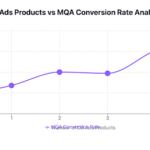
Win rates rise from 34.3% to 58.7% when four advertising tiers are connected. Within higher advertising tiers, MQA conversion rates more than double and in some cases approach triple.
When advertising connects to CRM visibility and predictive scoring, it supports earlier engagement with active buying groups and reinforces coordinated outreach.
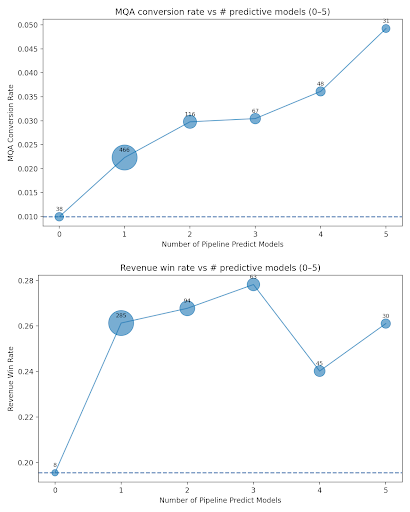
Labs research shows a similar relationship with predictive scoring depth. As additional predictive models are activated, conversion probability and closed revenue rates increase (see below). Broader predictive coverage improves prioritization, timing, and execution consistency.
Next steps for integration success
Building a reliable data foundation begins with CRM and MAP connectivity. Adding predictive scoring and advertising integration strengthens prioritization and accelerates buying group engagement.
Labs findings show that CRM, MAP, and predictive integrations function as structural drivers of conversion, velocity, and alignment. Organizations that invest in connected systems gain clearer visibility into pipeline progression and stronger coordination across teams.
To explore the full benchmarks and integration performance data, download the full Labs by Demandbase B2B GTM Report.
More Demandbase Labs articles
Insights from 1,452 companies reveal how ABM maturity, buying groups, integrations, and ads drive higher pipeline and win rates.
See how the right mix of sales touches, marketing activity, and buying group focus increases MQA conversion and improves revenue outcomes.
Learn how engaging buying groups and increasing sales touches drives 2–3x higher win rates, larger deal sizes, and more predictable pipeline.
We have updated our Privacy Notice. Please click here for details.