
What is revenue orchestration and why it’s the future of RevOps
Answered on January 26, 2026
What is revenue orchestration?
Revenue Orchestration is the strategic alignment of all revenue-generating teams (marketing, sales, revOps, and customer success) along with their processes, technologies, and data to create a seamless customer experience throughout the entire buying journey.
At its core, revenue orchestration empowers:
- Marketing to target the right audience with personalized, data-backed messaging that attracts high-intent buyers.
- Sales teams to engage leads effectively, leveraging real-time signals and historical data to tailor outreach and close deals faster.
- RevOps to unify data, processes, and technology, ensuring teams work from a single source of truth while eliminating inefficiencies.
- Customer success to drive retention and expansion by addressing customer needs, reducing churn, and increasing lifetime value.
This approach breaks down silos, synchronizes customer interactions, and ensures that every engagement contributes to a predictable and scalable revenue cycle.
Revenue Orchestration vs. Traditional Revenue Strategies
Traditional revenue strategies follow a linear, siloed approach where marketing, sales, and customer success operate independently with minimal coordination.
These strategies often fail to address the complexities of modern buying groups, where multiple stakeholders influence purchasing decisions.
The focus is typically on short-term conversions, with revenue growth driven by isolated departmental efforts rather than a cohesive, data-driven strategy.
Revenue orchestration, on the other hand, is a dynamic, cross-functional approach that integrates data, technology, and automation across marketing, sales, and customer success.
It ensures that every customer interaction is informed by real-time insights, allowing teams to deliver personalized, consistent experiences throughout the revenue cycle. This leads to higher efficiency, increased revenue predictability, and better customer retention.
Category | Revenue Orchestration | Traditional Revenue Strategies |
|---|---|---|
| Core Approach | Data-driven, AI-powered automation and real-time insights guide engagement at every stage of the buyer journey. | Manual, linear, and siloed processes that rely on traditional lead funnels and one-size-fits-all outreach. |
| Technology Stack | Utilizes Revenue Orchestration Platforms (ROPs), AI, automation, intent data, predictive analytics, and deep CRM integrations. | Relies on CRM, basic marketing automation tools, and spreadsheets, with limited real-time data synchronization. |
| Alignment Across Teams | Breaks down silos between sales, marketing, and customer success, orchestrating engagement across all touchpoints. | Departments work in isolation, with marketing focused on lead generation, sales on closing deals, and customer success on retention. |
| Data Utilization | Unified data-driven decision-making, leveraging AI and automation for real-time insights into buyer intent and behavior. | Operates on historical and fragmented data, making insights slower to process and act upon. |
| Personalization | Highly contextual engagement based on real-time buyer signals, account history, and predictive analytics. | Limited personalization, mainly static email nurtures and mass outbound outreach. |
| Lead Scoring & Routing | Dynamic, AI-driven lead qualification that adapts in real time to customer interactions and intent signals. | Rule-based, manual lead scoring that often fails to capture real-time buying signals. |
| Customer Journey Management | Tracks and optimizes the entire customer lifecycle, ensuring seamless hand-offs between teams for higher retention and expansion. | Focuses primarily on acquisition, with minimal attention to post-sale expansion and customer success. |
| Sales Execution | Uses AI-driven insights to suggest optimal outreach timing, channel selection, and messaging for each prospect. | Sales teams follow static playbooks, often leading to generic outreach and missed engagement opportunities. |
| Marketing Strategy | Account-based, data-driven, and multi-channel, leveraging behavioral insights and predictive models to optimize conversions. | Campaign-based, volume-driven, and channel-specific, with a focus on MQLs and lead volume over quality. |
| Customer Retention & Expansion | Focuses on lifetime value (LTV) by continuously engaging and upselling existing customers with personalized offers. | Primarily front-loaded on acquisition, with less emphasis on customer retention and expansion. |
| Speed & Agility | Real-time adaptability based on ongoing customer interactions, enabling quick pivots in strategy. | Slow to adjust, often relying on quarterly or annual strategy reviews. |
| Revenue Impact | Higher revenue efficiency, faster sales cycles, improved deal conversions, and stronger customer lifetime value. | Leads to missed revenue opportunities, longer sales cycles, and lower overall efficiency. |
| Scalability/strong> | Highly scalable with automation and AI-driven insights that optimize processes as the business grows. | Limited scalability due to reliance on manual processes and outdated metrics. |
| Competitive Advantage | Helps businesses gain a strategic edge by proactively engaging high-intent buyers before competitors. | Reactive, often struggling to compete with businesses that leverage automation and AI-driven engagement. |
Why Revenue Orchestration is the Future of RevOps
The problem:
As customer journeys become more complex and data-driven decision-making becomes a necessity, businesses need an agile, intelligent approach to revenue management.
Existing Solution:
Traditional RevOps has focused on optimizing existing workflows, aligning sales, marketing, and customer success teams, and improving operational efficiency.
However, many organizations still struggle with disconnected data, inefficient handoffs, and reactive decision-making that limit revenue growth.
Best Solution:
Revenue Orchestration takes RevOps further by leveraging automation, AI-driven insights, and cross-functional collaboration to create a seamless, adaptive revenue engine.
It eliminates silos by integrating real-time customer data across all touchpoints, enabling personalized engagement and predictive revenue forecasting.
Instead of relying on static playbooks, it continuously refines strategies based on behavioral signals and intent data, ensuring teams proactively guide buyers through the revenue cycle.
What is a Revenue Orchestration Platform?
A Revenue Orchestration Platform (ROPs) is a software that helps businesses automate, manage, and optimize their revenue processes across different teams (sales, marketing, and customer success).
It connects data from various sources, analyzes it, and provides insights to improve revenue generation.
For example, let’s say a sales team is struggling to convert high-intent leads due to slow follow-up times.
A ROPs can automatically detect this issue, trigger real-time notifications, and prioritize lead assignments based on engagement data, ensuring that sales reps act on the most valuable opportunities first.
How Revenue Orchestration Platform Works
Step 1: Collecting and Integrating Data
The platform first gathers data from multiple sources such as CRM systems (e.g., Salesforce), marketing automation tools (e.g., HubSpot), finance software, and customer support platforms.
It integrates this data to create a unified view of the customer journey.
Step 2: Analyzing Customer Behavior and Revenue Trends
Once the data is collected, the platform analyzes patterns using AI and machine learning. It examines customer behavior, sales cycle duration, deal size, churn rates, and marketing effectiveness.
For instance, it can detect which marketing campaigns generate the most high-value leads, which sales reps close deals faster, and which customers are at risk of leaving.
The system identifies places where potential revenue is lost due to inefficiencies or missed opportunities.
Step 3: Automating Workflows and Processes
Based on insights, the platform automates key revenue processes. This includes:
- Lead routing: Assigning leads to the right sales reps based on factors like company size, industry, and engagement history.
- Follow-up sequences: Triggering automated emails or reminders for sales reps to engage prospects at the right time.
- Customer retention alerts: Notifying customer success teams when a customer shows signs of churn so they can take action.
- Revenue forecasting: Predicting future revenue trends based on historical data, pipeline analysis, and buying signals.
Step 4: Aligning Sales, Marketing, and Customer Success Teams
The platform ensures collaboration and alignment between different teams. It provides dashboards and reports that everyone can access, helping them work toward common revenue goals.
For example, if the platform detects that marketing is bringing in a lot of leads but sales isn’t converting them, it flags the issue.
Sales and marketing teams can then review what’s going wrong—whether it’s poor lead quality or weak sales outreach—and make adjustments.
Step 5: Personalizing Customer Engagement
With real-time insights, the platform helps teams personalize their outreach. It suggests the best communication channels and the right time to engage customers.
For instance:
- If a lead has visited the pricing page multiple times but hasn’t reached out, the system may recommend that a sales rep call them or send a discount offer.
- If an existing customer is using a product frequently, the platform may suggest upselling a premium feature.
Step 6: Measuring Performance and Optimizing Revenue Strategies
The final step is continuous monitoring and optimization. The platform tracks key performance indicators (KPIs) like:
- Lead-to-customer conversion rate
- Sales cycle length
- Customer lifetime value (CLV)
- Churn rate
- Revenue growth
It provides detailed reports and insights, helping leadership teams refine their strategies, reallocate budgets, and improve forecasting accuracy.
Practical Example → How Revenue Orchestration Platform Works
Let’s say a B2B SaaS company sells project management software. Here’s how a ROP helps them grow revenue efficiently:
- Data Integration: The platform pulls lead data from LinkedIn Ads, engagement details from HubSpot, deal progress from Demandbase, and customer subscription data from Stripe.
- Customer Behavior Analysis: It identifies that leads from LinkedIn Ads tend to convert into paying customers faster than leads from Google Ads. It also detects that many trial users drop off after 10 days.
- Automating Workflows: The platform sets up an automated sequence:
- It routes LinkedIn-sourced leads to top-performing sales reps.
- It triggers an email campaign reminding trial users on day 9 to upgrade, including a limited-time discount.
- Team Collaboration: The platform notifies marketing to focus more on LinkedIn Ads and alerts the customer success team about trial users who haven’t engaged in the past 5 days, prompting proactive outreach.
- Personalized Engagement: A sales rep receives an alert that a trial user has engaged heavily with the software but hasn’t subscribed. The rep sends a personalized email offering a free onboarding session.
Revenue Optimization: The platform’s dashboard shows that customers who received onboarding were 30% more likely to convert. The company invests more in onboarding and sees an increase in subscription revenue.
Benefits of Revenue Orchestration Platforms
Centralized and Real-Time Revenue Insights
One of the biggest challenges businesses face is fragmented data spread across different systems. According to a recent report, this inefficiency can cost companies up to 20-30% of their annual revenue [*].
A ROP acts as a central hub, pulling data from all these sources to provide a single source of truth for revenue operations.
How This Helps:
- Teams no longer waste time searching for customer information or manually compiling reports.
- Real-time dashboards provide instant visibility into revenue performance, deal progression, and customer health.
- Businesses can make data-driven decisions instead of relying on guesswork or outdated reports.
Example: A sales manager can instantly see which deals are at risk and take proactive steps to recover them.
Improved Sales and Marketing Alignment
Misalignment between sales and marketing often leads to wasted budget, low-quality leads, and missed revenue opportunities.
Marketing teams may generate leads that sales reps consider “unqualified,” while sales teams may fail to follow up on promising leads quickly.
ROPs eliminate this gap by:
- Automatically scoring and routing leads to the right sales reps based on engagement levels, firmographics, and intent signals.
- Providing marketing with real-time feedback on which campaigns generate the highest-quality leads.
Enabling closed-loop reporting, so sales teams can track where leads came from and marketing can measure conversion success.
Example: If marketing generates 1,000 leads from LinkedIn Ads, but sales only converts 2%, the platform can analyze why. Maybe leads from LinkedIn need additional nurturing before sales outreach, so marketing adjusts their strategy accordingly.
Increased Sales Efficiency with AI-Powered Automation
Sales teams spend a significant amount of time on manual, repetitive tasks like data entry, follow-ups, and lead qualification.
ROPs automates these processes, allowing reps to focus on high-value activities such as selling and closing deals.
How This Helps:
- Automated lead prioritization ensures sales reps focus on the hottest opportunities.
- AI-powered follow-up sequences ensure no prospect falls through the cracks.
- Real-time alerts notify sales reps when a lead is ready to buy (e.g., after multiple visits to the pricing page).
Example: Instead of manually emailing every lead, the system detects when a prospect opens an email twice, clicks a pricing link, and downloads a whitepaper. This triggers a notification for the sales rep to follow up with a call.
Faster Sales Cycles and Higher Win Rates
When sales, marketing, and customer success teams work in sync, deals move faster. The platform helps shorten sales cycles by:
- Providing historical insights on similar deals, allowing sales teams to anticipate objections and address them early.
- Ensuring the right resources (case studies, testimonials, competitor comparisons) are available at the right time in the sales process.
- Reducing back-and-forth between teams by centralizing deal data and automating handoffs between marketing, sales, and onboarding teams.
Example: A sales team using a ROP can see that deals involving technical buyers close faster when a product demo is offered early. The system automatically recommends this approach, improving win rates.
More Accurate Revenue Forecasting
Traditional revenue forecasting often relies on outdated CRM data and gut feelings. Meanwhile, ROPs use AI and predictive analytics to provide more accurate, data-driven forecasts.
How This Helps:
- Sales leaders can see revenue projections in real-time and adjust strategies accordingly.
- Finance teams can make better budgeting decisions based on revenue trends.
- Companies can identify potential bottlenecks or slowdowns before they become major problems.
Example: The platform detects that Q3 sales tend to drop by 15%, so marketing starts nurturing high-intent leads earlier to offset the expected slowdown.
Scalability for Growing Businesses
As companies scale, manual revenue management becomes impossible. ROPs provide a scalable infrastructure for managing complex sales processes, ensuring teams can handle higher volumes of leads, deals, and customers without breaking workflows.
How This Helps:
- New reps get ramped up faster with structured sales playbooks.
- Expansion into new markets is smoother, as workflows adapt to new geographies and customer segments.
- Automated workflows ensure consistency, reducing the risk of human error as the team grows.
Example: A SaaS company expanding into Europe automates lead routing based on language preference, ensuring leads from Germany go to German-speaking reps. This streamlines expansion efforts while keeping revenue operations efficient.
How to Implement Revenue Orchestration in Your Organization
Set a Unified Revenue Goal
Before you touch technology or process, you need absolute clarity on what revenue orchestration will achieve for your business.
Here’s what to do:
- Define the primary revenue goal based on company objectives (e.g., increase ARR by 20%, improve LTV by 30%, reduce churn by 5%).
- Break it down into specific KPIs per team:
- Marketing: Increase MQL to SQL conversion by 15%.
- Sales: Improve win rate from 25% to 35%.
- Customer Success: Increase Net Revenue Retention (NRR) from 90% to 95%.
DB Insider → When defining revenue goals, tie each KPI to a clear financial impact. For example, if marketing increases MQL to SQL conversion by 15%, estimate the revenue lift it generates.
Audit Your Existing Processes
You cannot orchestrate what you don’t understand. Before making changes, conduct a deep audit of your current revenue operations.
Here’s what to do:
- Map out the customer journey from acquisition to renewal. Identify where teams struggle with functionality issues, such as inefficient handoffs or lack of visibility into customer data.
- Analyze your CRM, marketing automation, and customer success platforms.
- Where is data incomplete?
- Where do teams lack visibility?
- Evaluate lead and deal handoff processes.
- Are high-intent leads being passed to sales too early or too late?
- Are sales passing key insights to customer success?
- Review reporting and attribution models.
- Are you measuring metrics that truly drive revenue growth (e.g., pipeline velocity, average deal size, NRR)?
- Is your attribution model (first-touch, multi-touch, etc.) giving you actionable insights or misleading the team?
DB Insider → Have your RevOps or marketing team pretend to be prospects or customers to experience the actual process. Observing real buyer interactions can reveal hidden data gaps or communication breaks that a simple system audit misses.
Align Teams Under a Centralized Operating Model
Orchestration requires real time, cross-functional collaboration between marketing, sales, customer success, and revenue operations.
Here’s what to do:
- Appoint a CRO (Chief Revenue Officer) or RevOps leader responsible for overseeing data, processes, and revenue insights.
- Unify revenue teams under a shared accountability framework:
- Marketing is not just responsible for leads—but revenue contribution
- Sales is not just responsible for closing deals—but long-term revenue (e.g., focusing on upsell potential).
- Customer success is not just focused on retention—but expansion (e.g., identifying cross-sell opportunities).
DB Insider → Schedule short, weekly standups with marketing, sales, CS, and RevOps. Focus on a single KPI or friction point each week. This creates continuous alignment and eliminates silo thinking.
Implement a Revenue Intelligence System
Orchestration fails without real-time data and insights. You need a revenue intelligence system that connects all revenue-related data across departments.
Here’s what to do:
- Deploy a revenue intelligence platform (e.g., Demandbase) to unify insights across marketing, sales, and CS.
- Automate lead routing and deal progression tracking so there’s no manual handoff breakdowns between teams.
- Enable AI-powered forecasting to predict pipeline health and optimize sales efficiency.
DB Insider → Integrate ‘Next Best Action’ Alerts. Use a platform like Demandbase to trigger automatic notifications for reps (e.g., “This account is surging in interest—time to reach out!”).
Standardize Key Workflows
Once data is integrated, the next step is standardizing how teams interact at each revenue stage.
Here’s what to do:
- Define clear MQL to SQL qualification rules. Ensure sales only gets leads that meet an agreed-upon threshold (e.g., firmographic fit, engagement score).
- Automate handoffs between sales and customer success:
- No deals should be marked “Closed Won” without CS receiving necessary account data (e.g., use cases, challenges, success metrics).
- Create pipeline acceleration workflows. For example:
- If a high-value deal stalls, trigger automated plays for marketing (e.g., specific nurture emails or targeted ads).
- If a customer account shows churn risk (e.g., reduced product usage, missed QBR), customer success gets notifications to intervene.
DB Insider → Build automated nurture sequences that re-engage prospects who stall at any stage. This keeps them warm until they’re ready to move forward again, minimizing funnel leakage.
Monitor, Optimize and Iterate
Revenue orchestration is not “set it and forget it.” Once you roll out new processes and systems, you must continuously monitor performance and make iterative improvements.
Here’s what to do:
- Establish a regular review process (e.g., monthly, quarterly) to evaluate:
- Pipeline health and velocity: Are deals moving faster? Are we hitting forecast targets?
- Conversion metrics: Are marketing-generated leads converting at higher rates? Where are drop-offs happening?
- Customer retention and expansion: Have churn rates decreased? Are upsells more frequent?
- Analyze data for root causes of underperformance. For example:
- If MQL → SQL conversion is lower than targeted, is it due to poor lead quality or sales misalignment?
- If churn is rising, are customer success teams receiving the right information at handoff?
- Solicit feedback from all revenue teams:
- Do front-line reps find the workflows helpful or cumbersome?
- Are managers getting the insights they need to coach effectively?
DB Insider → Gather all stakeholders to dissect the entire revenue funnel and identify 1–2 high-impact optimizations for the next quarter. This fosters continuous improvement and keeps your orchestration strategy fresh.
Best Revenue Orchestration Platforms to Consider
1. Demandbase
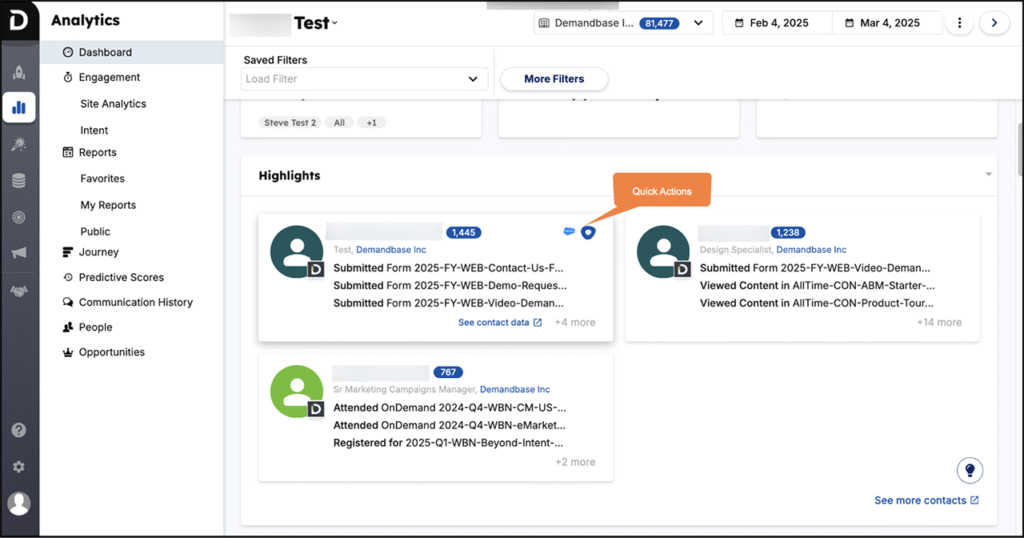
Demandbase is a leading B2B marketing and sales intelligence platform specializing in account-based marketing (ABM) and go-to-market (GTM) strategies.
It integrates AI-powered intent data, firmographic insights, and predictive analytics to help businesses target high-value accounts, engage them effectively, and measure impact across marketing and sales touchpoints.
Unlike traditional lead-based systems, Demandbase focuses on account-level intelligence, ensuring that sales and marketing teams prioritize the right prospects at the right time.
Strengths:
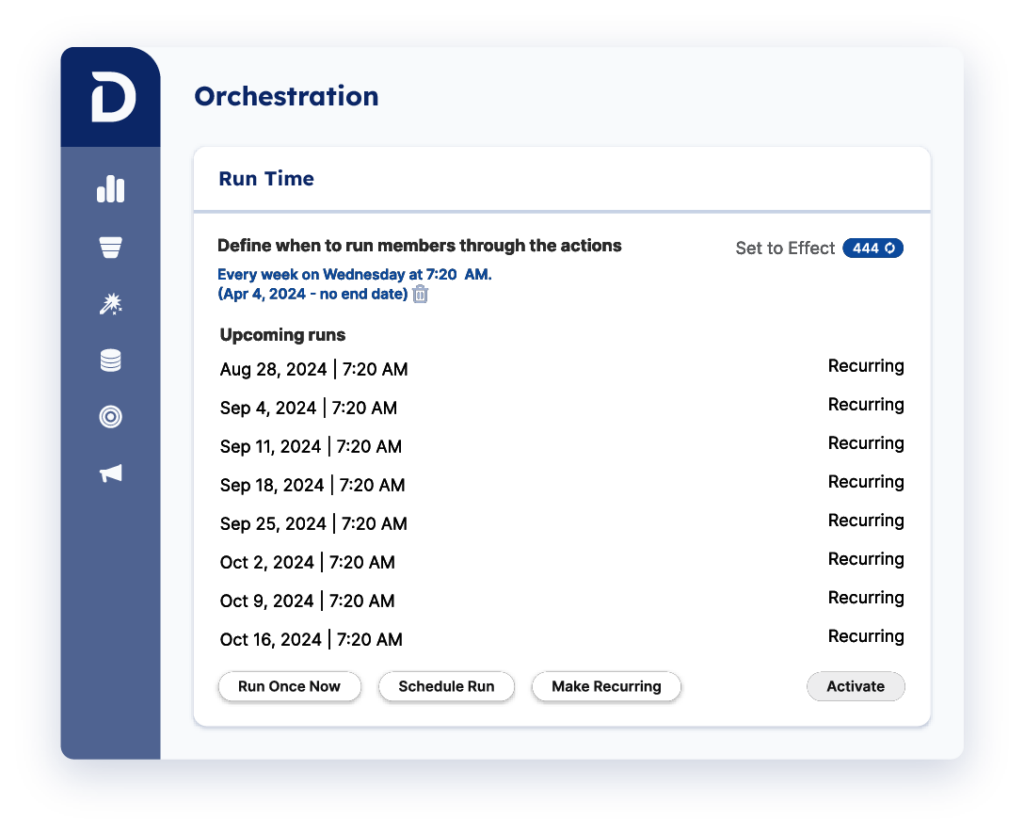
- Unlimited Automations. Demandbase enables businesses to create seamless, automated workflows that trigger based on specific buyer signals such as intent data, account engagement, and behaviors.
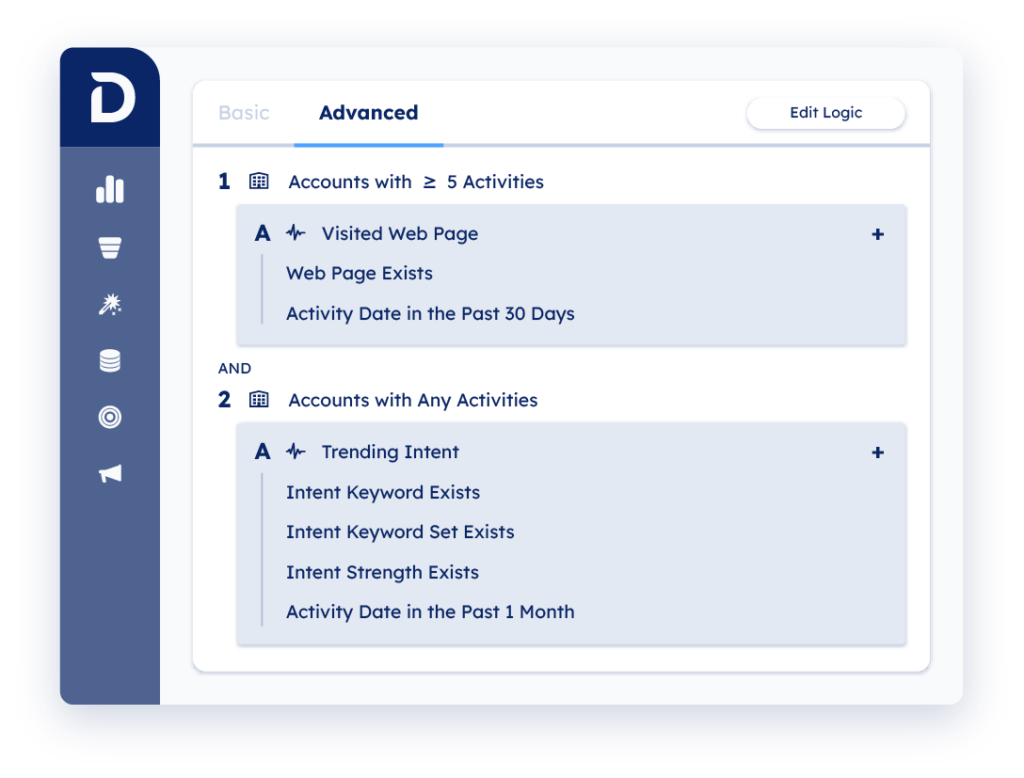
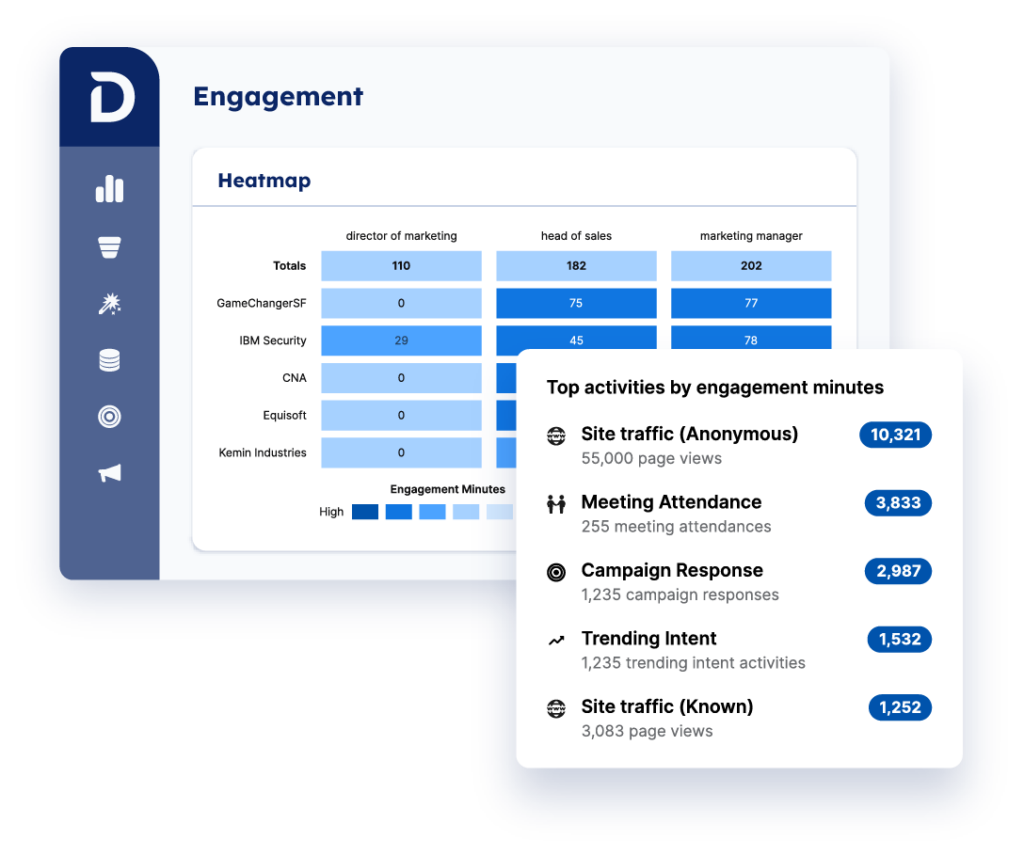
- Precision Segmentation. Users can create personalized audience segments using firmographics, buyer intent signals, engagement levels, and sales interactions.
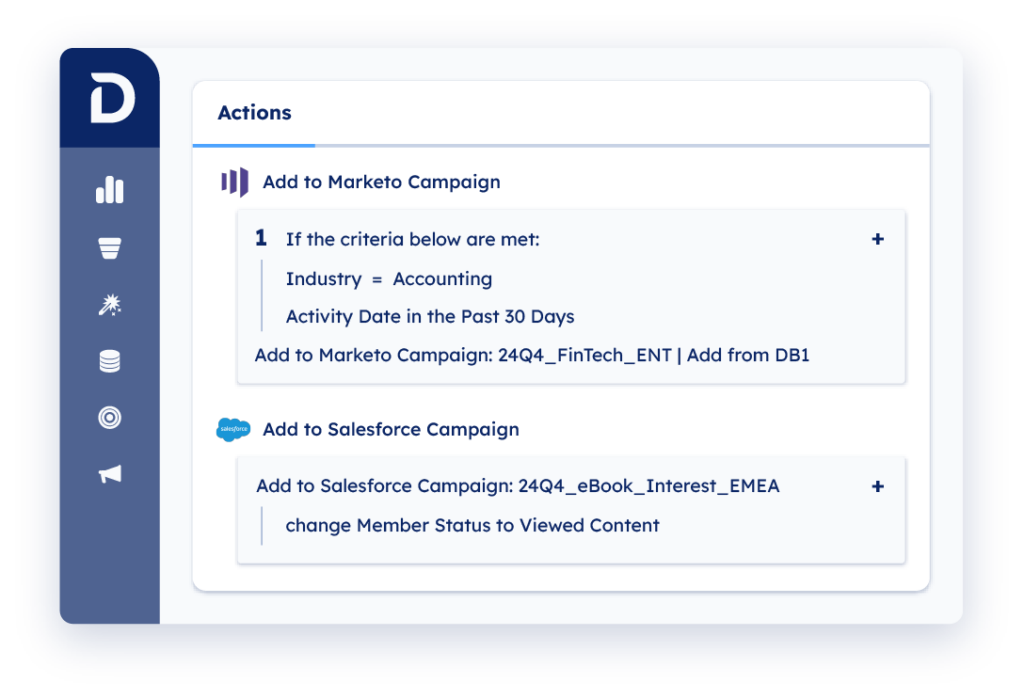
- Cross-Channel Play Automation. Companies can automate outreach via LinkedIn, Twitter, Facebook, and email while syncing engagement data across multiple systems.
- Customer Data Management. The system automatically aligns first-party and third-party data sources to enrich customer profiles and improve personalization.
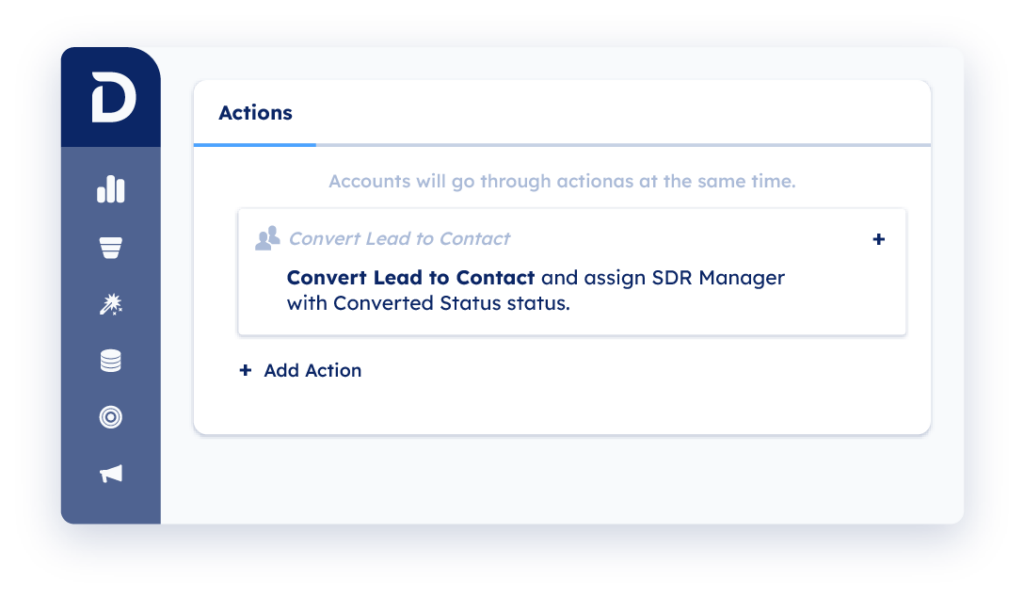
- Customer Retention and Advocacy. The platform allows businesses to nurture satisfied customers into brand advocates through automated loyalty programs and personalized upsell offers.
Who is Demandbase Best For?
- Companies with Long Sales Cycles. Businesses selling high-ticket B2B solutions (e.g., SaaS, consulting, IT services) that need to nurture and track complex buying journeys.
- Enterprise B2B Marketers. Companies running large-scale account-based marketing initiatives that need AI-powered insights and multi-channel orchestration.
2. Salesloft
Salesloft is a sales engagement platform that helps sales teams automate and optimize their workflows. It provides tools for email automation, call tracking, meeting scheduling, and pipeline management to improve efficiency.
Strengths:
- Modern Revenue Workspace. A centralized hub that integrates sales engagement, pipeline forecasting, and deal intelligence. This allows sales reps to work from a single dashboard, reducing time spent switching between tools.
- Conversation Intelligence. AI-powered call transcription and analytics to track talk-to-listen ratios, sentiment, and key topics.
- Deal Engagement Score. Uses AI to score leads and opportunities based on engagement, deal stage, and historical data.
Best for: Mid-market and enterprise sales teams looking to streamline outreach, improve productivity, and boost close rates.
3. Outreach
Outreach is an AI-powered sales execution platform designed to help sales teams optimize engagement, and drive revenue growth at scale. It combines sales automation, deal intelligence, conversation analytics, and AI-powered forecasting in a single platform.
Strengths:
- Kaia. Real-time AI call coaching and transcription to analyze prospect conversations. It also extracts key insights like objections, competitors mentioned, and deal risks to help reps improve performance.
- Commit. Tracks pipeline health and ensures that reps focus on the right opportunities at the right time.
- Deal Health Insights. Uses AI to assess deal risk based on email engagement, meeting activity, and decision-maker involvement.
Best for: B2B sales teams managing large outbound pipelines who need multi-channel automation and deal health insights.
4. Gong
Gong is a revenue intelligence platform that helps sales teams capture customer interactions, analyze deal insights, and improve sales effectiveness. It leverages AI to extract valuable insights from sales calls, emails, and meetings to provide a 360-degree view of deal progress and rep performance.
Strengths:
- Smart Trackers. Automatically detect and track key topics and themes in sales conversations.
- Gong Insights. Delivers deep analytics on customer conversations, identifying trends in messaging, sales objections, and winning behaviors. It helps teams refine their sales playbooks based on real-world data.
- Gong Forecast. Analyzes deal health and pipeline activity, eliminates reliance on gut-based forecasting and ensures more accurate sales projections.
Best for: Businesses looking to scale sales training and improve rep performance using AI-driven coaching.
5. LeanData
LeanData is a revenue orchestration platform designed to optimize lead management, routing, and sales alignment. It streamlines go-to-market operations by ensuring leads, accounts, and opportunities are properly assigned and tracked.
Strengths:
- BookIt. Automates scheduling by allowing prospects to instantly book meetings with the right sales reps.
- Account-Based Lead Matching. Matches inbound leads to the right accounts using fuzzy logic, ensuring proper account attribution and preventing duplicate records in Salesforce.
- Territory Management. Automates territory-based lead assignment, dynamically updating rules based on geography, industry, or company size, keeping sales teams aligned with shifting market segments.
Best for: organizations that run their entire GTM motion within Salesforce and need intelligent lead routing to streamline sales processes.
Top 5 Future Trends in Revenue Orchestration
AI-Powered Predictive Revenue Intelligence
AI and machine learning will play a critical role in forecasting revenue, identifying patterns in buyer behavior, and recommending next-best actions.
Expect revenue teams to rely more on AI-powered tools that analyze historical data to predict deal closures, churn risks, and upsell opportunities with greater accuracy.
Unified Revenue Operations (RevOps) Tech Stacks
The fragmentation of sales, marketing, and customer success tools will decline in favor of unified RevOps platforms.
These platforms will provide a single source of truth for revenue teams, integrating CRM, marketing automation, customer data platforms (CDPs), and forecasting tools into a seamless workflow.
Hyper-Personalized Buyer Journeys
Revenue orchestration will shift toward micro-personalization, where AI-driven insights tailor outreach and engagement based on real-time buyer intent signals.
Account-based marketing (ABM) and dynamic content personalization will ensure that prospects receive contextually relevant messaging at each touchpoint.
Automated Workflows and Playbooks
Automation will be key in orchestrating revenue-driving processes across teams. Expect predefined revenue playbooks that trigger automated workflows for lead scoring, deal progression, customer expansion, and retention.
Sales and marketing automation will reduce manual efforts, allowing teams to focus on high-value activities.
Customer Lifecycle Optimization
The focus of revenue orchestration will expand beyond new business acquisition to customer retention, cross-sell, and upsell strategies.
Organizations will invest in customer success-led growth, leveraging product usage insights and customer engagement data to maximize lifetime value (LTV).
Drive Revenue Growth with Demandbase Orchestration
In the end, it all comes down to this: your success is measured in revenue, but the path to get there has never been more complex.
Decision-makers don’t follow a linear path. They research anonymously, engage on their own terms, and expect hyper-relevant experiences.
Your tech stack was supposed to solve this; instead, it’s become part of the problem. Siloed systems. Fragmented data. Manual workflows eating up valuable time.
Demandbase Orchestration exists for this exact moment.
But pause—we’re not offering another point solution to add to your already complex stack.
Instead, we’re turning the intelligence you already have into coordinated action across every channel.
And here’s what you get:
- Accelerated Pipeline Generation. Target the right accounts at the right time with coordinated, multi-channel engagement that converts faster.
- Enhanced Marketing ROI. Eliminate wasted spend by focusing resources precisely where they’ll drive the most revenue impact.
- Time-to-Value. Deploy quickly with pre-built integrations that connect to your existing tech stack without disruption.
- Measurable Revenue Impact. Track the direct contribution of your orchestration efforts with robust attribution reporting.
We have updated our Privacy Notice. Please click here for details.