
What is revenue acceleration? The modern framework for GTM success
Answered on January 26, 2026
What is revenue acceleration?
Revenue acceleration is the coordinated effort of aligning marketing, sales, and customer success to shorten the path from prospect to revenue, and from revenue to expansion.
It’s a cross-functional GTM framework that helps your business generate income faster, by working smarter across every customer-facing function.
This approach is built on three interconnected principles:
- Alignment: All go-to-market teams work from the same data, goals, and playbooks. Everyone moves in sync.
- Visibility: Every stage of the buyer’s journey is measurable. Teams can see how accounts engage, where deals stall, and what actions increase momentum.
- Optimization: Real-time insights allow teams to adapt immediately. They can refine targeting, messaging, and engagement tactics to accelerate pipeline velocity.
Let’s run an example with a SaaS company selling workforce analytics software.
In a typical setup, marketing might run campaigns that attract interest but don’t pass enough context to sales. Sales then chases leads without full insight into which accounts show real intent, and customer success only reappears post-sale to handle onboarding.
Now let’s picture the same company implementing a revenue acceleration framework:
- Marketing uses intent data and predictive scoring to target accounts most likely to buy.
- Sales receives those insights in real time and tailors outreach to active buying groups.
- Customer success leverages those same signals to anticipate renewal or upsell opportunities months in advance.
Here, you have one synchronized engine where reps close deals faster because buyers get what they need sooner. The hand-off process is also seamless, leading to customer growth compounding because everyone operates from shared insight.
Revenue acceleration vs. Revenue operations (RevOps): It’s not the same
Revenue acceleration is often confused with Revenue Operations (RevOps) —and for good reason. They’re deeply interconnected, but they serve different purposes.
- RevOps is the system that connects and standardizes data, processes, and technology across marketing, sales, and customer success. It ensures your CRM is accurate, your workflows are efficient, and your insights are measurable. It builds the operational backbone that allows revenue teams to work in sync.
- Revenue acceleration, on the other hand, is the outcome of that alignment in action. It’s the result you achieve when your RevOps foundation enables teams to collaborate, act on real-time intelligence, and execute GTM strategies.
While they’re distinct, they’re also interdependent. Without RevOps, acceleration can’t scale. And without acceleration, RevOps has no business impact. But together, they form a continuous cycle of optimization.
For example, RevOps might ensure your CRM and marketing automation platforms are properly integrated and clean.
Revenue Acceleration takes that clean data, interprets live signals through AI, and automatically tells your teams which accounts to prioritize today and how to engage them for maximum impact.
How revenue acceleration works
It starts with unified data and real-time intelligence
Every acceleration journey begins with visibility. You can’t move ‘faster’ if you can’t see clearly.
That’s why the foundation of revenue acceleration lies in bringing all your data (intent signals, CRM entries, ad performance, website visits, and customer interactions) into one unified system.
This connected view helps GTM teams identify which accounts are showing buying intent, who within those accounts is active, and what content or topics are driving engagement.
Next is using the insight to find the right accounts
With your foundation in place, the next step is determining which accounts are most likely to convert and when.
This is where you apply AI-driven scoring and predictive analytics. They analyze engagement patterns, buying signals, and historical performance to identify high-value accounts.
For marketing, this prioritization guides which accounts to target with campaigns and messaging. For sales, it identifies which opportunities to engage first.
Follow up with coordinating multi-channel engagement
Activation is the next phase. It’s where marketing, sales, and customer success come together:
- Marketing delivers targeted campaigns designed for each role within the buying group—i.e., decision-makers, influencers, and users, through channels like email, LinkedIn, and personalized ads.
- Sales uses the same insights to tailor outreach, aligning their messaging with what the account is already engaging with.
- Customer success joins the loop early, understanding customer context even before the deal closes, so onboarding and retention start from a place of familiarity.
Remove friction that might come up
Too often, deals suddenly stall because buyers encounter mixed messages, or misaligned follow-ups between departments. In a revenue acceleration model, automation and process orchestration solve this.
- When marketing activity triggers buying signals, alerts automatically notify sales.
- When sales updates a deal, customer success instantly receives that context.
- When an account shows renewed engagement post-sale, marketing reactivates nurturing for upsell or advocacy.
This continuous cycle ensures no opportunity goes cold, streamlining the buyer’s journey because internal collaboration mirrors external engagement.
Measuring and learning from the process
The final piece of the process is learning. Revenue acceleration thrives on continuous optimization—ie., tracking what works, and what doesn’t.
Teams monitor performance at the buying group level. They analyze which roles were engaged, what content accelerated conversion, and where drop-offs occurred.
Why revenue acceleration is businesses imperative in 2026
It creates a predictable revenue engine
For CEOs, CROs, and CMOs, ‘unpredictability’ is not acceptable. For one, reports of missed forecasts, stalled deals, and inconsistent pipeline coverage make it nearly impossible to plan or scale.
That’s why many are switching to revenue acceleration to introduce measurable predictability into every stage of the customer journey.
When teams have engagement, intent scoring and shared revenue analytics, they can see exactly where each account stands, including who’s engaged, who’s slipping, and where revenue risk exists.
This visibility empowers leadership to make proactive decisions, and allocate resources to where they’ll have the greatest impact.
It delivers a better experience for the buyer
The B2B market is full of products with similar (copycat) features. Every tool does the same thing with a slight twist in their approach. The only difference is the customer experience.
For example, if we compare reviews from Demandbase vs. 6Sense:
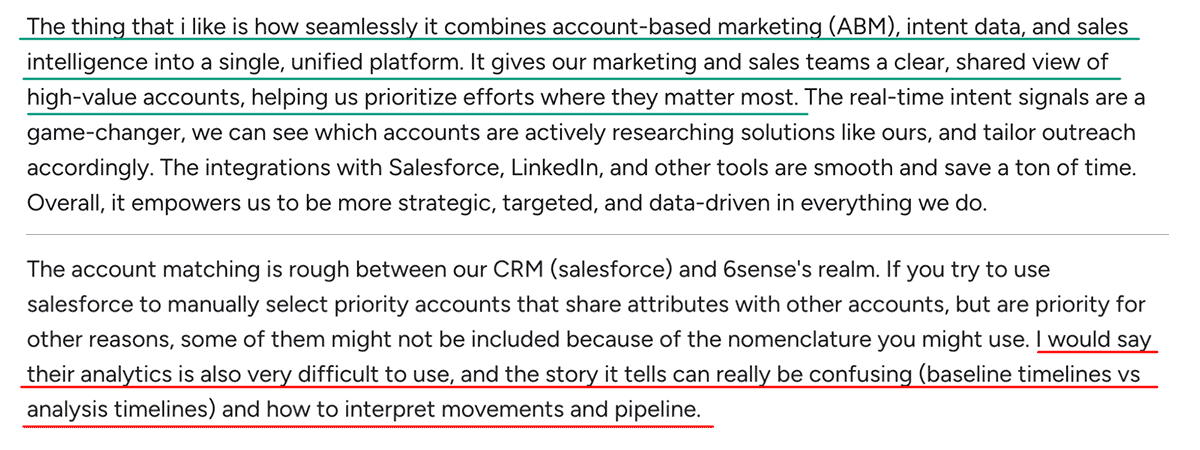
It aligns sales and customer success on shared signals, allowing them to identify expansion opportunities, predict churn risks, and deliver the kind of proactive engagement that keeps customers loyal. This means every interaction (from onboarding to renewal) becomes a continuation of the same journey.
It helps track buying group movement
The typical traditional marketing strategies used to base its approach on tracking B2B buyer movement in a linear path—i.e., moving from awareness to purchase. While buyers still do the same, the path in between is somewhat complicated.
Modern B2B buyers jump between touchpoints, consult peers, engage across multiple channels, and make collective decisions as a team.
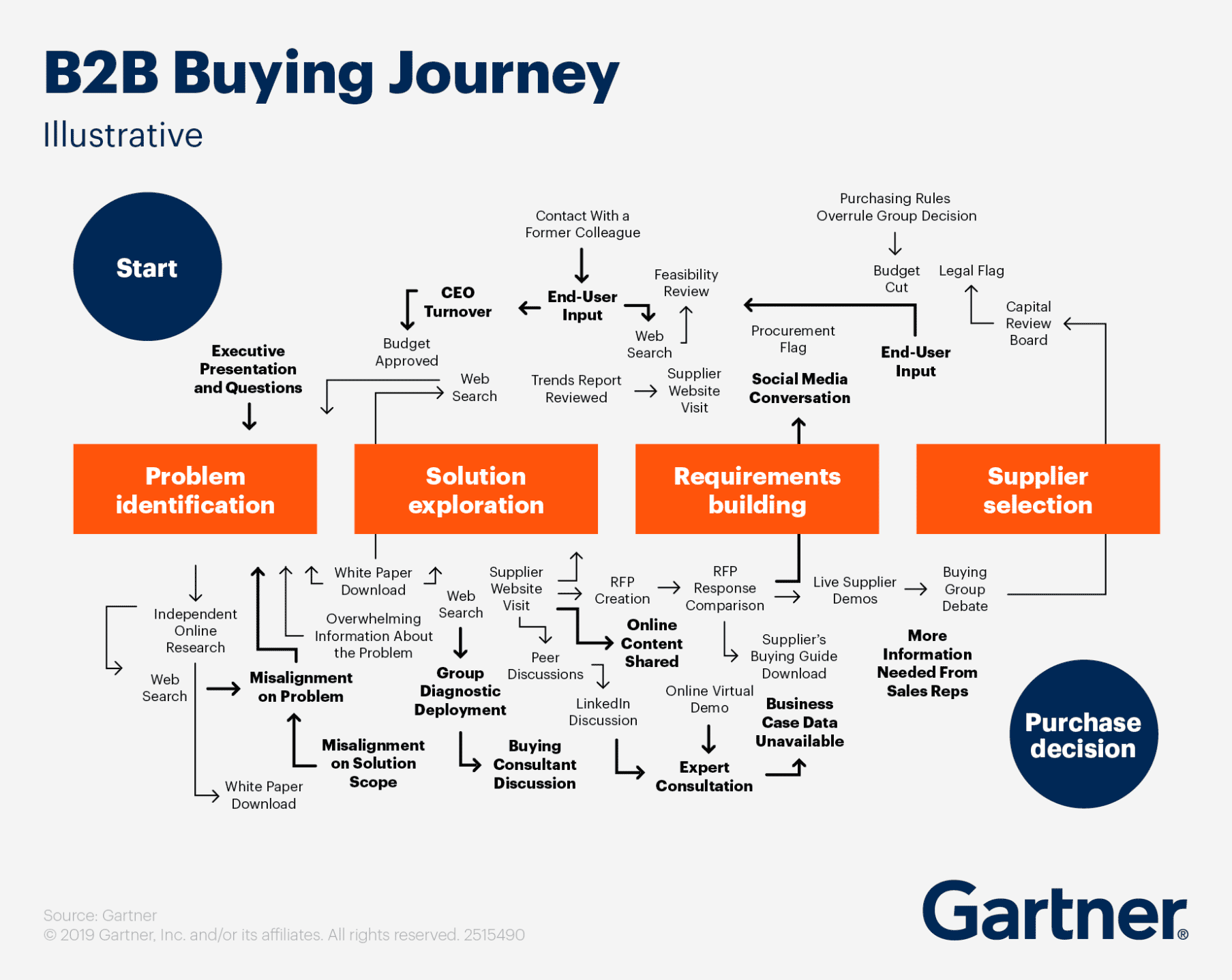
[Source: Gartner]
Revenue acceleration recognizes this complexity. It shifts the focus from tracking ‘individual leads’ to helping organizations map, track, and engage the entire buying group.
This involves unifying intent data, and account-level signals, so GTM teams can anticipate when an account is in-market and deliver coordinated experiences that speak to each role’s unique priorities.
It increases pipeline velocity and improves win rates
The common logic amongst most sales teams when it comes to increasing win rates was to get more ‘leads’ and flood them with the same cold messaging. The idea was to land 1-2 deals that’ll compensate for the time, energy, and resources wasted.
Revenue acceleration directly addresses this unsustainable approach by focusing on velocity, and not the volume as you’re used to. The approach is to help companies optimize existing sales processes to move opportunities through the pipeline faster and with higher conversion rates.
With time, that efficiency compounds. A 10% improvement in conversion speed or deal velocity can translate into significant revenue gains without additional spend.
Plus, this is a win for marketing and sales. We’re in a market where budgets are tightening and expectations keep on rising. Revenue acceleration offers a scalable way to maximize output from the same (or smaller) inputs.
The teams driving revenue acceleration
Revenue acceleration is powered by three teams. You have the marketing, sales and customer success teams.
Each plays a distinct role in building and sustaining the pipeline. But together, they form a continuous feedback loop that shares insights in real time and optimizes every touchpoint across the customer journey.
Here’s how they work:
Marketing team: Identifying opportunities and building momentum early
In a revenue acceleration framework, the marketing team’s focus is on identifying opportunities early. This shifts the approach from collecting as many MQLs as possible, to identifying best-fit, in-market accounts and engaging them.
Using intent data, predictive analytics, and buying group signals, marketing can pinpoint which accounts are actively researching relevant topics or competitors. That intelligence allows marketing to prioritize high-quality accounts, and activate campaigns only where there’s real buying potential.
In addition, marketing also shapes ‘how fast’ accounts move through the early stages by delivering content that’s timely, and aligned with buyer intent. The emphasis here is on educating and building trust with the buyer.
Sales team: Converting insight into revenue
Once marketing has identified and warmed in-market accounts, next up is sales.
Revenue acceleration redefines the sales team’s role from “closers” to consultative orchestrators who understand the entire buying group and use real-time intelligence to guide decisions.
Remember, we’re dealing with a buying group. And because of data, sales leverages account-level engagement data, and buyer intent signals, to focus energy where momentum already exists. This means sales reps know which accounts are heating up, which stakeholders are engaging most, and which next action has the highest impact—all before the first call.
In this model, the outreach is precise due to the ‘warm familiarity’ set by marketing, making conversations even more relevant. Reps don’t need to pitch as they’re busy facilitating decisions by providing personalized solutions that align with each stakeholder’s needs.
Customer success team: Driving revenue growth through retention and expansion
In traditional GTM structures, customer success often sits at the end of the process, handling post-sale support and renewals.
But in a revenue acceleration framework, they’re now responsible for driving expansion, advocacy, and long-term value.
Using the same unified data that marketing and sales rely on, the customer success team monitors product usage, engagement trends, and satisfaction signals to identify accounts at risk, as well as those ready for upsell or cross-sell opportunities.
This creates a proactive, data-driven approach to customer engagement. Instead of waiting for renewal conversations, success teams can reach out months earlier with solutions that anticipate their needs.
Bringing it all together
Here’s an example:
Let’s say a mid-market HR tech company using a revenue acceleration framework powered by Demandbase.
- Marketing detects an opportunity: Demandbase flags increased intent activity from a cluster of accounts in the healthcare sector, specifically around “employee engagement software.”
- Marketing launches a personalized ad campaign featuring a case study on healthcare workforce retention.
- Sales activates the insight: Within days, one target account shows a spike in engagement: multiple visits to the pricing and demo pages, plus webinar attendance from two HR managers and one operations executive.
- The SDR receives an automatic alert. With this context, the SDR reaches out with a tailored message:
- “Noticed your team’s been exploring engagement strategies for healthcare staff. Here’s how other hospitals improved retention by 30% using our platform.”
- The SDR receives an automatic alert. With this context, the SDR reaches out with a tailored message:
- The deal closes, and customer success takes over: After onboarding, the CS team tracks usage metrics and identifies that a second department (nursing administration) begins adopting the product organically.
- CS loops this signal back to sales, triggering a cross-sell opportunity, which closes within weeks.
- Marketing refines the ICP: Seeing the trend, marketing updates its ICP to include healthcare organizations with similar growth patterns, amplifying the cycle with more precision.
The six components that power a revenue acceleration loop
There are six components responsible for the closed-loop system we discussed above. And each ensures every signal strengthens the next action.
- A shared data platform: Break down silos. All GTM teams must operate from a single, unified source of account and customer data. It’s the only way to keep everyone acting on the same insight.
- Specific, shared metrics: Marketing, sales, and customer success should measure success through the same business outcomes. E.g., pipeline velocity, account engagement, customer lifetime value, net revenue retention etc.
- Consistent messaging: Every team must tell the same story. From first ad impression to post-sale onboarding, your brand’s value proposition should sound unified, credible, and cohesive.
- Clear accountability: Shared goals work only when every team knows which levers they control. Define ownership clearly so each function contributes confidently to the same revenue outcomes.
- Ability to act on insights: Equip your team to respond instantly to engagement spikes, intent signals, or risk alerts.
- An AI-driven intelligence: An intelligent AI layer powers it all. It surfaces patterns, predicts intent, and guides teams toward the accounts and actions most likely to convert.
How to get started with revenue acceleration: 5 Essential steps
1. Conduct a go-to-market audit
This is the problem-identification phase. Start by forming a cross-functional team with leaders from marketing, sales, RevOps, and customer success.
Together, audit your existing GTM motion, analyzing your people, processes, data source and platforms. Look closely at common bottlenecks like where data stops flowing, or where handoffs slow down.
Ask questions like:
- Are all teams aligned around the same buyer journey?
- Are we using multiple CRMs or fragmented engagement tools?
- Does each team define “qualified” differently?
For better results, visualize your buyer’s actual path—from awareness to renewal. Then map your internal workflows against each stage.
This exposes where internal friction directly impacts customer experience, helping you prioritize fixes that matter most to revenue.
DB Nuggets → Don’t rely solely on team feedback. Pull data from CRM handoff times, deal velocity reports, and engagement drop-offs to validate what’s really slowing growth.
A 48-hour delay between MQL and follow-up, for instance, is more quantifiable than pushing it all under “alignment issues.”
2. Define your unified data strategy
Once you’ve diagnosed the problem, chances are, you’ll find the same theme everywhere—and that is ‘fragmented data.’
The next step is to create a unified data strategy—a plan that ensures everyone is working towards a common goal.
Decide what system will serve as your central hub (often your CRM or GTM platform) and make it the anchor for all account and engagement data. Then, integrate your marketing automation, sales engagement, and analytics tools into that hub.
The goal here is to ensure every team can see the same real-time information about every account.
DB Nuggets → Start small. You don’t need to unify every dataset at once.
Focus first on the three that drive the most day-to-day decisions: CRM activity, intent signals, and website engagement data. Once those are in sync, expansion becomes much easier.
3. Map the buyer’s journey and define your initial plays
With your data aligned, the next phase is to map the entire buyer journey from the buyer’s perspective.
Here, you’ll want to find out:
- What triggers your buyer to start researching?
- Who gets involved at each stage?
- What questions or objections arise along the way?
The answer you get determines how you’ll design your cross-functional ‘plays.’ These are coordinated actions marketing, sales, and customer success can execute together when specific triggers appear.
For example, you could create:
- An intent-spike play that triggers a sequence of ads and coordinated sales outreach whenever a target account starts researching a competitor.
- A renewal acceleration play where customer success receives early alerts about usage drops and engages before renewal conversations even begin.
DB Nuggets → Start with just one or two plays. Perfect the coordination and timing first, then scale. You can also assign each play an owner and automate as much of the workflow as possible. The faster your team can act on a signal, the closer you get to true acceleration.
4. Establish your measurement framework
This step is about defining what ‘success’ looks like before your pilot begins.
Ideally, you’ll want to move away from traditional volume-based metrics like MQLs or meetings booked. They mean nothing to your bottom line. Instead, focus on revenue-centric KPIs that reflect business impact.
For example:
- Pipeline velocity: How quickly opportunities move through stages.
- Account engagement score: How active your target accounts are across touchpoints.
- Win rate: The percentage of opportunities converted.
Set clear baseline numbers and compare performance between pilot accounts and a control group. That way, you can quantify how acceleration affects speed, efficiency, and your overall business growth.
DB Nuggets → Keep reporting visible. Create a shared dashboard accessible to all GTM teams so everyone can see, in real time, how their actions contribute to the bigger picture.
5. Launch a pilot program
Select a small, focused segment of your target market (e.g., industry, region), and pick around 50-100 accounts that represent your Ideal Customer Profile (ICP).
Run your new plays with full coordination between marketing and sales, and measure their performance against the KPIs you defined earlier.
As results roll in, look for acceleration indicators, e.g., shorter sales cycle, higher engagement, and more consistent handoffs.
DB Nuggets → Set quantifiable benchmarks. For example, 20% faster deal velocity or 30% higher engagement. This will help to objectively assess whether your pilot should expand, or pause.
6 Best practices for a successful revenue acceleration strategy
A successful revenue acceleration strategy is guided by a core set of principles.
Adopting these best practices will ensure your go-to-market efforts are efficient, effective, and sustainable.
Always start from the buyer’s perspective
One common mistake most GTM teams make is building their strategy around their own process (MQL → SQL → Closed Won) instead of how real buyers actually buy.
Your job isn’t to push people through a funnel. Rather, it’s to meet them at the moments that matter. That means deeply understanding their decision making process—i.e., what triggers a buying journey, who gets involved, and what information buyers seek at each stage.
When you build plays that map to those moments, your entire GTM motion becomes ‘frictionless.’
Prioritize fit, intent, and engagement —in that order
Data is only valuable when it’s prioritized correctly. A high-intent signal from a poor-fit account wastes time. Meanwhile, a perfect-fit account without engagement might just need a nudge.
Always start with fit (are they right for your solution?), then layer in intent (are they showing interest?), and finally, engagement (are they interacting with your brand?).
This hierarchy ensures your team invests in the right accounts, at the right time, with the right approach.
Invest in data hygiene and integration early
Cases of incomplete records, duplicate contacts, or outdated firmographics ruin revenue acceleration.
Before layering on automation and AI, invest time in data governance. Make sure you clean up your CRM, and standardize fields, so every integration flows both ways. This is because your insights are only as accurate as the data feeding them.
Prioritize speed (…but don’t lose context)
While it’s true that revenue acceleration rewards speed, it’s also important to factor in ‘relevance’ so all effort doesn’t go to waste.
For example, when you get an ‘intent spike’ alert, the typical response is to act fast and reach out.
However, learn to ground your outreach in context. You don’t want to contact an account just because the system says “high intent.” You want to find out ‘why?’
- What topic triggered the spike? Who in the organization is most active? What’s happening in their business that might have caused it?
Balance automation with human oversight
In addition to speed like we just discussed, AI and automation makes it possible. However, they can’t handle the ‘human thinking’ part of the revenue acceleration framework.
For this, you’d want to let AI surface insights and prioritize accounts, but let your people decide how to act on them. For example, AI can handle lead generation, calendar management, note taking, —while your team handles sales calls, and client onboarding.
When automation takes care of repetitive tasks, your teams have the bandwidth to focus on more important projects.
Build a continuous feedback loop
Set up recurring sessions where marketing, sales, and customer success share insights. The aim is to understand what signals actually predicted conversions, which plays resonated with prospects, and what content shortened the cycle.
Each iteration teaches you something new, and with time, this loop becomes self-optimizing. Data fuels insights, insights inform plays, and plays generate more precise data.
Implement sales enablement tools into the system
Too many companies roll out new tech stacks, scoring models, and GTM plays without enabling the teams expected to use them. As a result, it becomes difficult to ‘accelerate’ revenue when the people are still trying to figure out what the system is telling them to do.
A simple fix is to build structured training, playbooks, and feedback loops directly into your workflows. When sales knows why an account is flagged as high-priority, and marketing understands how their campaigns triggered a specific play, the entire system becomes self-sustaining.
Start your next quarter with a unified GTM
Demandbase One is the go-to-market platform built to run a modern revenue acceleration strategy from a single place.
It unifies marketing, sales, and customer success around a single view of your accounts by combining fit, intent, and engagement data to show you exactly who’s ready to buy and when.
The platform uses AI to analyze millions of data points across your CRM, marketing automation, and sales engagement tools, then translates them into real-time insights your teams can act on immediately.
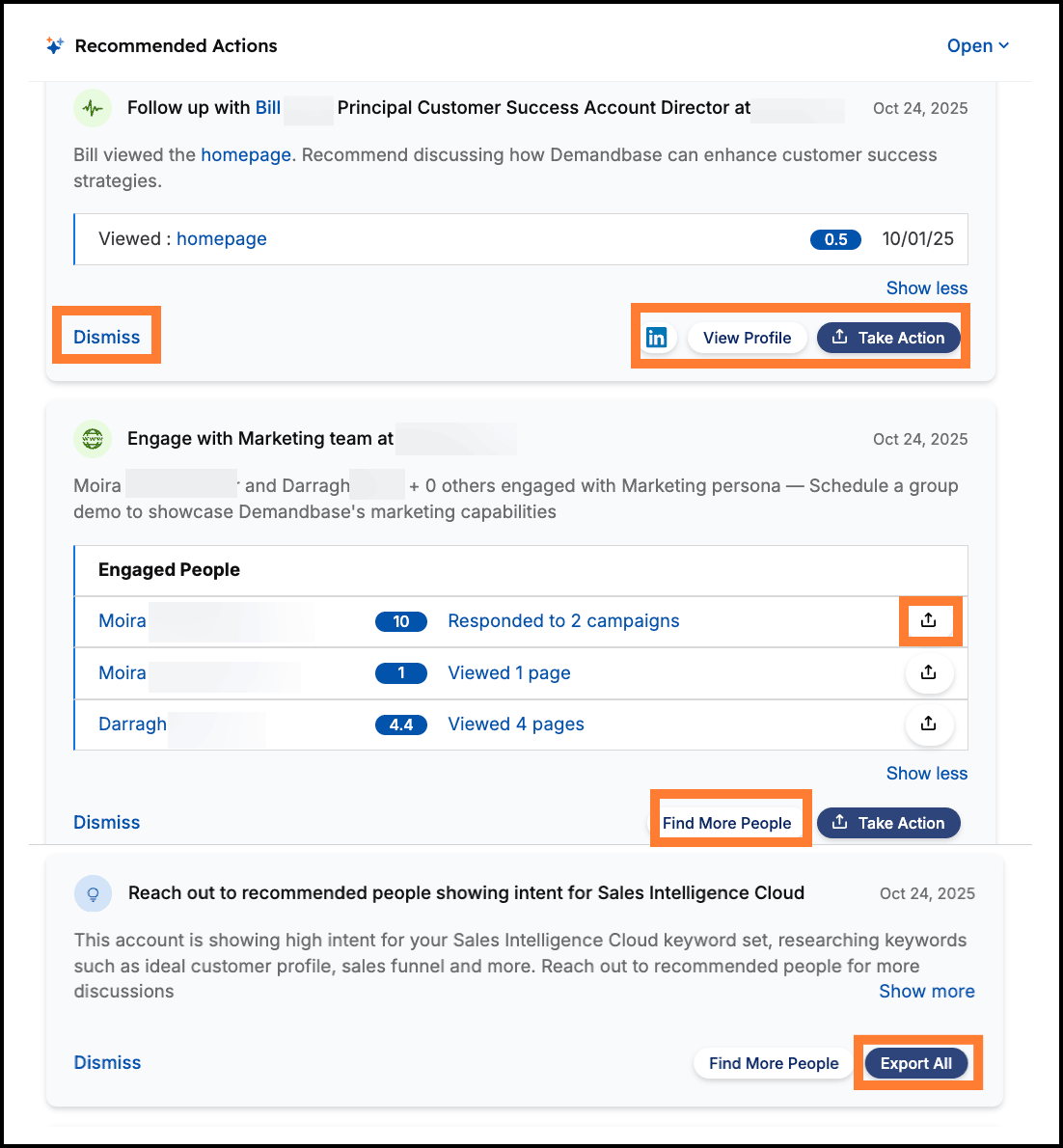
By using Demandbase to unify their data and orchestrate account-based plays, Coalfire was able to:
- Identify and prioritize high-intent accounts in real time
- Coordinate outreach across marketing and sales simultaneously
- Personalize engagement for buying committees at scale
This resulted in a 40% increase in pipeline growth and a 25% higher conversion rate.
As one Coalfire’s executive puts it:
“Demandbase gave us the clarity and precision we needed to step up our ABM strategy, ensuring every dollar spent truly counts.”
With Demandbase, you see opportunities as they form, engage every buyer at the right moment, and watch your GTM run smoother than it ever has.
We have updated our Privacy Notice. Please click here for details.