

The evolution of Demandbase AI’s architecture
Demandbase’s AI chat started as a clear vision: Can we let our users interact with their data as if it were ChatGPT?
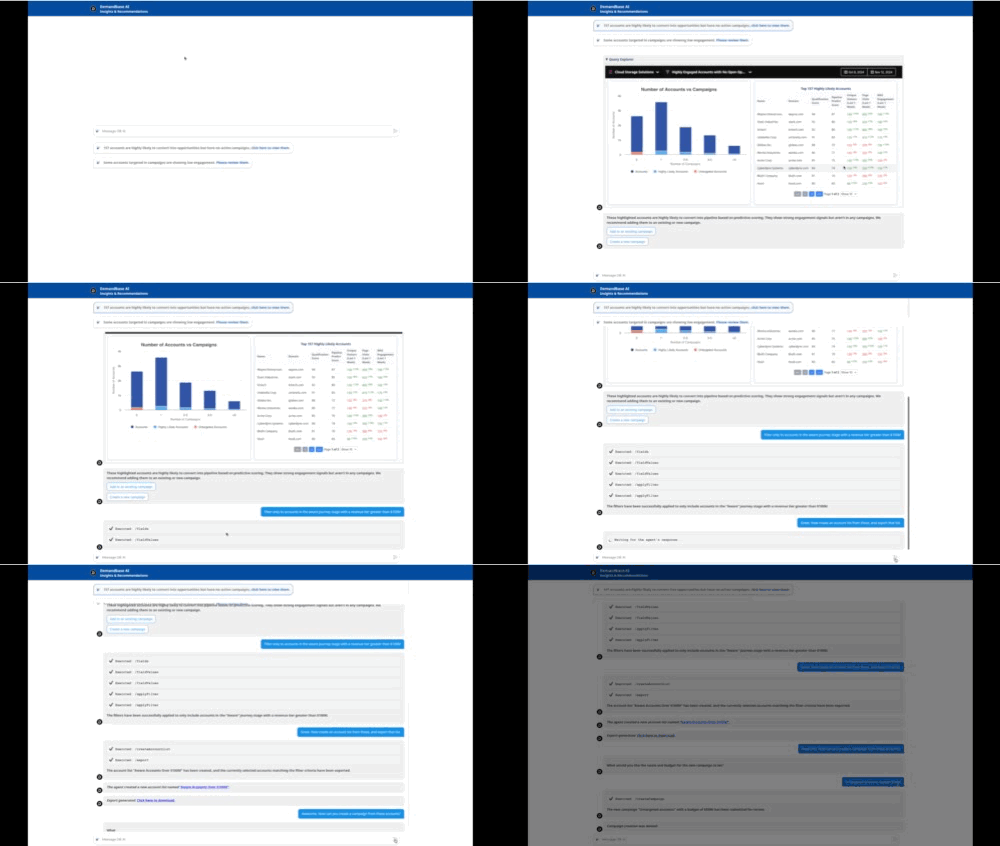
Demandbase AI has been a case study in adapting quickly and experimenting thoughtfully with new approaches. Back in January of 2025, when we officially kicked off the project, we had one goal: Save our users time by allowing them to define filters via Chat, rather than a point-and-click user interface. And we largely accomplished this: In our “Filter Agent” experience, users were able to express and define filters faster than before.
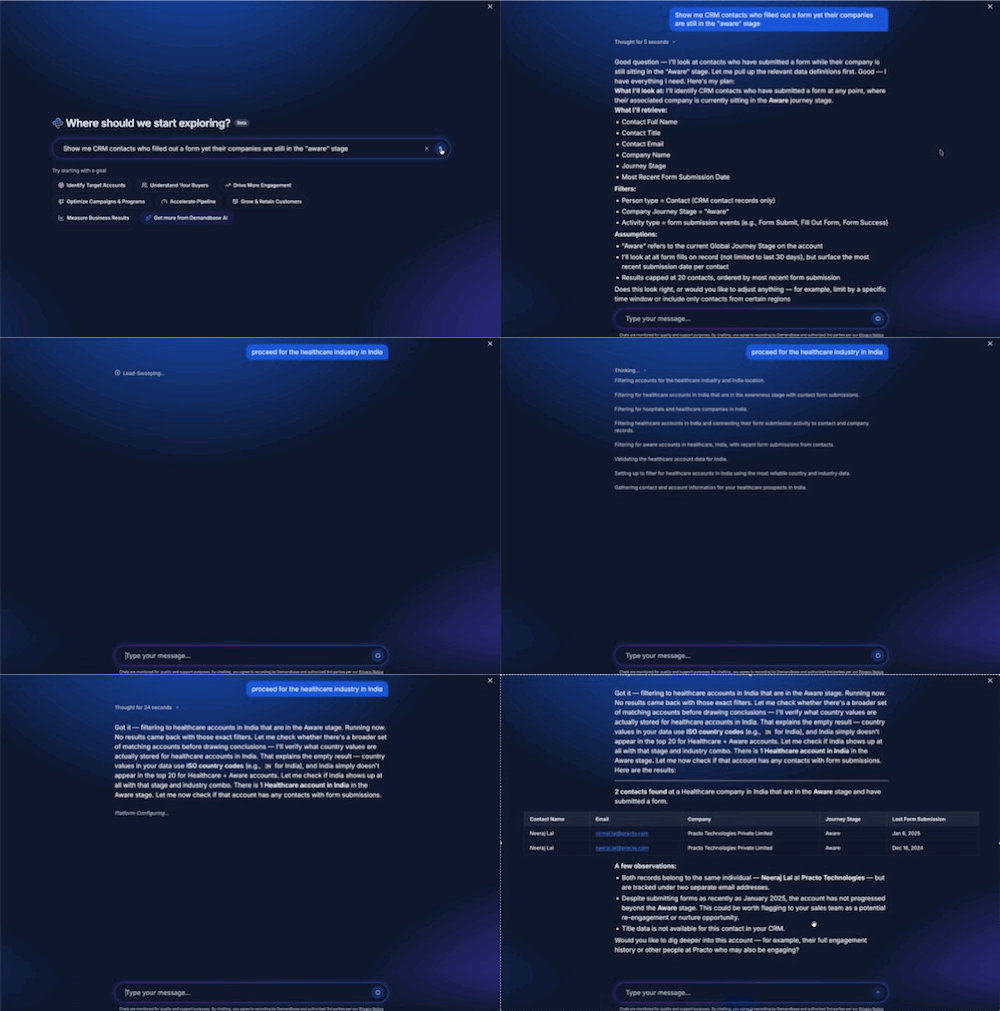
But we didn’t stop there. We knew that users wanted to converse with their CRM and GTM platform. They wanted to ask questions like “What trending accounts showed up on my site this week, and who should I reach out to?” and get answers like this:
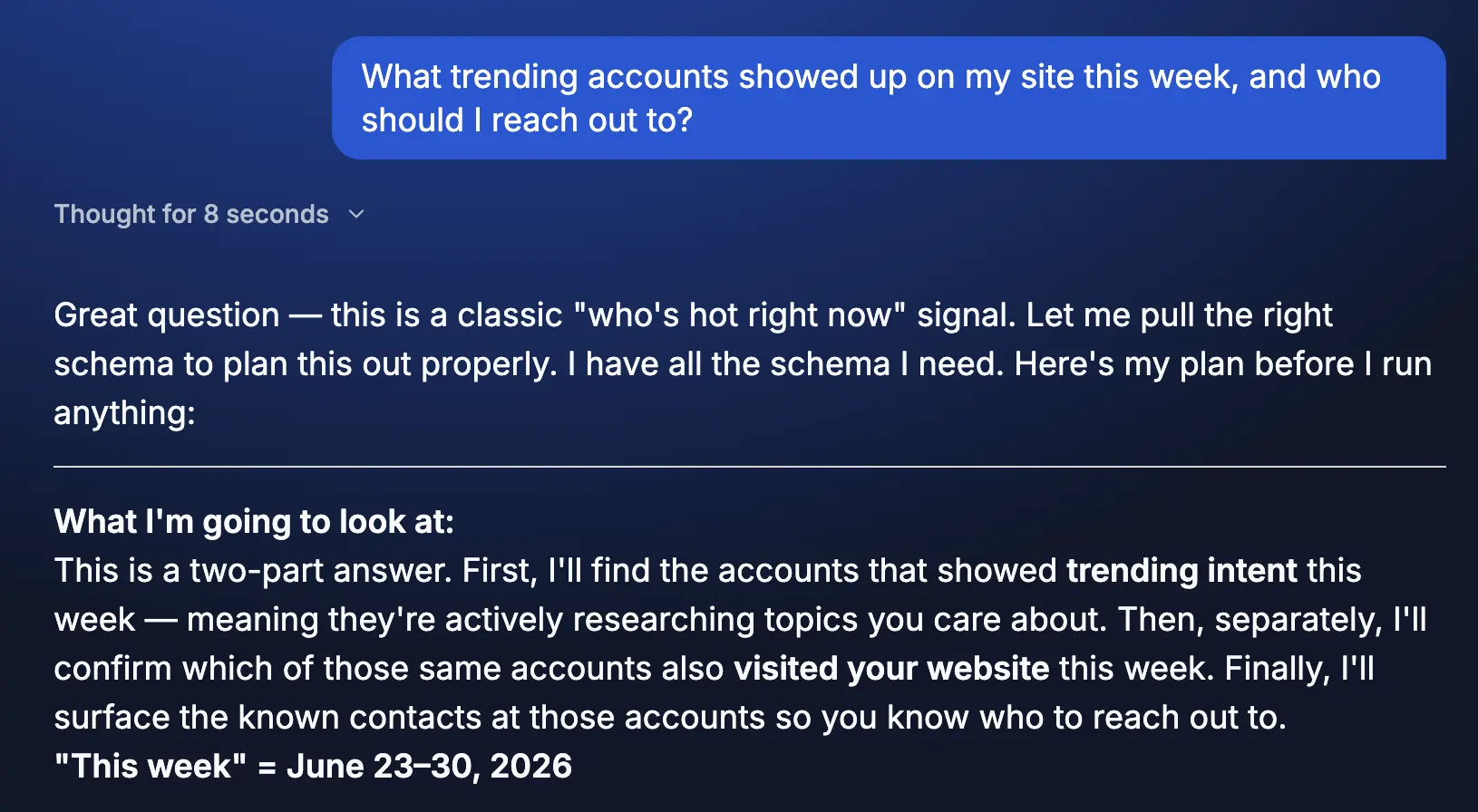
The only question was how to get there.
Semantic layers & agent orchestrator
We started by adopting an open-source Semantic Layer. At first, our Semantic Layer accelerated us. We found that agents could generate JSON structures that allowed users to ask basic natural language questions about their data. We also quickly built an in-house, front-facing “Multi-Agent Orchestrator”. Little did we know that the open source community would soon build something comparable.
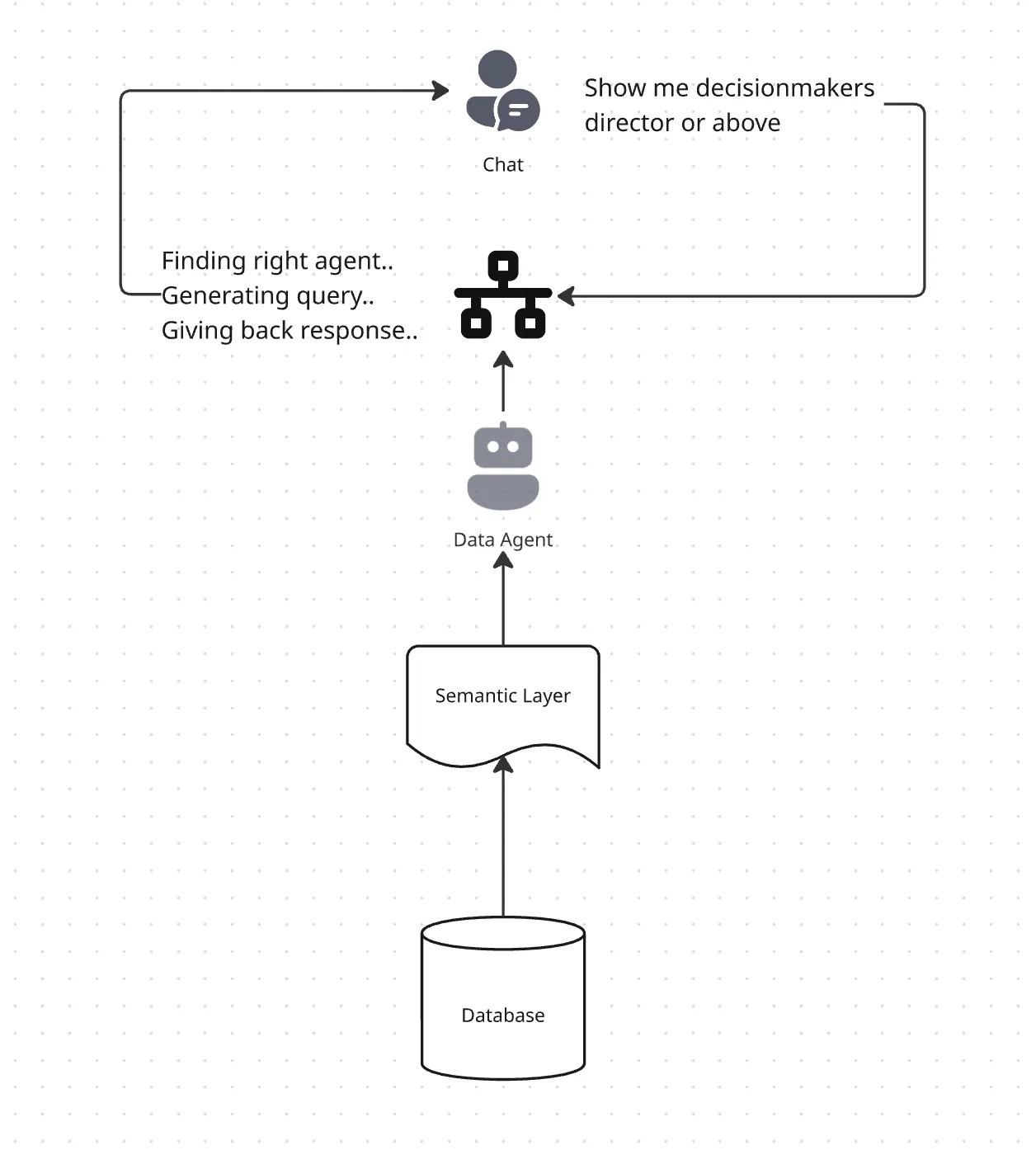
This approach brought us some success but there were a number of problems. For instance, the latency when generating answers grew, and without realtime feedback about what the agent was doing, users were left staring at a blank screen while it churned in the background. Sometimes, users would ask well-constructed questions, but since the agent wasn’t able to ask clarifying questions, it would make a best guess and end up with an unsatisfactory answer. Finally, there were some questions we couldn’t even begin to answer because of lack of data descriptions.
Better data descriptions
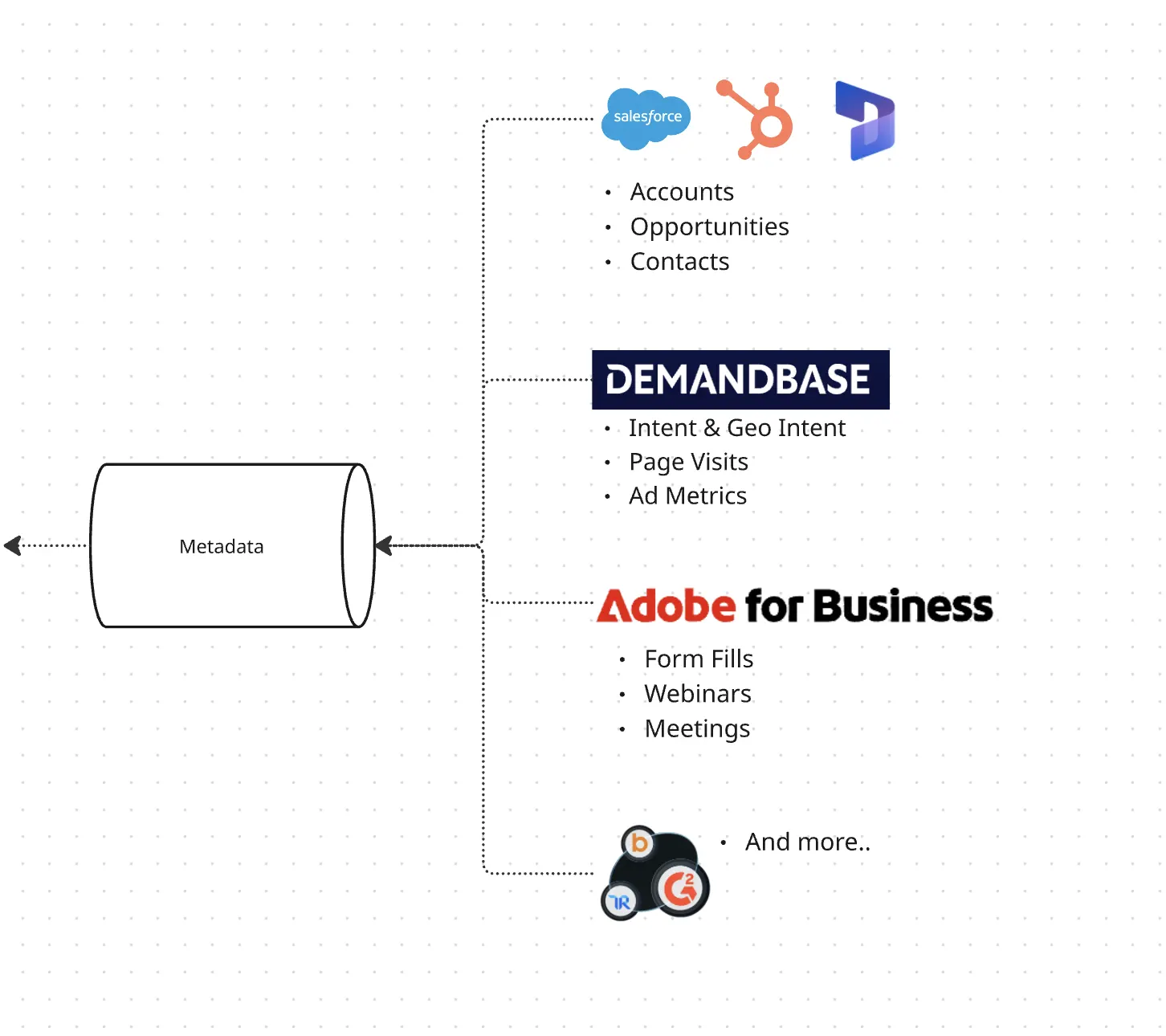
Our semantic layer helped organize our thoughts, and gave us a place to put our data model descriptions. But our results were only as good as our context. Without clear, consistent business object modeling, we would never achieve the conversational interface we first envisioned.
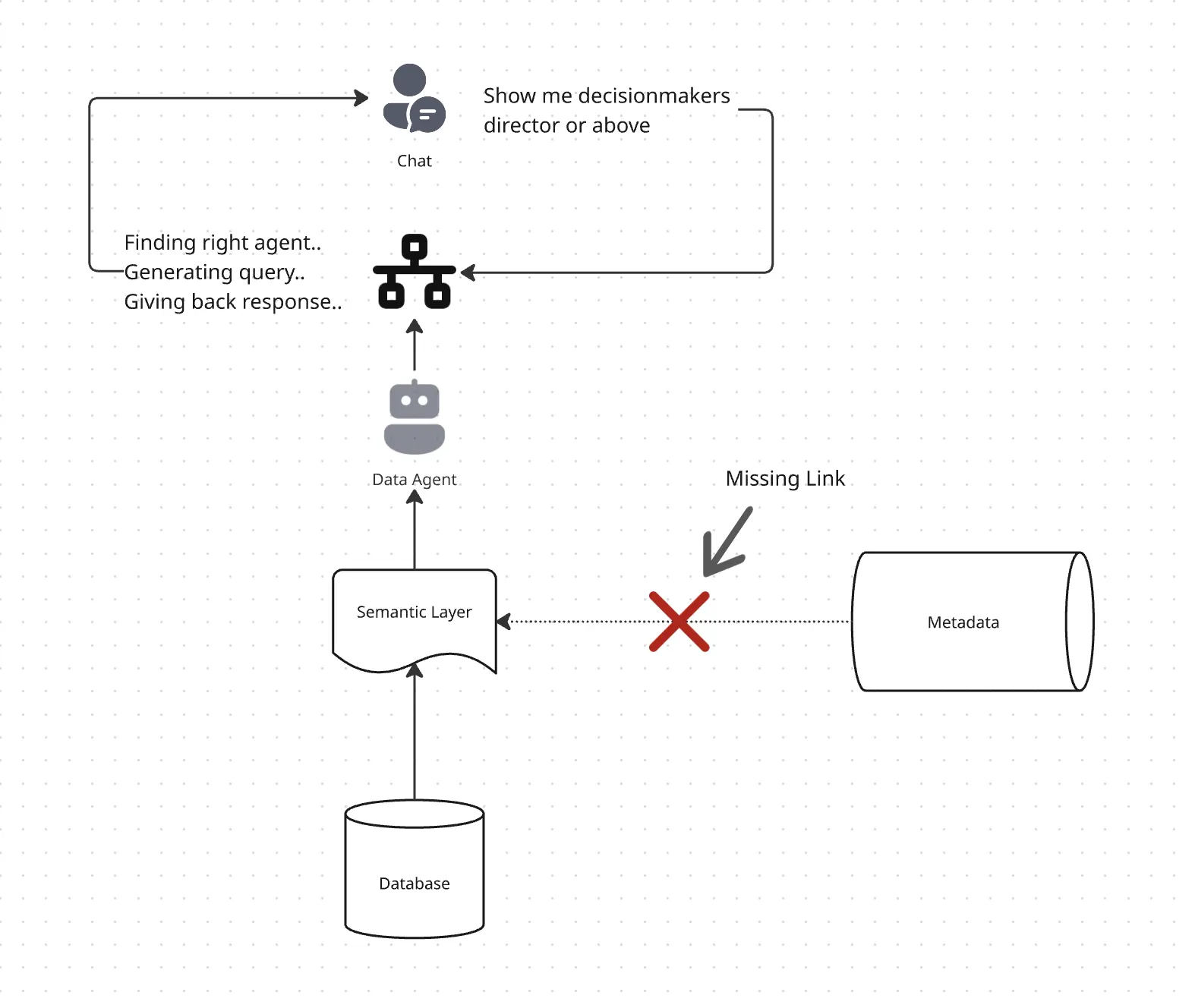
With over millions of signals, we had to tackle this in a cross-org effort. Imagine updating thousands of fields with the correct semantics description. It was a tedious, yet crucial part of creating a comprehensive data layer. Using every team’s speciality knowledge, we built a rich metadata layer, and suddenly that missing link vanished.
Lesson
The context quality is more important than the technologies you use.
A leap forward
The next generation of models were a marked leap forward in performance. Suddenly, frontier models could generate and execute code in ways they’d never been able to before. In fact, programming languages like SQL have much more training data “baked in” to the models. Our semantic layer and in-house agent orchestrator were beginning to feel clunky, and we wanted our agents to be able to clarify and work cooperatively with the user. Since we first started building our agents, the open source community has come a long way.
All of these problems (slow responses, inflexible query language, lack of conversationalism between the agent and user) became an adoption blocker. We had a hypothesis: Were these pieces constraining our performance?
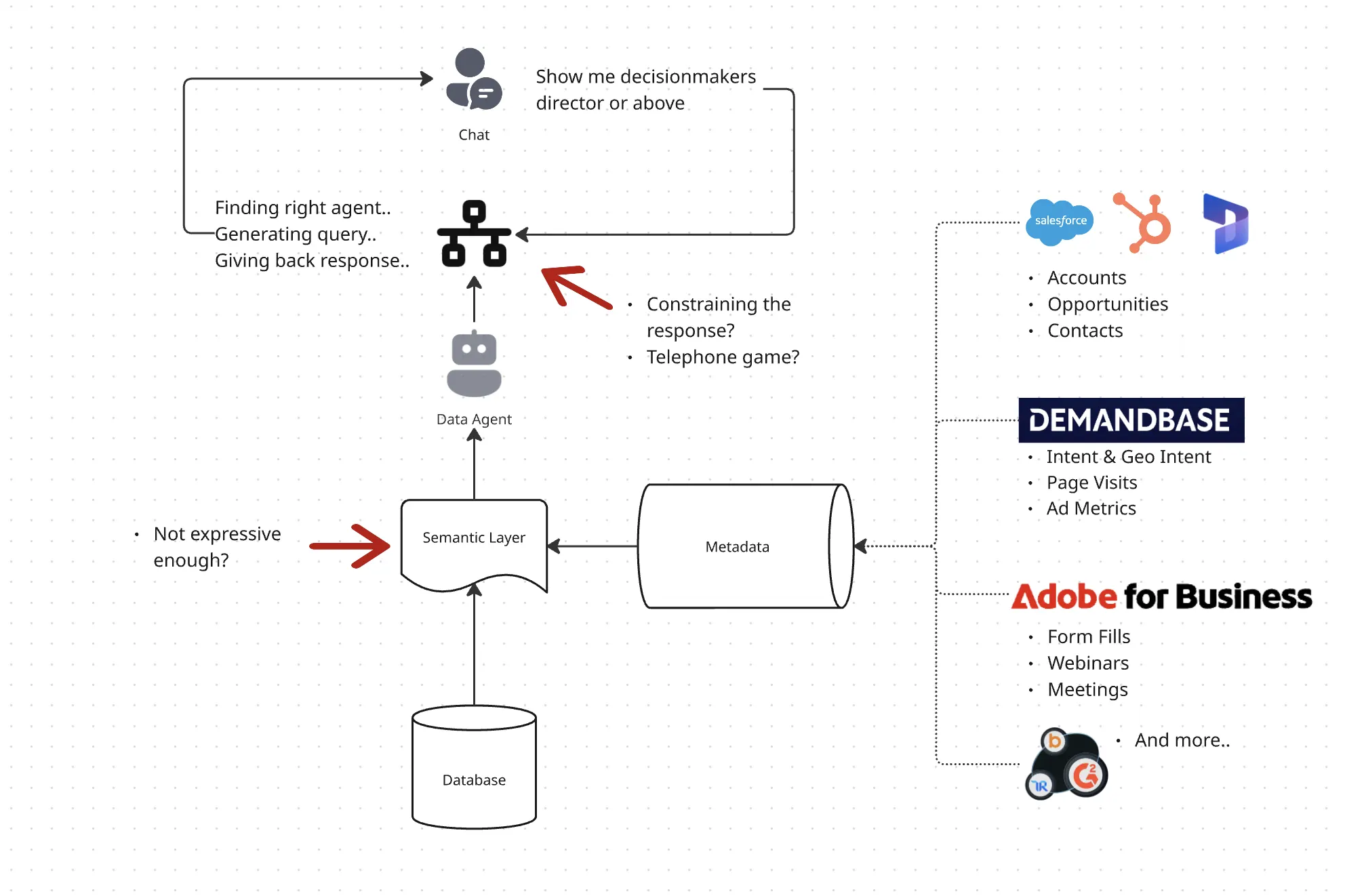
With our hypothesis in place, we ran an experiment. We tried removing the semantic layer from the equation entirely – only keeping the parts we liked, such as its YAML data description language. We saw better results, but the agent still couldn’t work cooperatively with the user. Next, we replaced our in-house multi agent orchestrator with an open-source Strands loop. Otherwise, we left the models unconstrained to write and execute any code it needed in order to answer the user’s question.
Our experiment was a huge success. Overnight, we saw a dramatic increase in our key metric: Conversation Pass Rate. The decision was made: Apply Occam’s Razor, and simplify.
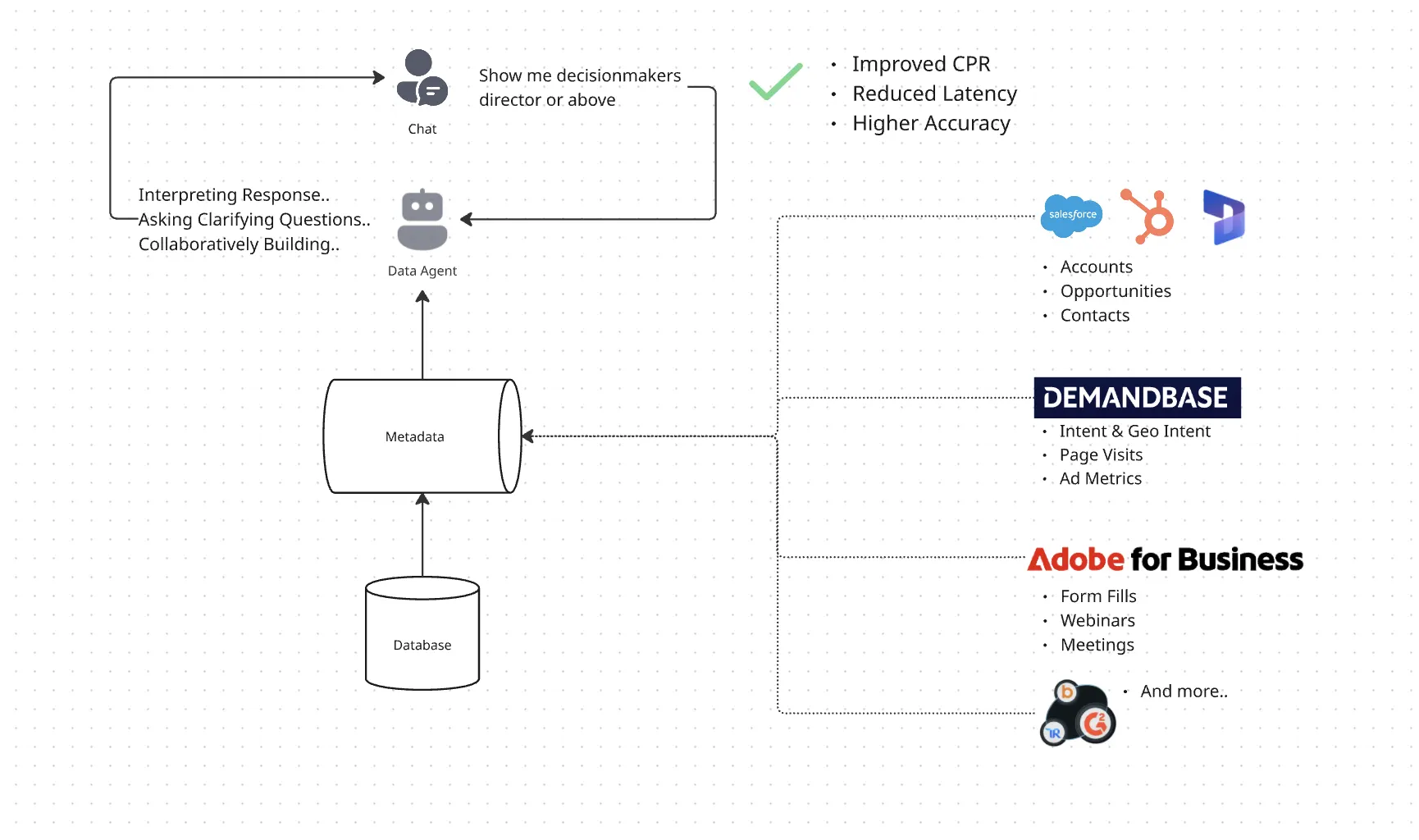
This is the version of Demandbase’s AI chat that you experience today. But we already have more coming down the pipeline. Our agentic chat experiences will soon be able to take actions on your behalf and with your approval. Data that you derive from chat will also be used in the Demandbase experience that you’re already familiar with. We are accelerating toward one universal GTM experience powered by the intelligence of the latest top-tier models.



We have updated our Privacy Notice. Please click here for details.